Abaeis nicippe
Sleepy Orange
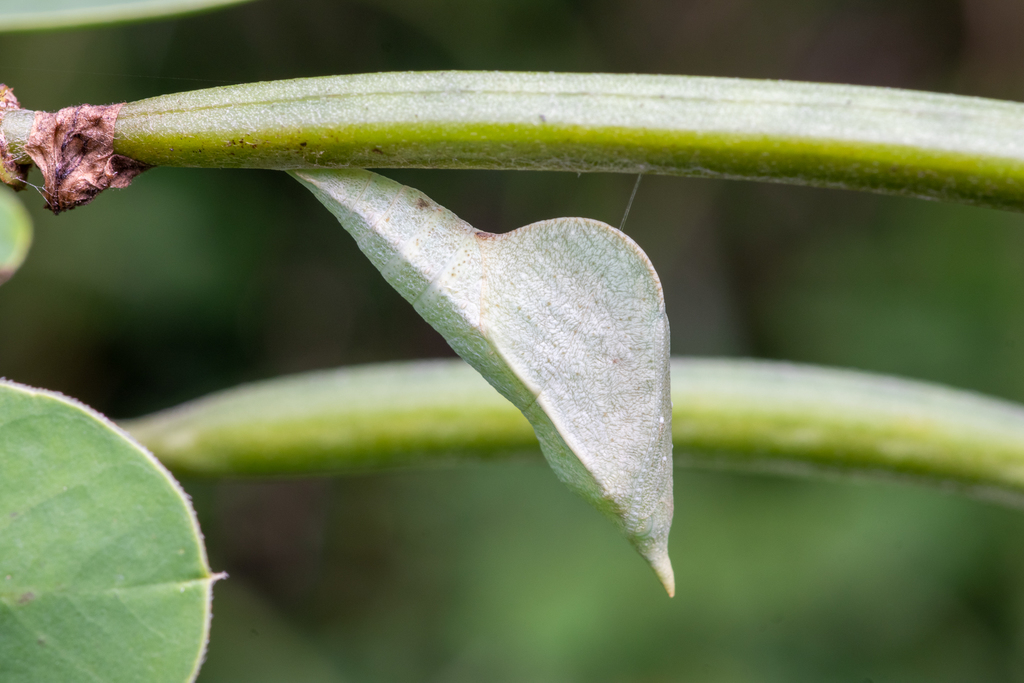
(c) DiegoH, some rights reserved (CC BY) · licence
Family: Pieridae · Class: Insecta · Order: Lepidoptera
Abaeis nicippe (Sleepy Orange) is a California animal in the Pieridae family.
The Sleepy Orange (Abaeis nicippe) is a small butterfly in the family Pieridae, characterized by its distinctive orange and black wing coloration. Adults have a wingspan of 32-44 mm (1.3-1.7 inches). Males display bright orange wings with black borders along the forewings and black spots on the hindwings. Females are typically duller orange with more extensive black markings and may show seasonal dimorphism, with summer forms being lighter than winter forms. The underside of the hindwings is yellow with irregular dark spots, providing camouflage when the butterfly is at rest with wings closed. The Sleepy Orange ranges from Central America north to the United States-Mexico border region, with vagrant populations appearing in non-mountainous parts of the eastern United States south of 40 degrees latitude. The species occasionally strays as far north as Ontario, Connecticut, South Dakota, and Colorado. In California, this butterfly is primarily found in the southern desert regions and occasionally in the Central Valley as a vagrant. The species' distribution is closely tied to the availability of its host plants and favorable climatic conditions. Sleepy Orange butterflies inhabit open areas including desert washes, fields, roadsides, parks, and gardens where their host plants grow. They prefer sunny locations at elevations from sea level to approximately 1,500 meters (4,900 feet). The species thrives in disturbed habitats and agricultural areas where Cassia species are present. Adults are frequently observed in areas with abundant nectar sources including lantana, asters, and other flowering plants. This species feeds exclusively on plants in the genus Cassia (family Fabaceae) during its larval stage. Common host plants include partridge pea (Chamaecrista fasciculata), wild senna (Senna hebecarpa), and other senna species. Adults are active throughout the day, with peak activity during warm, sunny hours. Males engage in patrolling behavior to locate mates and establish territories around host plants. Females lay single pale yellow eggs on young leaves or flower buds of host plants. The species produces multiple broods per year in warmer climates, with continuous breeding possible in frost-free areas. Larvae are green with yellow stripes and feed openly on leaves during the day. The Sleepy Orange is not federally or state-listed as threatened or endangered. Population trends vary regionally, with the species remaining stable in core areas of its range while showing irregular occurrence in peripheral regions. In California, the butterfly appears as a vagrant, with sightings dependent on weather patterns and seasonal migrations from more southern populations. Climate change may be affecting the species' distribution patterns, potentially allowing for range expansion northward during warmer periods. The species benefits from the presence of native and non-native Cassia species in urban and agricultural landscapes, though habitat loss in some regions may limit breeding opportunities.
Classification
Class: Insecta · Order: Lepidoptera · Family: Pieridae
Frequently asked questions
How is Abaeis nicippe classified?
Abaeis nicippe belongs to class Insecta, order Lepidoptera, family Pieridae.
What family does Abaeis nicippe belong to?
Abaeis nicippe is in the Pieridae family.
What is Abaeis nicippe?
The Sleepy Orange (Abaeis nicippe) is a small butterfly in the family Pieridae, characterized by its distinctive orange and black wing coloration.
Is Abaeis nicippe found in California?
Yes. Abaeis nicippe is recorded in California in The California Species Project's catalogue.
Related species
Other California species in the same genus, family, or bioregion.
Data from The California Species Project — 14,000+ California species with verified data from CNPS, CDFW, USFWS, and more.