Abagrotis denticulata
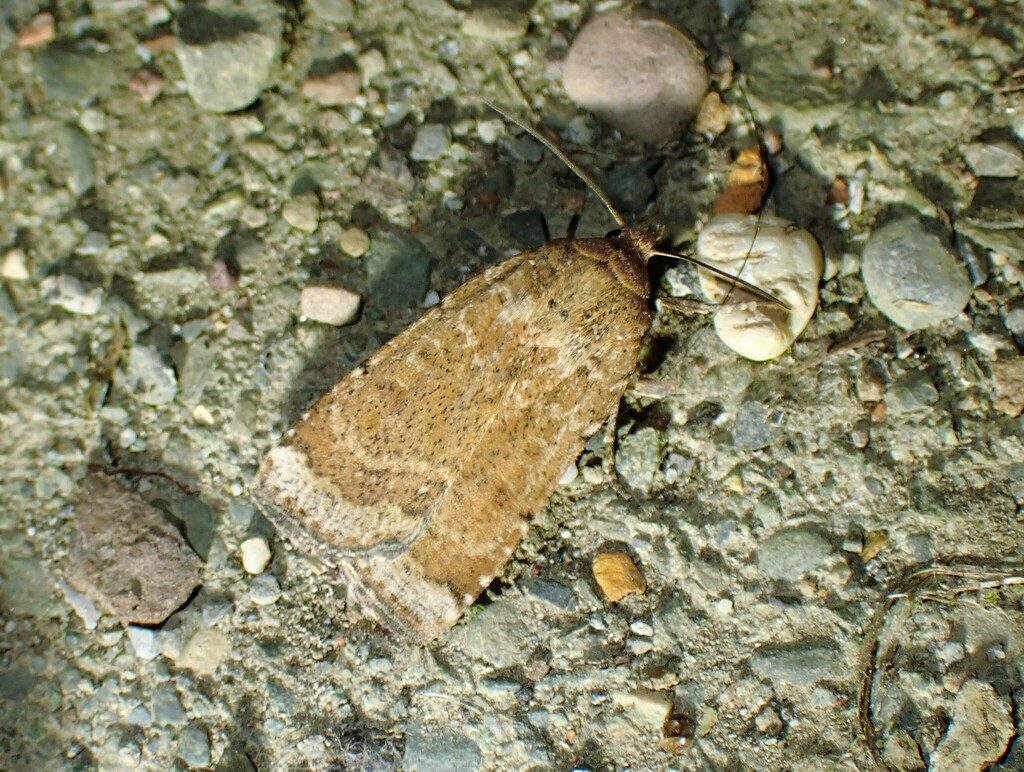
(c) Louis Imbeau, some rights reserved (CC BY) · licence
Family: Noctuidae · Class: Insecta · Order: Lepidoptera
Abagrotis denticulata is a California animal in the Noctuidae family.
Abagrotis denticulata is a moth species belonging to the family Noctuidae, commonly known as cutworm moths or owlet moths. This species represents one of numerous nocturnal moths within the genus Abagrotis, which contains approximately 60 described species primarily distributed across North America. The specific epithet 'denticulata' refers to small tooth-like structures, likely describing morphological features of the moth's anatomy. The physical characteristics of A. denticulata follow the typical noctuidae body plan, with a robust thorax and forewings adapted for nocturnal flight. Like other members of this family, adults possess scaled wings with cryptic coloration patterns that provide camouflage during daylight hours when the moths rest on bark, leaves, or soil. The forewings typically display mottled brown, gray, or earth-tone patterns, while the hindwings are generally paler. Sexual dimorphism is common in noctuids, with males often having more feathery antennae for detecting female pheromones. The distribution and range of Abagrotis denticulata remain poorly documented in available literature. The genus Abagrotis shows greatest diversity in western North America, particularly in mountainous regions and areas with diverse plant communities. Many species within this genus exhibit restricted ranges and are associated with specific elevation zones or plant associations, suggesting A. denticulata may have similarly specialized habitat requirements. Habitat preferences for this species are not well-established in current taxonomic literature. However, based on ecological patterns observed in related Abagrotis species, A. denticulata likely inhabits areas supporting its larval host plants. Many noctuids in this genus are associated with herbaceous plants, shrubs, or low-growing vegetation in montane or semi-arid environments. Elevation ranges and specific vegetation associations require further investigation. The life cycle of A. denticulata follows the typical lepidopteran pattern of complete metamorphosis. Adults are nocturnal and likely active during specific seasonal periods when environmental conditions favor reproduction. Larvae, commonly called cutworms, typically feed on plant roots, stems, or foliage depending on the species. The larval stage represents the primary feeding period, while adults focus on reproduction and dispersal. Specific host plant relationships, breeding seasons, and larval ecology remain undocumented for this species. The conservation status of Abagrotis denticulata has not been formally assessed by major conservation organizations. No federal or state listing status has been assigned, and the species does not appear in IUCN Red List assessments as of December 2025. The lack of comprehensive surveys and taxonomic research limits understanding of population trends, distribution extent, and potential conservation needs. Many noctuidae species face challenges from habitat modification, light pollution affecting nocturnal behavior, and climate change impacts on host plant communities. Without detailed ecological studies, the conservation requirements for A. denticulata remain unclear, highlighting the need for further taxonomic and ecological research on this poorly known moth species.
Classification
Class: Insecta · Order: Lepidoptera · Family: Noctuidae
Frequently asked questions
How is Abagrotis denticulata classified?
Abagrotis denticulata belongs to class Insecta, order Lepidoptera, family Noctuidae.
What family does Abagrotis denticulata belong to?
Abagrotis denticulata is in the Noctuidae family.
What is Abagrotis denticulata?
Abagrotis denticulata is a moth species belonging to the family Noctuidae, commonly known as cutworm moths or owlet moths.
Is Abagrotis denticulata found in California?
Yes. Abagrotis denticulata is recorded in California in The California Species Project's catalogue.
Related species
Other California species in the same genus, family, or bioregion.
Data from The California Species Project — 14,000+ California species with verified data from CNPS, CDFW, USFWS, and more.