Abagrotis reedi
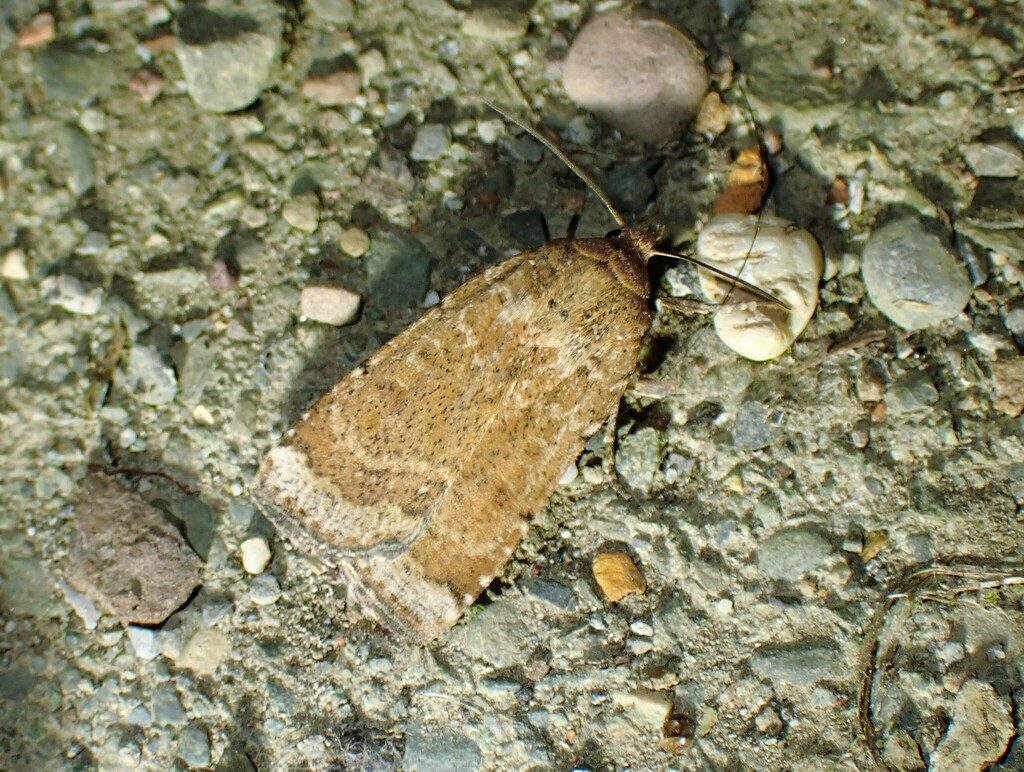
(c) Louis Imbeau, some rights reserved (CC BY) · licence
Family: Noctuidae · Class: Insecta · Order: Lepidoptera
Abagrotis reedi is a California animal in the Noctuidae family.
Abagrotis reedi is a moth species belonging to the family Noctuidae, commonly known as owlet moths or cutworm moths. This species represents one of many North American members of the genus Abagrotis, a group of nocturnal moths characterized by their cryptic coloration and association with arid and semi-arid environments. The physical characteristics of A. reedi follow the typical pattern of Abagrotis species, with forewings displaying muted earth tones that provide effective camouflage against natural substrates. Like other members of the genus, adults likely measure 15-25 mm in forewing length, with males typically smaller than females. The forewings exhibit the characteristic noctuid pattern of reniform and orbicular spots, though specific coloration details for this species require further documentation. The hindwings are typically paler than the forewings, ranging from whitish to light brown. The geographic distribution of Abagrotis reedi appears to be restricted to western North America, with documented occurrences in California and potentially adjacent states. The species likely inhabits regions characterized by dry, open landscapes typical of the Great Basin and adjacent montane areas. Specific county-level distribution data within California remains limited, reflecting the cryptic nature of this moth and the specialized collecting techniques required to document noctuid diversity. Habitat preferences for A. reedi likely include sagebrush steppe, pinyon-juniper woodlands, and montane shrublands at elevations ranging from approximately 1,200 to 2,500 meters. These environments are characterized by sparse vegetation cover, alkaline or neutral soils, and significant diurnal temperature fluctuations. Adult moths are presumably active during late spring through early fall, with peak flight periods varying by elevation and local climate conditions. The life cycle of A. reedi follows the typical pattern of Abagrotis species, with larvae likely feeding on herbaceous plants and low shrubs characteristic of their habitat. Many Abagrotis species are known to be cutworms, with larvae cutting plant stems at ground level and feeding on fallen vegetation. The larval host plants for A. reedi remain undocumented, though related species often utilize members of the families Asteraceae, Chenopodiaceae, and Fabaceae. Adults are nocturnal and attracted to artificial lights, making them occasionally detectable through standard moth collecting techniques. The conservation status of Abagrotis reedi remains poorly understood due to limited survey data and taxonomic uncertainty within the genus. The species lacks federal or state conservation designations, likely reflecting insufficient biological and distributional information rather than actual abundance. Climate change poses potential threats to high-elevation and arid-adapted species like A. reedi through altered precipitation patterns and increasing temperatures. Habitat modification from development, grazing, and invasive plant species may also impact populations, particularly in accessible lower-elevation sites. Further research is needed to establish the species' distribution, host plant relationships, and population status to inform appropriate conservation measures. Systematic surveys using pheromone traps and light trapping could provide essential baseline data for this poorly known moth species.
Classification
Class: Insecta · Order: Lepidoptera · Family: Noctuidae
Frequently asked questions
How is Abagrotis reedi classified?
Abagrotis reedi belongs to class Insecta, order Lepidoptera, family Noctuidae.
What family does Abagrotis reedi belong to?
Abagrotis reedi is in the Noctuidae family.
What is Abagrotis reedi?
Abagrotis reedi is a moth species belonging to the family Noctuidae, commonly known as owlet moths or cutworm moths.
Is Abagrotis reedi found in California?
Yes. Abagrotis reedi is recorded in California in The California Species Project's catalogue.
Related species
Other California species in the same genus, family, or bioregion.
Data from The California Species Project — 14,000+ California species with verified data from CNPS, CDFW, USFWS, and more.