Abedus indentatus
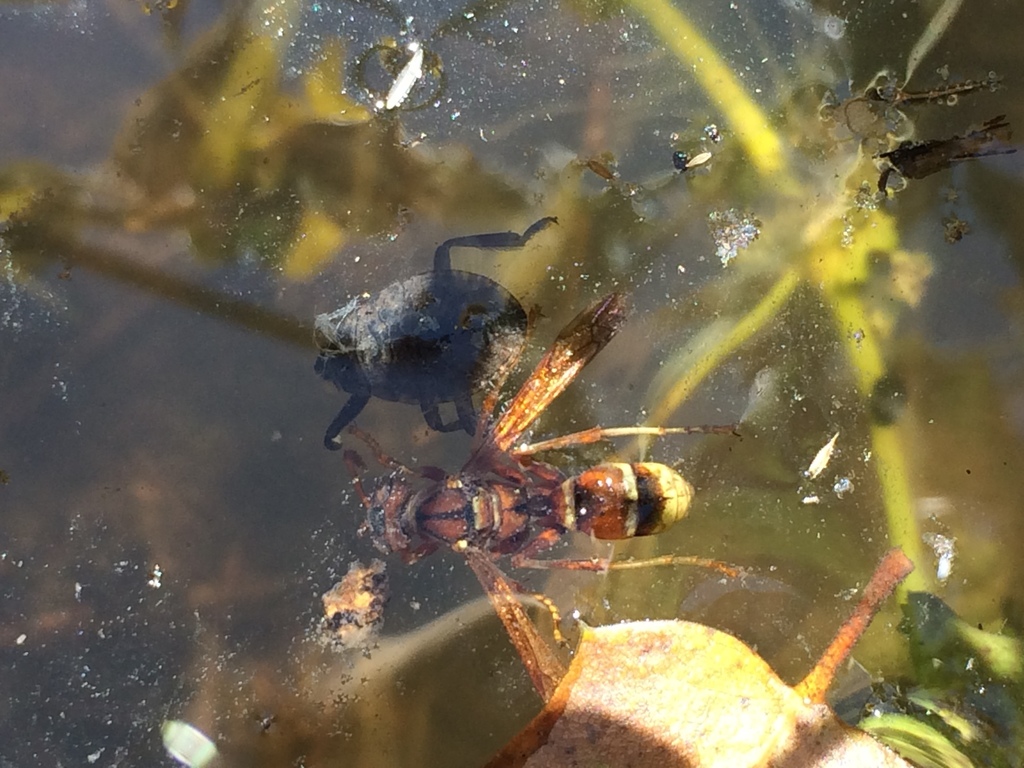
(c) Darin J McGuire, some rights reserved (CC BY) · licence
Family: Belostomatidae · Class: Insecta · Order: Hemiptera
Abedus indentatus is a California animal in the Belostomatidae family.
Abedus indentatus is a giant water bug in the family Belostomatidae, belonging to the subgenus Abedus (Deinostoma). This aquatic hemipteran is one of the larger true bugs found in California's freshwater systems, though specific morphometric data for this species remains poorly documented in the scientific literature. Like other members of the genus Abedus, A. indentatus possesses powerful raptorial forelegs adapted for grasping prey and robust piercing-sucking mouthparts characteristic of predatory aquatic hemipterans. The distribution of Abedus indentatus in California is not well-documented in current literature, though the species appears to be associated with southwestern aquatic systems based on available records. Giant water bugs of the genus Abedus are typically found in permanent or semi-permanent water bodies throughout the southwestern United States, but specific range data for A. indentatus requires further taxonomic and distributional study. This species inhabits freshwater environments including streams, pools, and other aquatic habitats where it functions as an apex invertebrate predator. Giant water bugs prefer areas with adequate dissolved oxygen and suitable prey populations. They are commonly found in slower-moving sections of streams or in pools where they can effectively ambush prey while remaining concealed among aquatic vegetation or debris. As a predatory hemipteran, Abedus indentatus feeds on a variety of aquatic invertebrates and small vertebrates. The species has been documented as a predator of amphibian larvae, specifically noted in USFWS recovery documentation as a predator of the federally endangered Arroyo southwestern toad (Anaxyrus californicus) tadpoles. Like other giant water bugs, A. indentatus likely employs an ambush hunting strategy, using its powerful forelegs to capture prey and its piercing mouthparts to inject digestive enzymes before consuming pre-digested tissues. Reproductive biology follows typical belostomatid patterns, with males often providing parental care by carrying eggs on their backs, though specific breeding behavior for this species has not been thoroughly studied. Abedus indentatus lacks formal conservation status designation at federal or state levels, and specific population trends are unknown due to limited taxonomic and ecological research. The species does not appear on current USFWS species lists or California Department of Fish and Wildlife special status species inventories as of December 2025. However, as an aquatic predator, the species may be vulnerable to habitat degradation affecting California's freshwater ecosystems, including water diversions, pollution, and climate-induced changes to hydrological patterns. The species' role as a predator of endangered amphibians has brought it to the attention of conservation biologists, though this predator-prey relationship represents natural ecological interactions rather than a conservation concern. Detailed ecological studies of Abedus indentatus are lacking, limiting our understanding of its specific habitat requirements, population dynamics, and conservation needs. The taxonomic status within the subgenus Deinostoma requires clarification through molecular and morphological studies. Enhanced survey efforts and taxonomic research would improve our knowledge of this species' distribution, ecology, and conservation status in California's aquatic ecosystems.
Classification
Class: Insecta · Order: Hemiptera · Family: Belostomatidae
Frequently asked questions
How is Abedus indentatus classified?
Abedus indentatus belongs to class Insecta, order Hemiptera, family Belostomatidae.
What family does Abedus indentatus belong to?
Abedus indentatus is in the Belostomatidae family.
What is Abedus indentatus?
Abedus indentatus is a giant water bug in the family Belostomatidae, belonging to the subgenus Abedus (Deinostoma).
Is Abedus indentatus found in California?
Yes. Abedus indentatus is recorded in California in The California Species Project's catalogue.
Related species
Other California species in the same genus, family, or bioregion.
Data from The California Species Project — 14,000+ California species with verified data from CNPS, CDFW, USFWS, and more.