Ablautus schlingeri
Oso Flaco Robber Fly
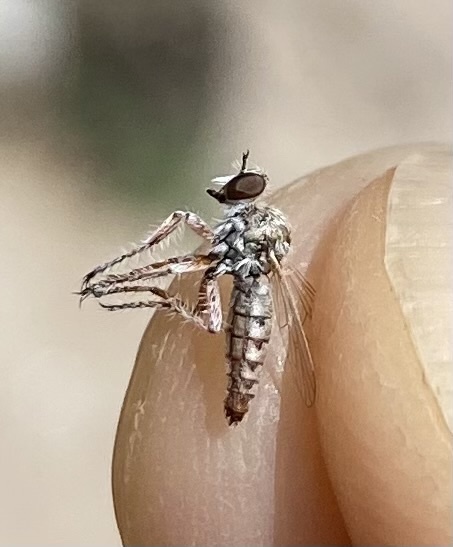
(c) Tristan A. McKnight, some rights reserved (CC BY) · licence
Family: Asilidae · Class: Insecta · Order: Diptera
Conservation status: G2 S2
Ablautus schlingeri (Oso Flaco Robber Fly) is a California animal in the Asilidae family.
The Oso Flaco robber fly is a small dipteran predator measuring approximately 4 mm in length. Males display distinctive coloration and morphology typical of the genus Ablautus, with robust legs adapted for capturing prey. The species belongs to the subfamily Stenopogoninae within the family Asilidae, commonly known as robber flies or assassin flies. Adults are characterized by their predatory lifestyle and aerial hunting behavior. This species has an extremely restricted range, endemic to coastal areas of southern California. The type locality and primary known population occurs at Oso Flaco Lake in San Luis Obispo County, from which the species derives its common name (BugGuide). The species appears to be limited to a narrow coastal zone, making it one of the more geographically restricted robber fly species in North America. The Oso Flaco robber fly inhabits specialized coastal sandy dune ecosystems. Documented observations indicate the species occurs in open sandy habitat at the fore-dune and back-dune interface, where stabilized sand meets active dune systems (BugGuide). This habitat type is characterized by sparse vegetation, exposed sand, and the dynamic environmental conditions typical of coastal dune ecosystems. The species' association with this specific microhabitat suggests narrow ecological requirements that may limit its distribution and population size. As with other asilid flies, A. schlingeri is a predatory species that captures other insects in flight or from perches. Robber flies are sit-and-wait predators that use their powerful legs to grasp prey and their piercing-sucking mouthparts to inject enzymes that dissolve internal tissues. Adult activity has been documented during summer months, with observations recorded in June and July (BugGuide). The species likely has a single generation per year, typical of temperate zone asilids, though specific details of its life cycle and larval ecology remain undocumented. The conservation status of the Oso Flaco robber fly reflects significant concern for its long-term persistence. The species carries a global rank of G2, indicating it is imperiled throughout its range due to rarity or other factors (NatureServe). Similarly, its state rank of S2 in California indicates the same level of imperilment at the state level. The U.S. Fish and Wildlife Service has maintained a species profile for A. schlingeri, suggesting ongoing monitoring of its conservation status (USFWS Species Profile). The species was historically considered for federal listing, with USFWS using the common name "Oso Flaco robber fly" in a 1991 assessment of potentially endangered species (BugGuide). The primary conservation concerns for this species likely stem from its extremely limited range and specialized habitat requirements. Coastal dune ecosystems face numerous threats including development pressure, recreational impacts, invasive plant species, and sea-level rise associated with climate change. The species' apparent restriction to a single locality makes it particularly vulnerable to local habitat disturbance or environmental changes. Conservation efforts would benefit from detailed population surveys, habitat protection measures, and research into the species' specific ecological requirements and life history.
Classification
Class: Insecta · Order: Diptera · Family: Asilidae
Conservation status
G2 S2
Frequently asked questions
How is Ablautus schlingeri classified?
Ablautus schlingeri belongs to class Insecta, order Diptera, family Asilidae.
What family does Ablautus schlingeri belong to?
Ablautus schlingeri is in the Asilidae family.
Is Ablautus schlingeri protected or of conservation concern?
Ablautus schlingeri carries the following status: G2 S2.
What is Ablautus schlingeri?
The Oso Flaco robber fly is a small dipteran predator measuring approximately 4 mm in length.
Is Ablautus schlingeri found in California?
Yes. Ablautus schlingeri is recorded in California in The California Species Project's catalogue.
Related species
Other California species in the same genus, family, or bioregion.
Data from The California Species Project — 14,000+ California species with verified data from CNPS, CDFW, USFWS, and more.