Abronica abronia
Elegant Aeolid
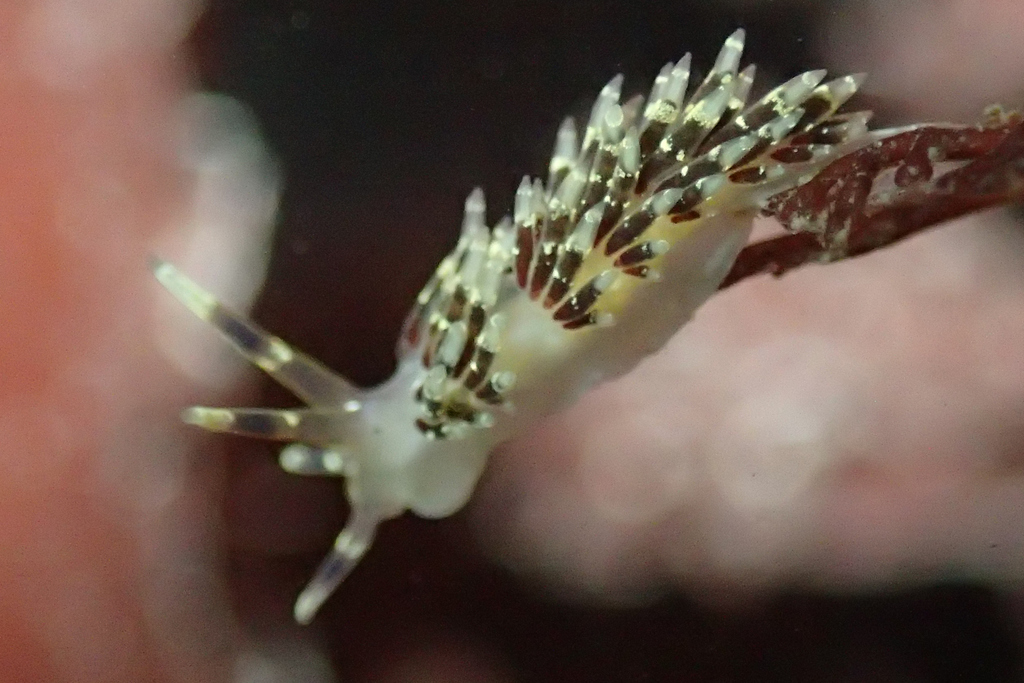
(c) Ken-ichi Ueda, some rights reserved (CC BY) · licence
Family: Abronicidae · Class: Gastropoda · Order: Nudibranchia
Abronica abronia (Elegant Aeolid) is a California animal in the Abronicidae family.
Abronica abronia, commonly known as the elegant aeolid, is a marine nudibranch mollusk belonging to the family Abronicidae. This sea slug is characterized by elongated cerata (finger-like projections) extending from its dorsal surface, which serve both respiratory and digestive functions. The body is typically translucent to semi-transparent, allowing internal structures to be visible through the integument. Like other aeolid nudibranchs, A. abronia lacks a shell in its adult form and displays bilateral symmetry with a distinct head bearing sensory tentacles called rhinophores and oral tentacles. The species occurs along the Pacific coast of North America, with documented populations in California waters. Specific distributional data for A. abronia remains limited in the scientific literature, reflecting the broader challenge of documenting marine gastropod ranges comprehensively. The species' occurrence in California waters places it within the broader northeastern Pacific nudibranch fauna, which includes numerous endemic and locally distributed species. Elegant aeolids inhabit marine environments, typically associated with rocky intertidal and subtidal zones where their cnidarian prey species occur. The depth range and specific microhabitat preferences for A. abronia have not been extensively documented in available literature. Like other members of the Abronicidae, this species likely requires specific environmental conditions including appropriate water temperature, salinity, and substrate characteristics that support both the nudibranch and its prey organisms. As with other aeolid nudibranchs, A. abronia is presumed to be a specialized predator of cnidarians, particularly hydroids or small anemones. The species likely uses its radula to feed on soft tissues of its prey, with the cerata potentially storing undischarged nematocysts (stinging cells) from consumed cnidarians for defensive purposes. Reproductive behavior in nudibranchs typically involves hermaphroditic mating, with individuals capable of both egg production and sperm transfer. Specific data on breeding seasons, egg mass characteristics, or larval development for A. abronia are not well documented in current literature. The conservation status of Abronica abronia has not been formally assessed by major conservation organizations. The species is not listed under federal or California state endangered species legislation as of December 2025. Like many marine gastropods, A. abronia may face threats from habitat degradation, pollution, ocean acidification, and climate change effects on marine ecosystems. The limited scientific documentation of this species' biology, distribution, and population status represents a significant knowledge gap that hampers conservation assessment efforts. Detailed ecological studies of this species are lacking. The above information synthesizes available taxonomic and general biological knowledge of aeolid nudibranchs. We welcome contributions of verified scientific data, photographs, or field observations to enhance this species account. Please contact Species List Pro to share additional information about Abronica abronia's distribution, ecology, or conservation needs.
Classification
Class: Gastropoda · Order: Nudibranchia · Family: Abronicidae
Frequently asked questions
How is Abronica abronia classified?
Abronica abronia belongs to class Gastropoda, order Nudibranchia, family Abronicidae.
What family does Abronica abronia belong to?
Abronica abronia is in the Abronicidae family.
What is Abronica abronia?
Abronica abronia, commonly known as the elegant aeolid, is a marine nudibranch mollusk belonging to the family Abronicidae.
Is Abronica abronia found in California?
Yes. Abronica abronia is recorded in California in The California Species Project's catalogue.
More California species
This species has no close relatives in our California data — here are other species to explore.
Data from The California Species Project — 14,000+ California species with verified data from CNPS, CDFW, USFWS, and more.