Abrostola parvula
Small Abrostola
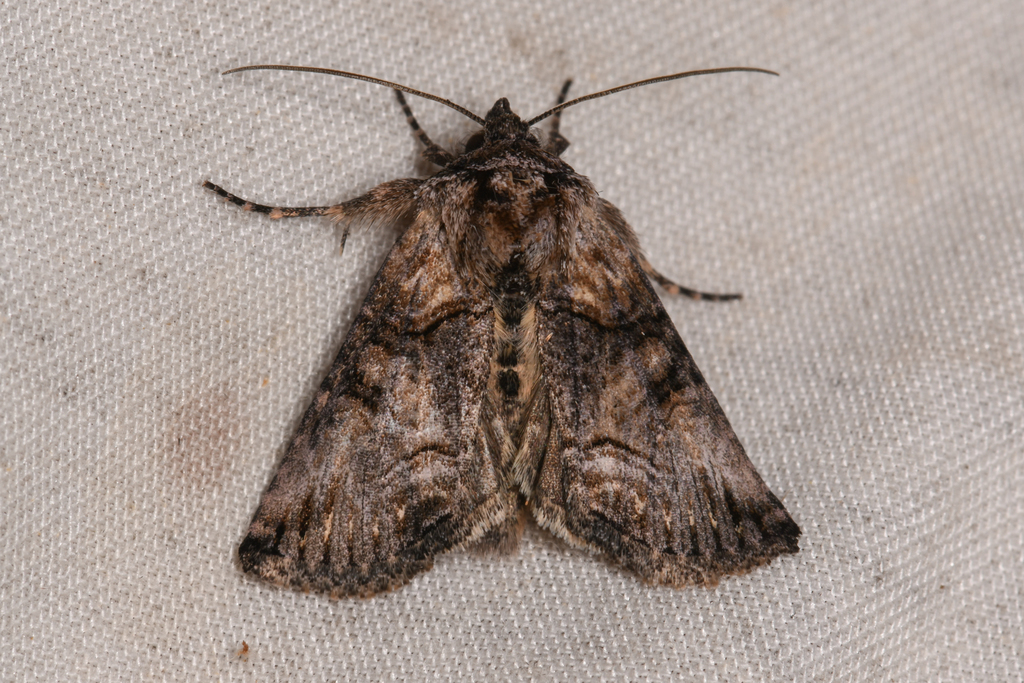
(c) Trevor Van Loon, some rights reserved (CC BY) · licence
Family: Noctuidae · Class: Insecta · Order: Lepidoptera
Abrostola parvula (Small Abrostola) is a California animal in the Noctuidae family.
Abrostola parvula is a small noctuid moth in the subfamily Plusiinae, tribe Abrostolini. This species belongs to a genus of moths commonly known as spectacle moths, though specific morphological details for A. parvula remain poorly documented in the scientific literature. As with other members of the genus Abrostola, adults likely possess the characteristic metallic markings on the forewings that distinguish this group. The species has a limited documented range in western North America. According to lepidopterological records, A. parvula has been collected in Nevada, specifically from Christmas Tree Pass in the Newberry Mountains, Clark County, representing both a county and state record when first documented in March 1987 and March 1988 (News of the Lepidopterists' Society 1989). The species' broader distribution remains incompletely known, though it appears to be restricted to arid mountain regions of the southwestern United States. Habitat preferences for A. parvula are not well documented in the available literature. Based on collection localities, the species appears to inhabit desert mountain environments, potentially associated with specific elevation zones or plant communities characteristic of the Mojave Desert region. The Newberry Mountains where specimens were collected represent typical Basin and Range topography with desert scrub vegetation. Ecological information for A. parvula is extremely limited. Like other Abrostola species, larvae likely feed on specific host plants, though these relationships have not been documented for this species. Flight period data suggests adult activity occurs in early spring, with specimens collected in March. The species may be univoltine, producing one generation per year, which is common among desert-adapted moths that time their life cycles with favorable conditions. The conservation status of A. parvula has not been formally assessed. The species lacks federal or state listing status and does not appear in IUCN Red List assessments. However, the limited collection records and apparently restricted range suggest it may be naturally rare or have specific habitat requirements that limit its distribution. The paucity of recent collection records raises questions about current population status, though this may reflect limited survey effort in remote desert locations rather than actual rarity. Scientific documentation for this species remains extremely limited despite its initial description and sporadic collection records. The lack of detailed biological information, including host plant relationships, larval biology, and precise habitat requirements, represents a significant knowledge gap. Further field research and taxonomic study are needed to better understand the ecology and distribution of A. parvula. If you have additional verified information about this species' biology, distribution, or ecology, please contact Species List Pro to help improve this species account.
Classification
Class: Insecta · Order: Lepidoptera · Family: Noctuidae
Frequently asked questions
How is Abrostola parvula classified?
Abrostola parvula belongs to class Insecta, order Lepidoptera, family Noctuidae.
What family does Abrostola parvula belong to?
Abrostola parvula is in the Noctuidae family.
What is Abrostola parvula?
Abrostola parvula is a small noctuid moth in the subfamily Plusiinae, tribe Abrostolini.
Is Abrostola parvula found in California?
Yes. Abrostola parvula is recorded in California in The California Species Project's catalogue.
Related species
Other California species in the same genus, family, or bioregion.
Data from The California Species Project — 14,000+ California species with verified data from CNPS, CDFW, USFWS, and more.