Acalyptris lotella
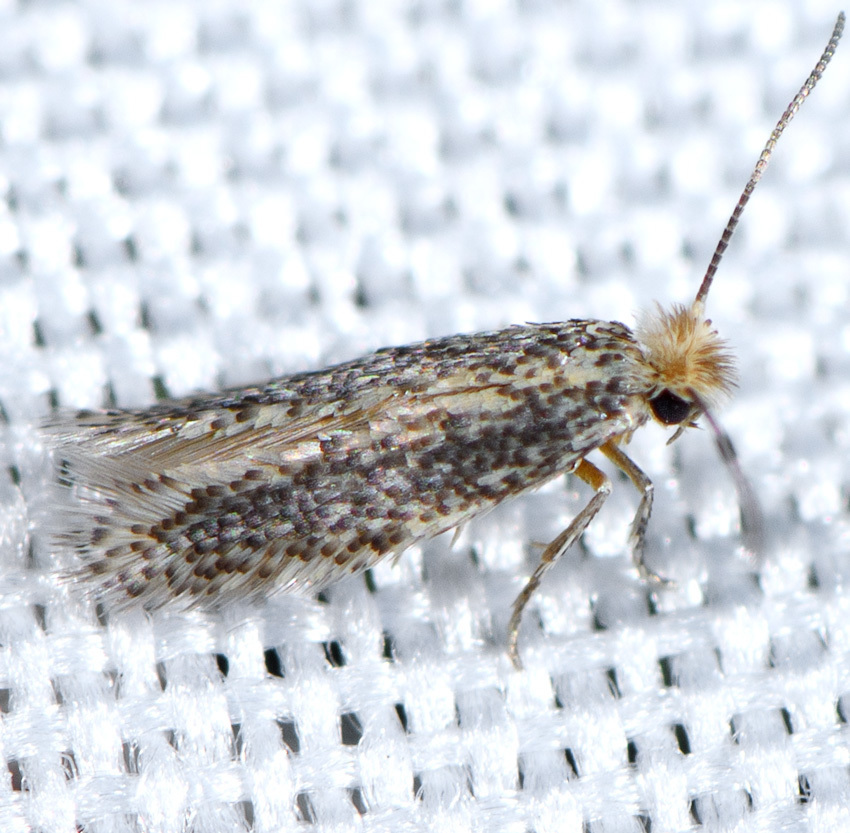
(c) Scott M Logan, some rights reserved (CC BY) · licence
Family: Nepticulidae · Class: Insecta · Order: Lepidoptera
Acalyptris lotella is a California animal in the Nepticulidae family.
Acalyptris lotella is a microlepidopteran species in the family Nepticulidae, commonly known as pygmy moths or midget moths. This diminutive moth represents one of the smallest lepidopteran species, with adults typically measuring 3-4 mm in wingspan. Members of the genus Acalyptris are characterized by their metallic coloration and extremely reduced wing venation, though specific morphological details for A. lotella require further documentation. The distribution of Acalyptris lotella extends across multiple U.S. states, with documented occurrences from the eastern and central regions. According to state wildlife action plans, this species has been identified as a Species of Greatest Conservation Need in Arkansas, Louisiana, New Mexico, and New York (BugGuide 2016). The species' presence in these diverse geographic regions suggests a potentially broader distribution than currently documented, though comprehensive range mapping remains incomplete. Habitat preferences for A. lotella have not been thoroughly studied, reflecting the general knowledge gaps surrounding many nepticulid species. Like other members of Nepticulidae, this species likely inhabits areas where its specific host plants occur. The family Nepticulidae typically occupies diverse habitats ranging from forests to grasslands, with species often showing high host plant specificity. The larval biology of Acalyptris lotella follows the typical nepticulid pattern of leaf mining. Nepticulid larvae create characteristic serpentine mines within leaf tissue, feeding on the internal cellular contents while leaving the outer epidermis largely intact. These mines often begin as narrow galleries and may widen toward the pupation site. The specific host plant relationships for A. lotella have not been definitively documented, representing a significant gap in our understanding of this species' ecology. Adult flight periods and reproductive behavior remain similarly undocumented. Developmental stages likely include four larval instars, with pupation occurring either within the mine or in a separate pupal chamber. Adults are presumably short-lived, as is typical for nepticulid species, with mating and oviposition occurring soon after emergence. The number of generations per year has not been established for this species. Conservation status information for Acalyptris lotella is limited. While the species lacks federal protection status, its inclusion on multiple state Species of Greatest Conservation Need lists indicates concern about population stability or knowledge gaps. These designations typically reflect either documented population declines, habitat threats, or insufficient data to assess conservation status adequately. The species does not appear on current IUCN Red List assessments. Primary conservation challenges for A. lotella likely include habitat loss and the general lack of baseline population data common to many microlepidoptera. The extreme small size of nepticulid moths makes field detection and population monitoring particularly challenging, contributing to the limited ecological knowledge for most species in this family. Climate change may pose additional threats through alterations to host plant distributions and phenology. Detailed ecological studies of this species are lacking. Research priorities should include host plant identification, life cycle documentation, and population assessment. The information presented here synthesizes available data from state wildlife databases and taxonomic resources. We welcome contributions of verified scientific data, photographs, or field observations to enhance this species account.
Classification
Class: Insecta · Order: Lepidoptera · Family: Nepticulidae
Frequently asked questions
How is Acalyptris lotella classified?
Acalyptris lotella belongs to class Insecta, order Lepidoptera, family Nepticulidae.
What family does Acalyptris lotella belong to?
Acalyptris lotella is in the Nepticulidae family.
What is Acalyptris lotella?
Acalyptris lotella is a microlepidopteran species in the family Nepticulidae, commonly known as pygmy moths or midget moths.
Is Acalyptris lotella found in California?
Yes. Acalyptris lotella is recorded in California in The California Species Project's catalogue.
Related species
Other California species in the same genus, family, or bioregion.
Data from The California Species Project — 14,000+ California species with verified data from CNPS, CDFW, USFWS, and more.