Acanthinucella punctulata
Spotted Unicorn
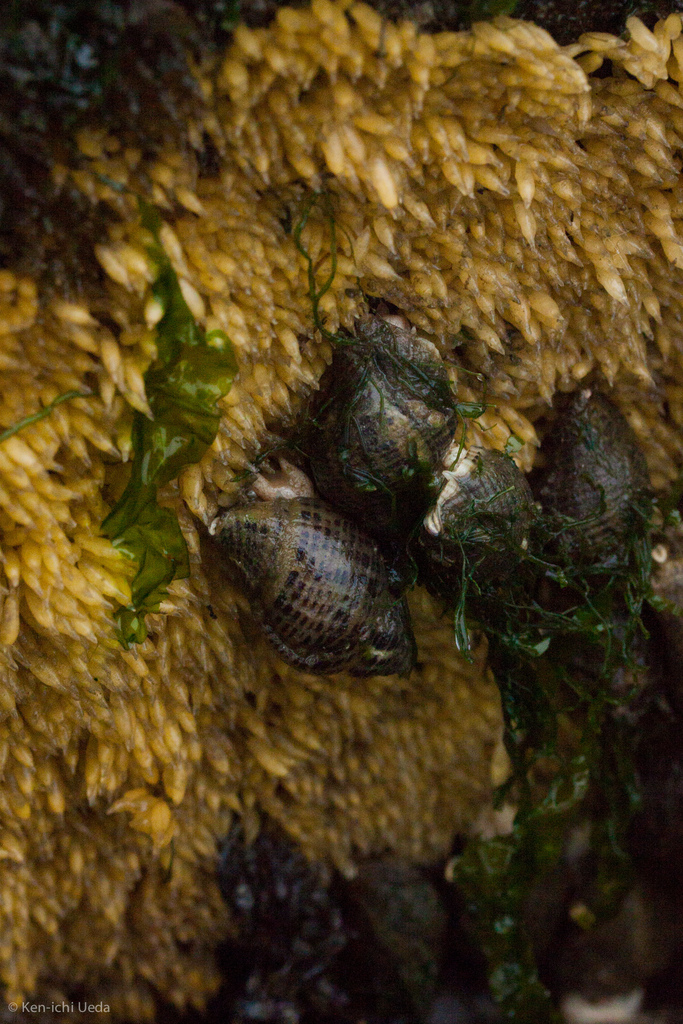
(c) Ken-ichi Ueda, some rights reserved (CC BY) · licence
Family: Muricidae · Class: Muricidae · Order: Muricidae
Acanthinucella punctulata (Spotted Unicorn) is a California animal in the Muricidae family.
The spotted unicorn (Acanthinucella punctulata) is a predatory sea snail, a marine gastropod mollusk in the family Muricidae. Also known as the spotted thorn drupe, this species exhibits the characteristic spiral shell morphology typical of murex snails, with a pointed spire and distinctive spotted coloration pattern that gives the species its common name. The shell displays prominent sculptural ridges and tubercles, adaptations that provide both structural support and defensive capabilities in the rocky intertidal environment. This species occurs along the northeastern Pacific coast, with documented populations ranging from central California to Baja California, Mexico. The species inhabits rocky intertidal zones and nearshore subtidal areas, typically found on hard substrates including rocky reefs, jetties, and pier pilings. Acanthinucella punctulata demonstrates strong site fidelity, often remaining in crevices and under ledges during low tide periods. The spotted unicorn occupies intertidal and shallow subtidal habitats characterized by high wave energy and rocky substrates. These environments provide abundant prey species and suitable attachment surfaces for this predatory gastropod. The species tolerates significant variations in temperature, salinity, and oxygen levels associated with tidal cycles, demonstrating physiological adaptations to the dynamic intertidal zone. As a predatory gastropod, A. punctulata feeds primarily on other mollusks, using its radula to drill through prey shells and consume soft tissues. The species exhibits typical muricid feeding behavior, secreting acidic compounds to weaken prey shells before mechanical drilling. Reproduction involves the laying of egg capsules attached to hard substrates, with larvae developing through planktonic stages before settling and metamorphosing into juvenile snails. The species plays an important ecological role in intertidal communities by exerting predation pressure on herbivorous gastropods and other invertebrates (Grokipedia). According to ecological studies, A. punctulata influences intertidal community dynamics through its predatory activities, potentially reducing grazing pressure on algal communities by controlling herbivore populations (Grokipedia). This top-down regulatory effect contributes to the maintenance of algal diversity and overall community structure in rocky intertidal habitats. The species' distribution and abundance patterns may be influenced by ocean temperature variations, prey availability, and habitat modification from coastal development. No specific conservation status has been assigned to this species at federal or state levels. However, like many intertidal species, spotted unicorns face potential threats from coastal development, pollution, ocean acidification, and climate-related changes in ocean temperature and chemistry. The species' dependence on rocky intertidal habitats makes it vulnerable to habitat degradation and human disturbance in coastal areas. Long-term population monitoring would be beneficial to assess potential impacts from environmental changes and human activities on this ecologically important predatory gastropod.
Classification
Class: Muricidae · Order: Muricidae · Family: Muricidae
Frequently asked questions
How is Acanthinucella punctulata classified?
Acanthinucella punctulata belongs to class Muricidae, order Muricidae, family Muricidae.
What family does Acanthinucella punctulata belong to?
Acanthinucella punctulata is in the Muricidae family.
What is Acanthinucella punctulata?
The spotted unicorn (Acanthinucella punctulata) is a predatory sea snail, a marine gastropod mollusk in the family Muricidae.
Is Acanthinucella punctulata found in California?
Yes. Acanthinucella punctulata is recorded in California in The California Species Project's catalogue.
Related species
Other California species in the same genus, family, or bioregion.
Data from The California Species Project — 14,000+ California species with verified data from CNPS, CDFW, USFWS, and more.