Acanthinucella spirata
Angular Unicorn
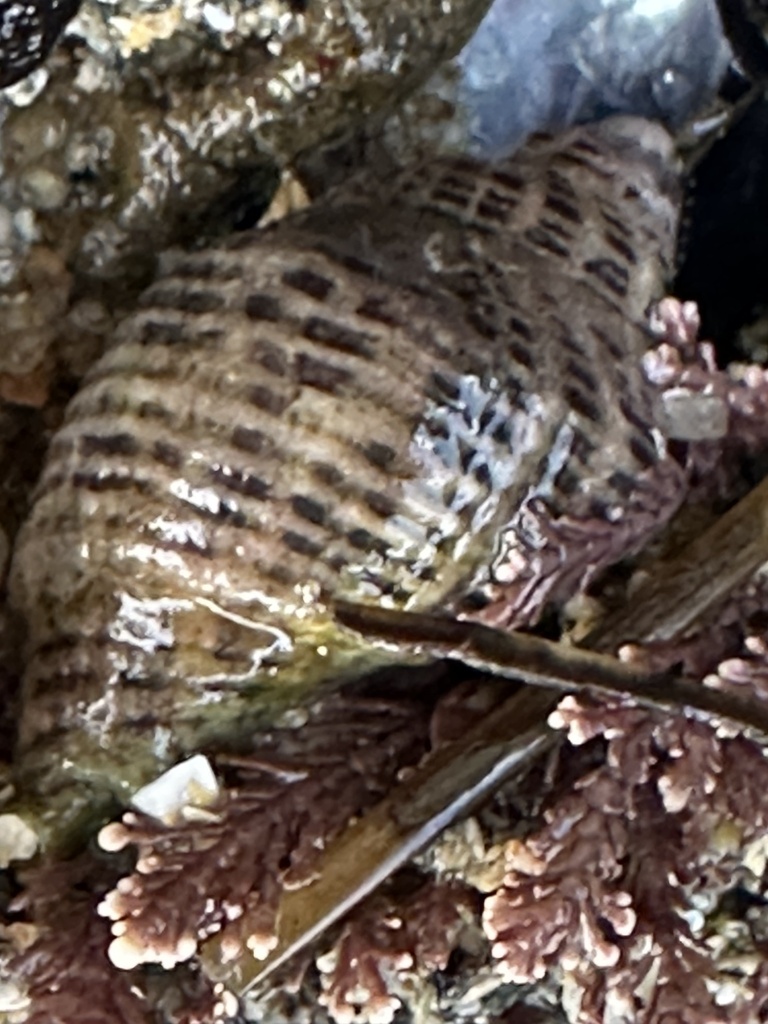
no rights reserved · CC0
Family: Muricidae · Class: Muricidae · Order: Muricidae
Acanthinucella spirata (Angular Unicorn) is a California animal in the Muricidae family.
The Angular Unicorn (Acanthinucella spirata) is a predatory marine gastropod in the family Muricidae, commonly known as rock snails or murex shells. This species is characterized by its distinctive angular shell morphology with pronounced spiral ridges and projecting spines that give it the "unicorn" appearance referenced in its common name. Acanthinucella spirata occurs along the Pacific coast of North America, with its primary range extending along the California coastline. According to recent research, the species has expanded its distribution along the California coast since the Pleistocene through a poleward geographical range shift in response to changing environmental conditions (Springer 2018). The species inhabits rocky intertidal and subtidal zones where it can be found among mussel beds and other hard substrates. This predatory snail occupies wave-swept rocky shores and intertidal habitats, typically associated with areas containing abundant prey species. The species demonstrates adaptations to high-energy wave environments, with specimens collected from locations such as Broad Beach in Malibu showing physiological tolerance to turbulent conditions (UC Scholarship 2021). Angular Unicorns prefer hard substrate environments where they can effectively hunt their primary prey. As a predatory gastropod, Acanthinucella spirata feeds primarily on bivalves, barnacles, and other sessile marine invertebrates. The species employs typical muricid feeding behavior, using its radula to drill through prey shells and consume soft tissues. Research on chemosensory behavior indicates that A. spirata, along with other whelk species, utilizes chemical cues to locate prey in the complex rocky intertidal environment (Frontiers in Ecology and Evolution 2021). The species exhibits typical gastropod reproduction, though specific details about spawning cycles and larval development require further documentation. Currently, Acanthinucella spirata lacks formal conservation status designations at federal or state levels. However, genetic studies suggest important considerations for potential future conservation efforts. Research conducted at UC San Diego indicates that conservation strategies should account for genetic diversity patterns across populations, as efforts focusing only on genetically diverse populations could risk eliminating other important population segments (UC San Diego Biology 2001). The species' ability to expand its range in response to environmental changes demonstrates some adaptive capacity, though the long-term impacts of climate change, ocean acidification, and coastal development on rocky intertidal habitats remain concerns for this and other specialized intertidal species. While not currently listed as threatened, the Angular Unicorn's dependence on specific rocky intertidal habitat types makes it potentially vulnerable to coastal development, pollution, and climate-related changes in ocean chemistry and temperature. The species serves as both predator and prey in rocky intertidal food webs, contributing to the ecological balance of these highly productive marine ecosystems along the California coast.
Classification
Class: Muricidae · Order: Muricidae · Family: Muricidae
Frequently asked questions
How is Acanthinucella spirata classified?
Acanthinucella spirata belongs to class Muricidae, order Muricidae, family Muricidae.
What family does Acanthinucella spirata belong to?
Acanthinucella spirata is in the Muricidae family.
What is Acanthinucella spirata?
The Angular Unicorn (Acanthinucella spirata) is a predatory marine gastropod in the family Muricidae, commonly known as rock snails or murex shells.
Is Acanthinucella spirata found in California?
Yes. Acanthinucella spirata is recorded in California in The California Species Project's catalogue.
Related species
Other California species in the same genus, family, or bioregion.
Data from The California Species Project — 14,000+ California species with verified data from CNPS, CDFW, USFWS, and more.