Acanthodoris rhodoceras
Black and White Dorid
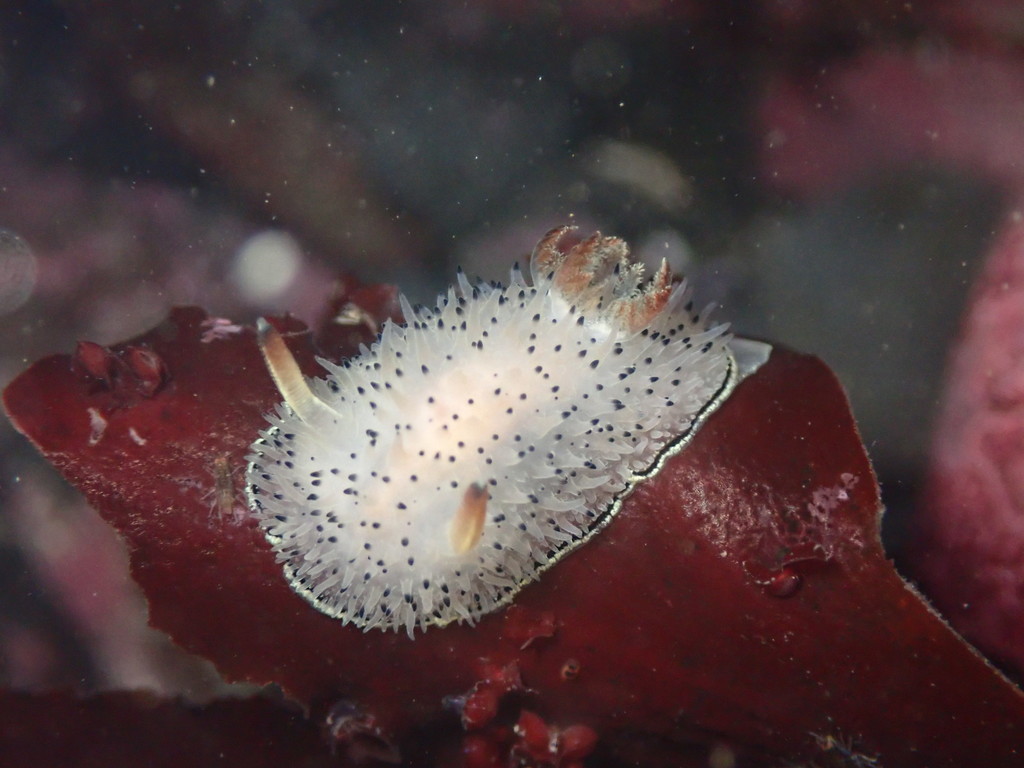
(c) Cricket Raspet, some rights reserved (CC BY) · licence
Family: Onchidorididae · Class: Gastropoda · Order: Nudibranchia
Acanthodoris rhodoceras (Black and White Dorid) is a California animal in the Onchidorididae family.
Acanthodoris rhodoceras, commonly known as the black-tipped spiny doris or black and white dorid, is a marine nudibranch mollusk in the family Onchidorididae. This sea slug is characterized by its distinctive black and white coloration pattern, with the dorsal surface typically displaying white or cream-colored body with contrasting black-tipped cerata (finger-like projections). The rhinophores and gill cluster often show dark pigmentation at their tips, giving rise to the common name. Adults typically measure 10 to 25 millimeters (0.4 to 1.0 inches) in length, with an elongated oval body shape typical of dorid nudibranchs. Acanthodoris rhodoceras occurs along the Pacific coast of North America, with documented populations from Alaska to California. The species inhabits rocky intertidal and subtidal zones, typically found on hard substrates including rock faces, pier pilings, and kelp holdfasts. It occurs from the low intertidal zone to depths of approximately 30 meters (98 feet), preferring areas with moderate to strong water movement and adequate food sources. This nudibranch inhabits temperate marine waters along exposed and semi-protected coastlines. The species is commonly found in tide pools during low tide and on vertical rock surfaces where its prey organisms are abundant. Acanthodoris rhodoceras prefers areas with encrusting organisms such as sponges, bryozoans, and barnacles, which serve as both food sources and substrate for attachment. As a carnivorous nudibranch, Acanthodoris rhodoceras feeds primarily on encrusting organisms, particularly sponges and bryozoans. The species uses its radula, a feeding organ equipped with rows of small teeth, to scrape food from hard surfaces. Reproduction occurs through hermaphroditic mating, with individuals capable of both producing and receiving sperm. After mating, the species deposits spiral egg masses on hard substrates, typically near food sources. The eggs develop into planktonic veliger larvae that eventually settle and metamorphose into juvenile nudibranchs. Spawning typically occurs during warmer months when food availability is highest. Acanthodoris rhodoceras currently holds no federal or state conservation listing status and is not assessed by the IUCN. The species appears to maintain stable populations throughout its range, though comprehensive population studies are limited. As with many marine invertebrates, potential threats include habitat degradation from coastal development, pollution, ocean acidification, and climate change impacts on prey species. The species' dependence on healthy rocky intertidal ecosystems makes it potentially vulnerable to environmental changes affecting these habitats. However, its relatively broad distribution and adaptability to various depths suggest some resilience to localized disturbances. Continued monitoring of intertidal communities would benefit understanding of population trends for this and other nudibranch species along the Pacific coast.
Classification
Class: Gastropoda · Order: Nudibranchia · Family: Onchidorididae
Frequently asked questions
How is Acanthodoris rhodoceras classified?
Acanthodoris rhodoceras belongs to class Gastropoda, order Nudibranchia, family Onchidorididae.
What family does Acanthodoris rhodoceras belong to?
Acanthodoris rhodoceras is in the Onchidorididae family.
What is Acanthodoris rhodoceras?
Acanthodoris rhodoceras, commonly known as the black-tipped spiny doris or black and white dorid, is a marine nudibranch mollusk in the family Onchidorididae.
Is Acanthodoris rhodoceras found in California?
Yes. Acanthodoris rhodoceras is recorded in California in The California Species Project's catalogue.
Related species
Other California species in the same genus, family, or bioregion.
Data from The California Species Project — 14,000+ California species with verified data from CNPS, CDFW, USFWS, and more.