Acanthogobius flavimanus
Yellowfin goby
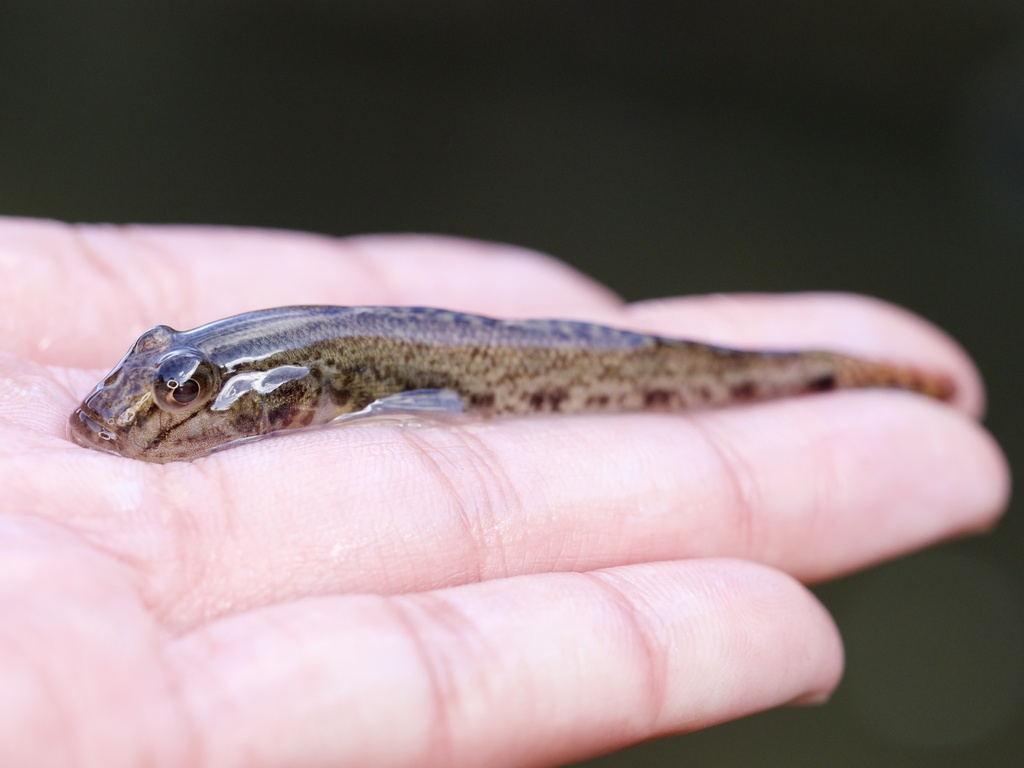
(c) りなべる, some rights reserved (CC BY) · licence
Family: Oxudercidae · Class: Actinopterygii · Order: Gobiiformes
Acanthogobius flavimanus (Yellowfin goby) is a California animal in the Oxudercidae family.
The yellowfin goby is a small marine fish native to East Asia that has established populations along the California coast. Adults typically measure 80 to 120 mm (3.1 to 4.7 inches) in total length, with a maximum recorded size of approximately 140 mm (5.5 inches). The body is elongated and cylindrical with a relatively large head. Coloration is generally pale yellow to brownish-yellow, with distinctive bright yellow pectoral fins that give the species its common name. The first dorsal fin contains six spines, while the second dorsal fin has one spine and 11 to 13 soft rays. Males develop breeding coloration with darker vertical bars along the sides and intensified yellow fin coloration. The yellowfin goby is native to the coastal waters of Japan, Korea, and eastern China, including the Yellow Sea and East China Sea. In California, established populations occur in San Francisco Bay, where the species was first documented in 1963. The population has since expanded throughout the bay system, including San Pablo Bay, Central Bay, and South Bay. Additional populations have been reported from Elkhorn Slough in Monterey County and several coastal lagoons in southern California. This species inhabits shallow coastal waters, estuaries, and bays with sandy or muddy substrates. Yellowfin gobies are typically found at depths ranging from the intertidal zone to approximately 20 meters (66 feet). They prefer areas with moderate salinity and are commonly associated with eelgrass beds and other submerged aquatic vegetation. The species demonstrates tolerance for a wide range of salinity conditions, from nearly fresh water to full marine conditions. Yellowfin gobies are benthic predators that feed primarily on small invertebrates, including polychaete worms, small crustaceans, and bivalve mollusks. They exhibit territorial behavior, with males establishing and defending small territories during the breeding season. Spawning occurs from April through August in California waters, with females depositing eggs in shallow depressions excavated by males in sandy or muddy substrates. Males provide parental care by guarding the nest and fanning the eggs to ensure adequate oxygenation. The species has a lifespan of approximately two to three years. The yellowfin goby is not listed under federal or state endangered species legislation and is considered an established non-native species in California. Population trends appear stable within San Francisco Bay, where it has become a common component of the fish community. As an introduced species, it may compete with native gobies and other benthic fish species for food and habitat resources. However, comprehensive studies of its ecological impacts on native species are limited. The species' establishment in California waters represents a successful marine invasion, likely facilitated by ballast water discharge from transpacific shipping vessels during the mid-20th century.
Classification
Class: Actinopterygii · Order: Gobiiformes · Family: Oxudercidae
Frequently asked questions
How is Acanthogobius flavimanus classified?
Acanthogobius flavimanus belongs to class Actinopterygii, order Gobiiformes, family Oxudercidae.
What family does Acanthogobius flavimanus belong to?
Acanthogobius flavimanus is in the Oxudercidae family.
What is Acanthogobius flavimanus?
The yellowfin goby is a small marine fish native to East Asia that has established populations along the California coast.
Is Acanthogobius flavimanus found in California?
Yes. Acanthogobius flavimanus is recorded in California in The California Species Project's catalogue.
More California species
This species has no close relatives in our California data — here are other species to explore.
Data from The California Species Project — 14,000+ California species with verified data from CNPS, CDFW, USFWS, and more.