Accipiter striatus
Sharp-shinned Hawk
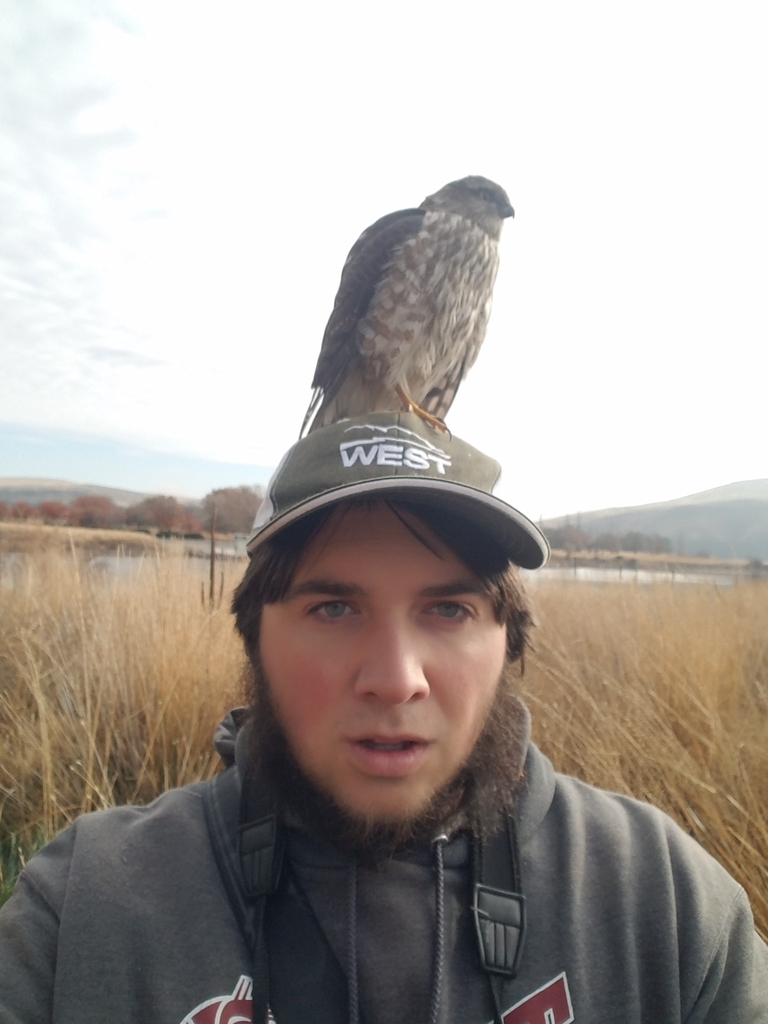
(c) RJ Baltierra, some rights reserved (CC BY) · licence
Family: Accipitridae · Class: Aves · Order: Accipitriformes
Conservation status: WL · G5 S4
Accipiter striatus (Sharp-shinned Hawk) is a California animal in the Accipitridae family.
The Sharp-shinned Hawk is the smallest accipiter in North America, with pronounced sexual dimorphism. Males measure 23-30 cm (9-12 inches) in length with a wingspan of 42-58 cm (17-23 inches), weighing 82-115 grams (2.9-4.1 ounces). Females are notably larger at 29-37 cm (11-15 inches) in length with a 58-68 cm (23-27 inches) wingspan, weighing 150-219 grams (5.3-7.7 ounces). Adults display blue-gray upperparts with rufous barring on white underparts. The tail is long and narrow with three to four dark bands and a white terminal band. Juveniles exhibit brown upperparts with heavy brown streaking on cream-colored underparts. The species is distinguished from the similar Cooper's Hawk by its smaller size, square-tipped tail, and proportionally shorter neck. Sharp-shinned Hawks breed across most of North America from Alaska to Central America. In California, they occur as year-round residents in mountainous regions and as migrants throughout the state. Breeding populations are concentrated in the Sierra Nevada, Cascade Range, and coastal mountains from Marin County north. During winter, populations increase substantially due to migration from northern breeding areas, with birds dispersing to lowland areas including urban and suburban environments. Breeding habitat consists primarily of dense coniferous and mixed forests, particularly those dominated by Douglas fir, ponderosa pine, and true firs. Nests are typically placed 3-18 meters (10-60 feet) above ground in dense canopy cover, often against the main trunk. The species shows preference for forest stands with 60-80% canopy closure. During migration and winter, Sharp-shinned Hawks utilize diverse habitats including riparian woodlands, parks, suburbs, and desert oases where prey is concentrated. Sharp-shinned Hawks are specialized bird hunters, with approximately 96% of their diet consisting of small songbirds. Primary prey includes sparrows, finches, warblers, and thrushes weighing 10-40 grams. Hunting occurs primarily through stealth and surprise attacks from concealed perches or during high-speed pursuits through vegetation. The breeding season extends from April through July, with females laying 3-5 bluish-white eggs marked with brown spots. Incubation lasts 30-35 days, performed primarily by the female while the male provides food. Nestlings fledge after 24-27 days but remain dependent on adults for an additional 4 weeks. The Sharp-shinned Hawk is classified as a Watch List species (WL) in California and maintains a global ranking of G5 (secure) and state ranking of S4 (apparently secure). According to North American Breeding Bird Survey data, continental populations have remained relatively stable since 1970, though regional variations exist. In California, the species faces threats from habitat fragmentation due to logging and urban development in montane forests. Window strikes during migration and pesticide accumulation through bioaccumulation in prey species pose additional concerns. Climate change may affect breeding habitat distribution at higher elevations, potentially shifting suitable nesting areas upward in elevation.
Classification
Class: Aves · Order: Accipitriformes · Family: Accipitridae
Conservation status
WL · G5 S4
Frequently asked questions
How is Accipiter striatus classified?
Accipiter striatus belongs to class Aves, order Accipitriformes, family Accipitridae.
What family does Accipiter striatus belong to?
Accipiter striatus is in the Accipitridae family.
Is Accipiter striatus protected or of conservation concern?
Accipiter striatus carries the following status: WL · G5 S4.
What is Accipiter striatus?
The Sharp-shinned Hawk is the smallest accipiter in North America, with pronounced sexual dimorphism.
Is Accipiter striatus found in California?
Yes. Accipiter striatus is recorded in California in The California Species Project's catalogue.
Related species
Other California species in the same genus, family, or bioregion.
Data from The California Species Project — 14,000+ California species with verified data from CNPS, CDFW, USFWS, and more.