Aceria boycei
Ragweed Gall Mite
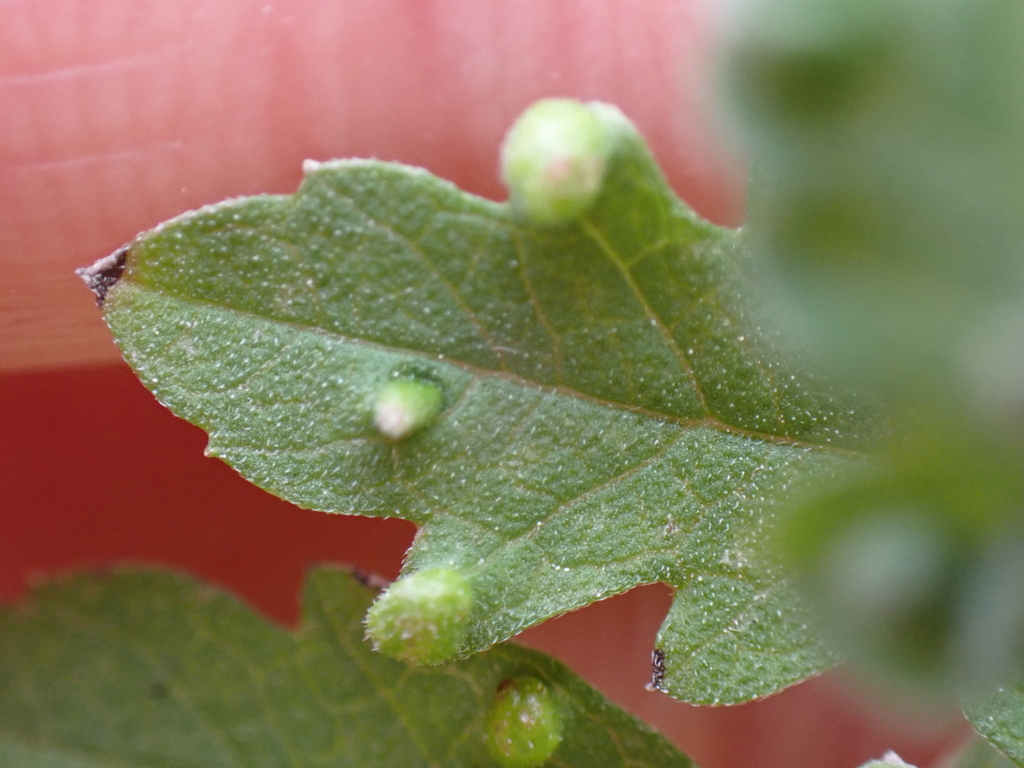
(c) Peter Burka, some rights reserved (CC BY-SA) · licence
Family: Eriophyidae · Class: Arachnida · Order: Trombidiformes
Aceria boycei (Ragweed Gall Mite) is a California animal in the Eriophyidae family.
The Ragweed Gall Mite (Aceria boycei) is a microscopic eriophyid mite in the family Eriophyidae, order Trombidiformes. Like other members of this family, these mites are extremely small, typically measuring 0.1 to 0.2 millimeters in length, and possess an elongated, vermiform body shape with only two pairs of legs located at the anterior end. The body is translucent to whitish in coloration and lacks the third and fourth pairs of legs found in most other mite groups. The current distribution and range of Aceria boycei in California remains poorly documented in the scientific literature. Eriophyid mites generally have restricted distributions closely tied to their specific host plants, suggesting this species likely occurs wherever suitable ragweed species are present within the state. However, detailed surveys documenting the precise geographic range of this mite have not been conducted or published in readily accessible sources. Aceria boycei inhabits galls that it creates on ragweed plants (Ambrosia species). These microscopic mites are obligate plant parasites that feed by inserting their needle-like mouthparts into plant cells and consuming the cellular contents. The feeding activity and possibly secreted chemicals cause abnormal plant tissue growth, resulting in the formation of characteristic galls that serve as both feeding sites and protective shelters for the mites. The specific microhabitat requirements beyond the host plant relationship have not been well documented. The species exhibits typical eriophyid mite biology, with multiple generations occurring per year during favorable conditions. Reproduction is primarily through sexual reproduction, though parthenogenesis may occur in some circumstances. Females deposit eggs within the galls, and development proceeds through egg, two larval stages, and adult phases. Population dynamics are closely linked to host plant phenology and environmental conditions. During winter or unfavorable periods, mites may enter diapause or seek overwintering sites in protected plant tissues. The conservation status of Aceria boycei has not been formally evaluated by federal or state agencies. This species does not appear on the U.S. Fish and Wildlife Service's Endangered Species Act listings, California's Species of Special Concern lists, or other formal conservation designations as of December 2025. The lack of conservation assessment likely reflects the limited scientific attention given to most eriophyid mites, which are often overlooked despite their ecological importance as herbivores and potential agricultural pests. Scientific documentation for this species remains extremely limited. The information presented here synthesizes available taxonomic and biological knowledge about eriophyid mites generally, as specific ecological studies of Aceria boycei appear to be lacking in the accessible literature. Many aspects of this species' biology, including detailed host plant relationships, distribution patterns, population trends, and potential threats, require further investigation. We welcome contributions of verified scientific data, photographs, or field observations to enhance this species account.
Classification
Class: Arachnida · Order: Trombidiformes · Family: Eriophyidae
Frequently asked questions
How is Aceria boycei classified?
Aceria boycei belongs to class Arachnida, order Trombidiformes, family Eriophyidae.
What family does Aceria boycei belong to?
Aceria boycei is in the Eriophyidae family.
What is Aceria boycei?
The Ragweed Gall Mite (Aceria boycei) is a microscopic eriophyid mite in the family Eriophyidae, order Trombidiformes.
Is Aceria boycei found in California?
Yes. Aceria boycei is recorded in California in The California Species Project's catalogue.
Related species
Other California species in the same genus, family, or bioregion.
Data from The California Species Project — 14,000+ California species with verified data from CNPS, CDFW, USFWS, and more.