Aceria erinea
Walnut Blister Mite
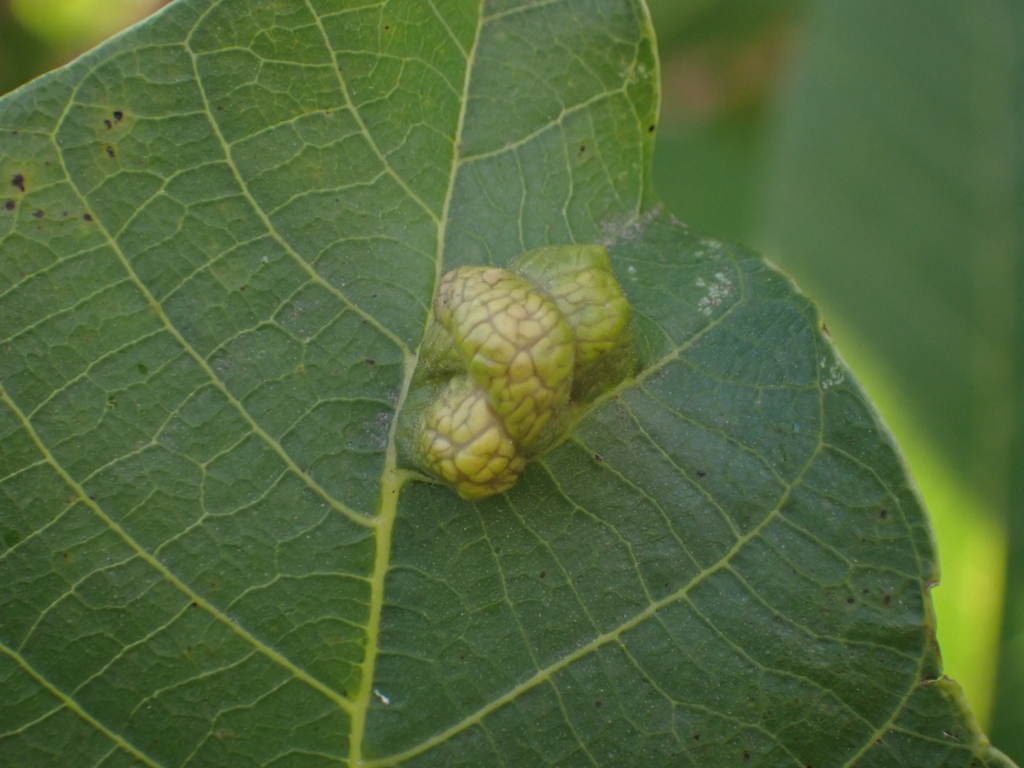
(c) SK53, some rights reserved (CC BY-SA) · licence
Family: Eriophyidae · Class: Arachnida · Order: Trombidiformes
Aceria erinea (Walnut Blister Mite) is a California animal in the Eriophyidae family.
The walnut blister mite (Aceria erinea) is a microscopic eriophyid mite belonging to the family Eriophyidae within the order Trombidiformes. Like all eriophyid mites, this species is extremely small, typically measuring less than 0.2 millimeters in length, making it virtually invisible to the naked eye. The elongated, worm-like body is characteristic of eriophyid mites, with only two pairs of legs located at the anterior end rather than the four pairs found in most other mites. The body is translucent to pale yellow in color. Aceria erinea is widely distributed across North America, including California, where it occurs wherever its host plants are present. The species has been documented throughout the United States and extends into southern Canada. In California, the mite is found in both natural and cultivated environments where walnut trees grow, including the Central Valley's extensive walnut orchards and foothill regions where native walnut species occur. This species is obligately associated with walnut trees (Juglans species), including English walnut (Juglans regia), black walnut (Juglans nigra), and California's native walnut species. The mites inhabit the undersurfaces of walnut leaves, where they feed by piercing plant cells and consuming cellular contents. They prefer areas with adequate moisture and protection from direct sunlight, typically colonizing the protected spaces between leaf veins and along the midrib. Walnut blister mites exhibit typical eriophyid biology, with multiple overlapping generations per year in favorable climates like California's. Adults overwinter in bark crevices, bud scales, and other protected locations on host trees. In spring, as new leaves emerge, mites migrate to fresh foliage to feed and reproduce. Females lay microscopic eggs on leaf surfaces, and development from egg to adult occurs rapidly under warm conditions, typically completing in 2-3 weeks. The species causes characteristic leaf galling or erineum formation, creating felt-like patches of abnormal plant tissue on the undersides of leaves where mites aggregate. These galls provide both food and shelter for developing mite populations. Aceria erinea is not listed under the federal Endangered Species Act or California's endangered species legislation, as it is considered a common agricultural pest rather than a conservation concern. The species is economically significant in walnut production regions, where heavy infestations can reduce photosynthetic capacity and overall tree health. Population levels fluctuate naturally based on weather conditions, with hot, dry summers typically reducing mite numbers while mild, humid conditions favor population growth. Natural predators including predatory mites, thrips, and lacewings help regulate populations. Management in commercial orchards typically involves monitoring programs and targeted miticide applications when economic thresholds are exceeded. The species faces no significant conservation threats and maintains stable populations throughout its range as of December 2025.
Classification
Class: Arachnida · Order: Trombidiformes · Family: Eriophyidae
Frequently asked questions
How is Aceria erinea classified?
Aceria erinea belongs to class Arachnida, order Trombidiformes, family Eriophyidae.
What family does Aceria erinea belong to?
Aceria erinea is in the Eriophyidae family.
What is Aceria erinea?
The walnut blister mite (Aceria erinea) is a microscopic eriophyid mite belonging to the family Eriophyidae within the order Trombidiformes.
Is Aceria erinea found in California?
Yes. Aceria erinea is recorded in California in The California Species Project's catalogue.
Related species
Other California species in the same genus, family, or bioregion.
Data from The California Species Project — 14,000+ California species with verified data from CNPS, CDFW, USFWS, and more.