Achyra occidentalis
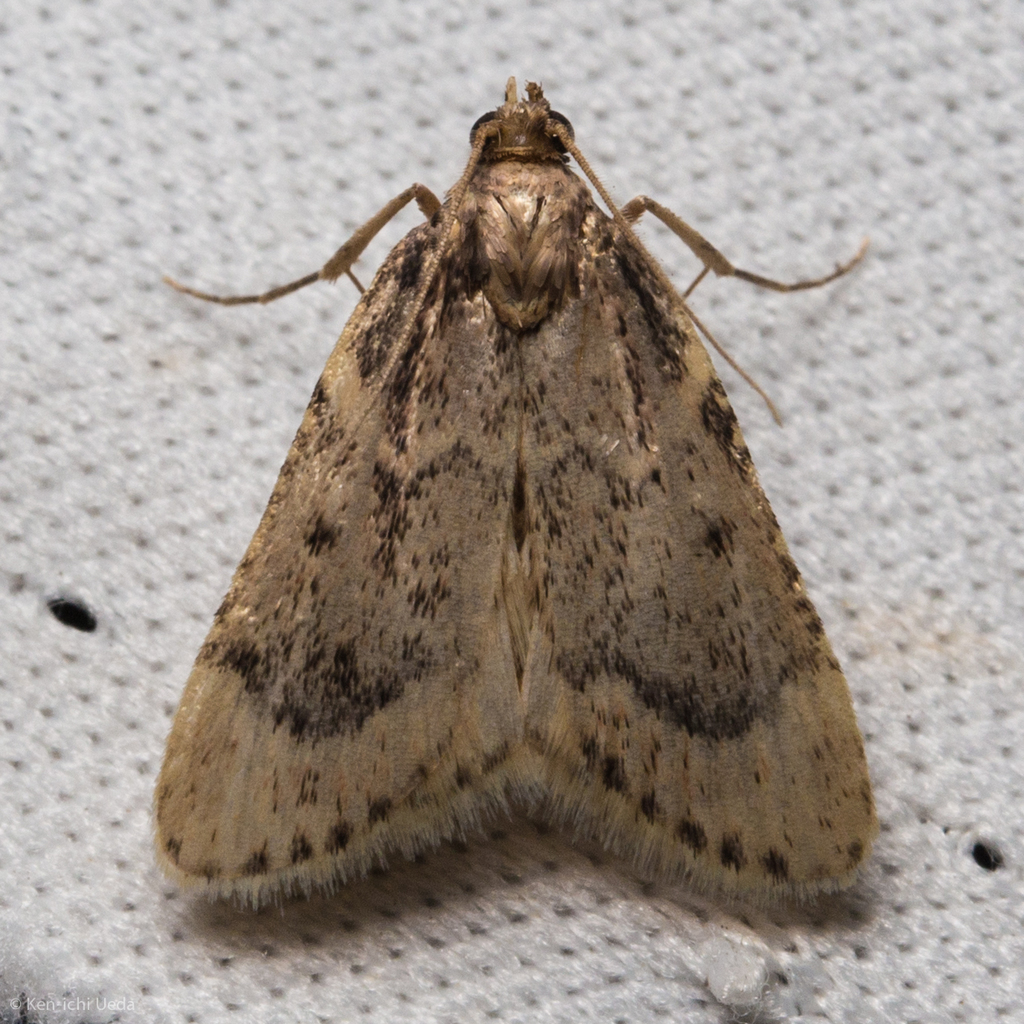
(c) Ken-ichi Ueda, some rights reserved (CC BY) · licence
Family: Crambidae · Class: Insecta · Order: Lepidoptera
Achyra occidentalis is a California animal in the Crambidae family.
Achyra occidentalis is a small moth in the family Crambidae, commonly known as grass moths or snout moths. This species belongs to a diverse group of pyraloid moths that includes many economically important agricultural pests, though the specific ecology and impact of A. occidentalis remains poorly documented in the scientific literature. Adult moths typically measure 15-25 mm in wingspan, displaying the characteristic features of the Crambidae family. The forewings are generally pale brown to tan with darker markings, while the hindwings are lighter in coloration. Like other members of the genus Achyra, this species likely exhibits sexual dimorphism, with males having more prominent antennae and slightly smaller body size compared to females. The labial palps extend forward from the head, giving the moth a snout-like appearance typical of this family. The range of Achyra occidentalis encompasses western North America, as suggested by its specific epithet 'occidentalis' meaning 'western.' However, detailed distribution records for this species are limited in the available literature. The species likely occurs in suitable habitat throughout California, though specific county records and elevational ranges have not been comprehensively documented. Habitat preferences for A. occidentalis remain largely unstudied, though related species in the genus Achyra typically inhabit areas with herbaceous vegetation and grasses. Many Crambidae species are associated with grasslands, agricultural areas, and disturbed habitats where their larval host plants are abundant. The species likely occurs from sea level to moderate elevations, following the distribution of suitable vegetation communities. The life cycle of Achyra occidentalis follows the typical lepidopteran pattern of complete metamorphosis, though specific details about timing and duration remain undocumented. Larvae of related Achyra species are known to feed on various herbaceous plants, often creating silk-lined shelters or feeding within rolled leaves. Adult moths are likely active during warmer months, with peak activity possibly occurring in late spring through early fall. Mating behavior, reproductive output, and overwintering strategies for this species have not been specifically studied. The conservation status of Achyra occidentalis is currently unknown, as the species lacks formal federal or state listing status. The absence of comprehensive population data or threat assessments makes it difficult to evaluate conservation needs. Like many small moth species, A. occidentalis may face threats from habitat loss due to urbanization and agricultural intensification, pesticide use, and climate change effects on host plant distributions. However, without baseline ecological data, the actual impact of these potential threats cannot be assessed. Further research is needed to understand the distribution, ecology, and conservation requirements of this western North American moth species.
Classification
Class: Insecta · Order: Lepidoptera · Family: Crambidae
Frequently asked questions
How is Achyra occidentalis classified?
Achyra occidentalis belongs to class Insecta, order Lepidoptera, family Crambidae.
What family does Achyra occidentalis belong to?
Achyra occidentalis is in the Crambidae family.
What is Achyra occidentalis?
Achyra occidentalis is a small moth in the family Crambidae, commonly known as grass moths or snout moths.
Is Achyra occidentalis found in California?
Yes. Achyra occidentalis is recorded in California in The California Species Project's catalogue.
Related species
Other California species in the same genus, family, or bioregion.
Data from The California Species Project — 14,000+ California species with verified data from CNPS, CDFW, USFWS, and more.