Aciurina bigeloviae
Cotton-gall Tephritid
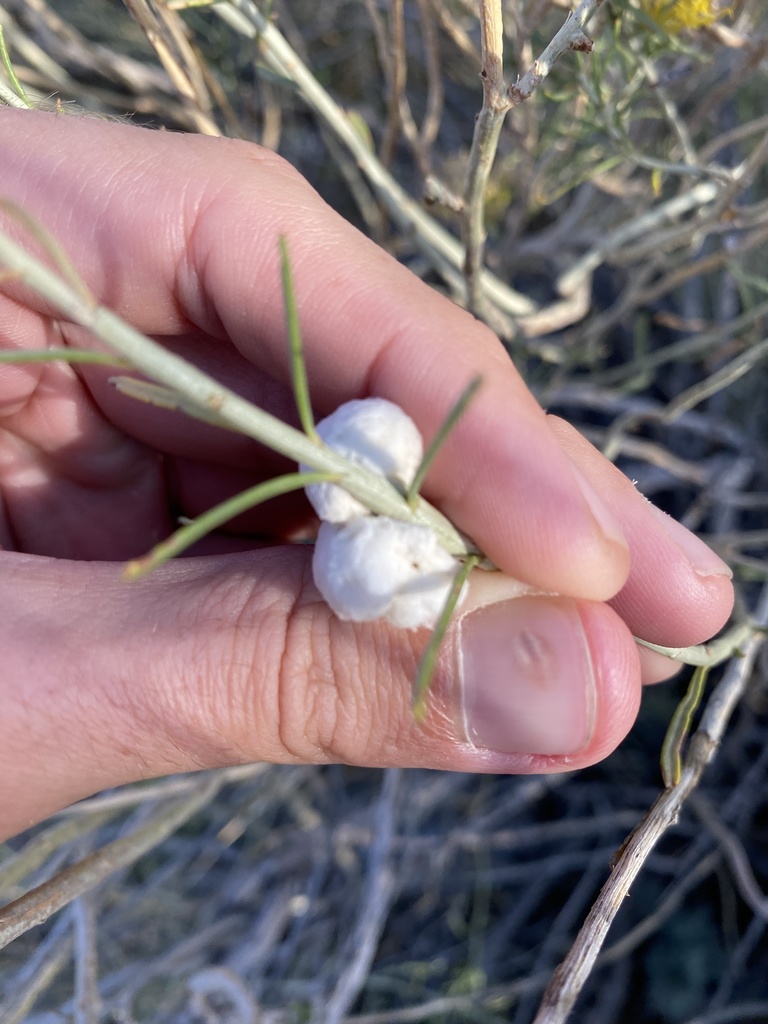
(c) Elliott Gordon, some rights reserved (CC BY) · licence
Family: Tephritidae · Class: Insecta · Order: Diptera
Aciurina bigeloviae (Cotton-gall Tephritid) is a California animal in the Tephritidae family.
Aciurina bigeloviae is a species of fruit fly in the family Tephritidae, commonly known as the Cotton-gall Tephritid. This species belongs to a genus of flies that typically form galls on various plant hosts, though specific morphological details for A. bigeloviae have not been comprehensively documented in the scientific literature. The species is found in North America, though its precise distribution range within California and other western states remains poorly documented. Aciurina species are generally associated with arid and semi-arid regions where their host plants occur. The limited available records suggest this species may be present in desert and chaparral habitats typical of southwestern North America. Aciurina bigeloviae appears to be associated with plants in the sunflower family (Asteraceae), following the pattern of related species in the genus. The common name "Cotton-gall Tephritid" suggests this species may form distinctive gall structures on its host plants, similar to other members of the genus Aciurina. These galls typically serve as both feeding sites and developmental chambers for the immature flies. However, specific host plant relationships and gall morphology for A. bigeloviae have not been definitively characterized in published studies. Like other tephritid flies, A. bigeloviae likely follows a holometabolous life cycle with egg, larval, pupal, and adult stages. Adult females presumably oviposit into plant tissues, with larvae developing within the resulting galls. The timing of adult emergence and reproductive activity has not been documented for this species, though related Aciurina species often show seasonal patterns tied to host plant phenology. Adult flies likely feed on plant secretions, nectar, or other organic matter, while larvae develop by consuming gall tissue. The conservation status of Aciurina bigeloviae has not been formally assessed at federal or state levels. According to NatureServe Explorer, the species has no listing under the U.S. Endangered Species Act or other formal conservation designations as of December 2025. The lack of comprehensive distributional data and ecological studies makes it difficult to evaluate population trends or potential threats to this species. Many insects, particularly specialized gall-forming species, face habitat loss due to development and changes in land use patterns affecting their host plants. Scientific documentation for this species remains extremely limited. The information presented here synthesizes available data from taxonomic databases and observations of related species within the genus. Detailed studies of A. bigeloviae's distribution, host plant relationships, life history, and ecological requirements are needed to better understand this species' biology and conservation needs. Field surveys in potential habitat areas could help clarify the species' current range and population status in California and other western states.
Classification
Class: Insecta · Order: Diptera · Family: Tephritidae
Frequently asked questions
How is Aciurina bigeloviae classified?
Aciurina bigeloviae belongs to class Insecta, order Diptera, family Tephritidae.
What family does Aciurina bigeloviae belong to?
Aciurina bigeloviae is in the Tephritidae family.
What is Aciurina bigeloviae?
Aciurina bigeloviae is a species of fruit fly in the family Tephritidae, commonly known as the Cotton-gall Tephritid.
Is Aciurina bigeloviae found in California?
Yes. Aciurina bigeloviae is recorded in California in The California Species Project's catalogue.
Related species
Other California species in the same genus, family, or bioregion.
Data from The California Species Project — 14,000+ California species with verified data from CNPS, CDFW, USFWS, and more.