Acleris gloveranus
Western Blackheaded Budworm
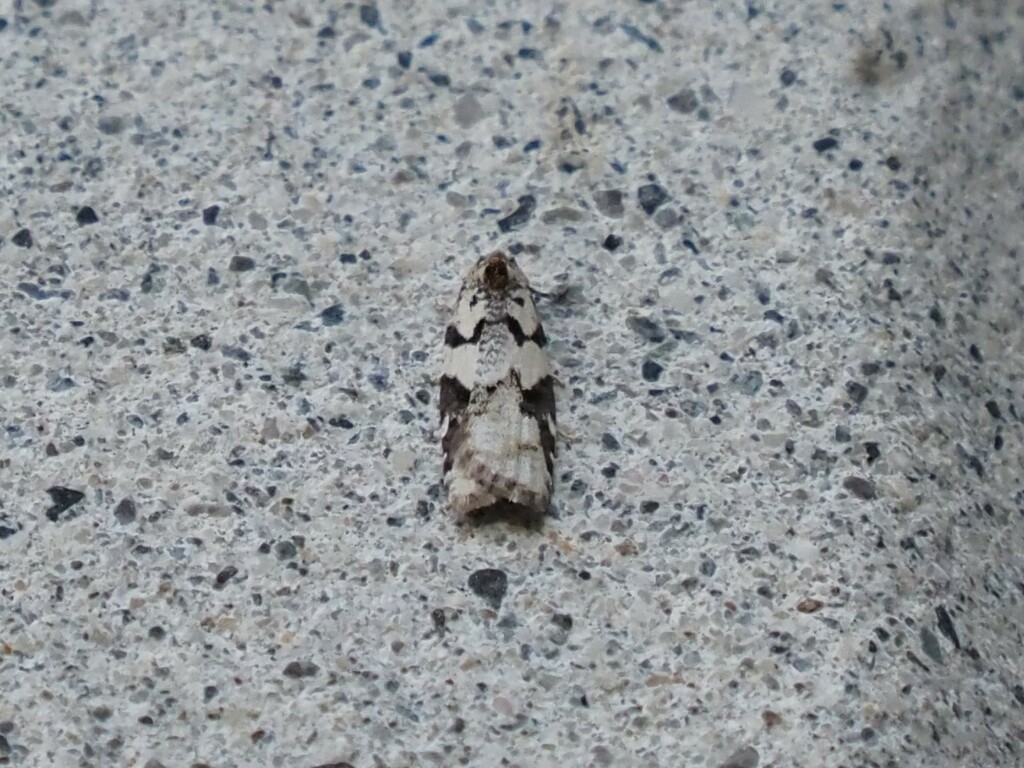
(c) Matt Muir, some rights reserved (CC BY) · licence
Family: Tortricidae · Class: Insecta · Order: Lepidoptera
Acleris gloveranus (Western Blackheaded Budworm) is a California animal in the Tortricidae family.
The Western Blackheaded Budworm is a small moth in the family Tortricidae, designated as Hodges species #3547. Adults are characterized by their distinctive wing patterns and coloration, though detailed morphological descriptions require examination of specimens. The species exhibits sexual dimorphism typical of tortricid moths, with variations in wing markings and size between males and females. This species occurs across the Pacific Northwest extending south to Arizona (Moth Photographers Group). Within this range, Acleris gloveranus inhabits coniferous forest ecosystems from sea level to montane elevations. The species has been documented in various western states including California, where it is associated with mixed coniferous forests. Specific records exist from locations such as the Jemez Mountains of New Mexico, where it has been collected as an associate of spruce budworm infestations (Stevens 1983). Western Blackheaded Budworm larvae feed exclusively on conifers in the family Pinaceae, utilizing multiple host genera including Abies (firs), Larix (larches), Picea (spruces), Pseudotsuga (Douglas-fir), and Tsuga (hemlocks) (Moth Photographers Group). Larvae initially feed on buds before transitioning to needle consumption as they develop (Bragard et al. 2019). This feeding pattern is characteristic of many tortricid budworms that exploit the new growth of coniferous trees. The species exhibits a univoltine life cycle typical of high-elevation tortricids. Adults are active during summer months when they mate and oviposit on host trees. Larvae overwinter in a partially developed state, resuming feeding and development the following spring when new coniferous growth becomes available. The timing of adult emergence appears synchronized with optimal conditions for larval establishment on fresh coniferous foliage. As a budworm species, A. gloveranus can occasionally reach outbreak densities in suitable forest habitats, though such events are typically localized and irregular. Currently, Acleris gloveranus holds no federal or state conservation listing status. The species appears to maintain stable populations throughout its range, benefiting from the extensive coniferous forests of western North America. However, like many forest-dependent insects, it faces potential threats from climate change, altered fire regimes, and forest management practices that could affect host tree availability and quality. The species' dependence on old-growth and mature coniferous forests may make certain populations vulnerable to intensive logging activities. Additionally, changing precipitation patterns and temperature regimes associated with climate change could alter the distribution and phenology of both the moth and its host trees. Despite these potential concerns, no specific conservation measures are currently in place for this species, and it is not considered at immediate risk of population decline across its range.
Classification
Class: Insecta · Order: Lepidoptera · Family: Tortricidae
Frequently asked questions
How is Acleris gloveranus classified?
Acleris gloveranus belongs to class Insecta, order Lepidoptera, family Tortricidae.
What family does Acleris gloveranus belong to?
Acleris gloveranus is in the Tortricidae family.
What is Acleris gloveranus?
The Western Blackheaded Budworm is a small moth in the family Tortricidae, designated as Hodges species #3547.
Is Acleris gloveranus found in California?
Yes. Acleris gloveranus is recorded in California in The California Species Project's catalogue.
Related species
Other California species in the same genus, family, or bioregion.
Data from The California Species Project — 14,000+ California species with verified data from CNPS, CDFW, USFWS, and more.