Acleris senescens
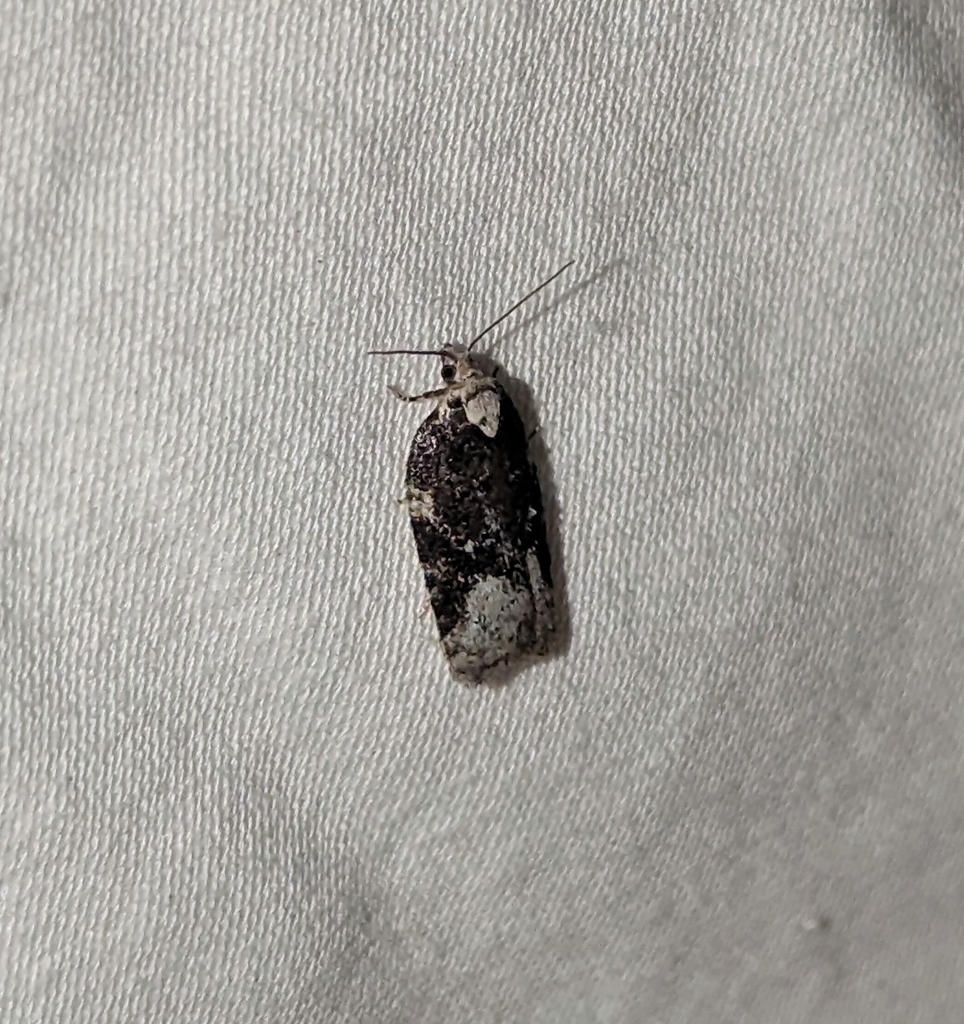
no rights reserved · CC0
Family: Tortricidae · Class: Insecta · Order: Lepidoptera
Acleris senescens is a California animal in the Tortricidae family.
Acleris senescens is a small moth in the family Tortricidae, commonly known as leafroller moths. This species belongs to a diverse genus of microlepidoptera found primarily in temperate regions of North America. Adults typically measure 8 to 12 mm in forewing length, with forewings displaying a mottled pattern of brown, gray, and cream coloration that provides effective camouflage against tree bark and dried vegetation. The hindwings are generally pale gray to white with reduced markings. Like other Acleris species, the forewings at rest are held in a characteristic bell-shaped or triangular configuration over the body. The range and distribution of Acleris senescens remains poorly documented in the scientific literature. Limited collection records suggest the species may occur in western North America, potentially including California, though comprehensive surveys are needed to establish precise geographic boundaries. The species appears to have a restricted distribution compared to more widespread Acleris moths, which may contribute to its taxonomic obscurity. Habitat preferences for A. senescens are not well-established due to limited ecological study. Based on the habitat requirements of closely related Acleris species, this moth likely inhabits forested areas, woodland edges, or shrubland communities where suitable host plants occur. Many tortricid moths in this genus are associated with deciduous trees and shrubs, suggesting A. senescens may occupy similar ecological niches. The larval ecology and host plant associations of Acleris senescens remain largely unknown. Tortricid larvae are typically leaf-tiers or leaf-rollers, creating silk shelters within folded or rolled leaves where they feed and develop. The larvae likely undergo four to five instars before pupating, either within the larval shelter or in leaf litter. Adult flight periods are undocumented for this species, though many Acleris moths are univoltine with adults emerging in late spring or early summer. Reproductive behavior follows typical tortricid patterns, with females likely releasing pheromones to attract males for mating. Eggs are presumably deposited on or near host plant foliage, though specific oviposition behaviors have not been recorded. The complete life cycle duration and overwintering stage remain uncharacterized. Acleris senescens lacks formal conservation status designations at federal, state, or global levels. The species is not listed under the Endangered Species Act or California Endangered Species Act as of December 2025. Population trends, abundance, and conservation needs are unknown due to insufficient survey data and taxonomic research. The apparent rarity of collection records may indicate either genuine scarcity or simply inadequate sampling of microlepidoptera fauna. Many small moth species remain understudied, and A. senescens exemplifies the knowledge gaps that exist for North American tortricid diversity. Comprehensive surveys targeting microlepidoptera communities would be valuable for assessing the conservation status and ecological requirements of this and other poorly known species.
Classification
Class: Insecta · Order: Lepidoptera · Family: Tortricidae
Frequently asked questions
How is Acleris senescens classified?
Acleris senescens belongs to class Insecta, order Lepidoptera, family Tortricidae.
What family does Acleris senescens belong to?
Acleris senescens is in the Tortricidae family.
What is Acleris senescens?
Acleris senescens is a small moth in the family Tortricidae, commonly known as leafroller moths.
Is Acleris senescens found in California?
Yes. Acleris senescens is recorded in California in The California Species Project's catalogue.
Related species
Other California species in the same genus, family, or bioregion.
Data from The California Species Project — 14,000+ California species with verified data from CNPS, CDFW, USFWS, and more.