Acontia lucasi
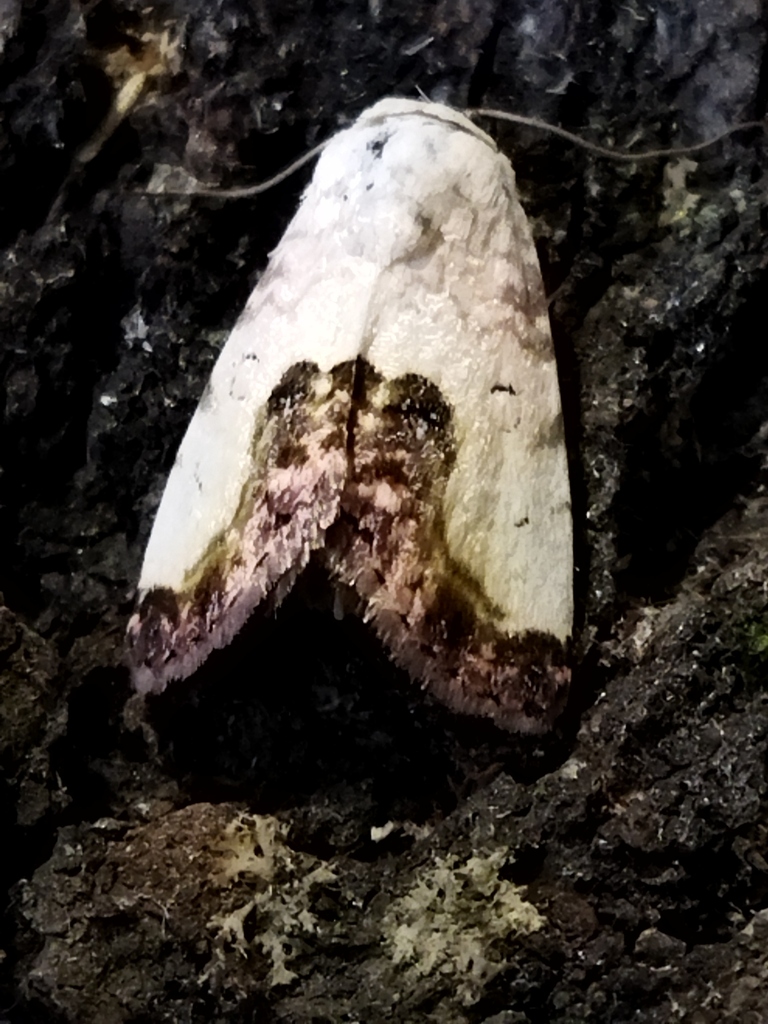
(c) SteveM4560, some rights reserved (CC BY) · licence
Family: Noctuidae · Class: Insecta · Order: Lepidoptera
Acontia lucasi is a California animal in the Noctuidae family.
Acontia lucasi is a small moth in the family Noctuidae, subfamily Acontiinae, commonly known as bird dropping moths. Adults display the characteristic wing pattern of the genus Acontia, with forewings featuring a distinctive mix of blackish and white patches. The blackish coloration typically appears distally and along the inner margin, while white patches are usually positioned basally and along the costa. The hindwings are often whitish but may appear grayish to blackish, particularly toward the outer margin, and frequently display pale fringes. This species occurs in the southwestern United States, with documented records from Arizona and California (Butterflies and Moths of North America). In Arizona, the species has been recorded from multiple counties including Apache County, where specimens were collected at elevations around 6,400 feet near Lupton along Highway 12 on the Navajo Reservation (News of the Lepidopterists' Society 2010). The species appears to have a relatively limited distribution within its southwestern range. Acontia lucasi inhabits arid and semi-arid environments typical of the southwestern United States. Based on collection records, the species occurs at moderate elevations, with documented captures at approximately 6,400 feet in Arizona. The moth appears to favor areas with desert scrub and grassland vegetation communities, though specific microhabitat preferences have not been thoroughly documented in the scientific literature. Like other members of the genus Acontia, A. lucasi exhibits the characteristic quick, darting flight behavior that inspired the generic name, which derives from the Greek word for "dart snake" (BugGuide.Net). The species is primarily active during warmer months, with Arizona records indicating activity from late July through early August. Specific host plants and larval ecology for this species remain poorly documented, though related Acontia species typically feed on herbaceous plants in desert and semi-arid environments. Acontia lucasi currently lacks formal conservation status designations at federal or state levels. The species appears to be naturally uncommon throughout its range, with relatively few documented records in the lepidopterological literature. Collection records suggest the species may be locally distributed within suitable habitat, though comprehensive population assessments have not been conducted. The limited distribution in southwestern desert regions may make the species vulnerable to habitat modification and climate change impacts, particularly given the specialized nature of desert ecosystems. However, without detailed population studies or trend data, the conservation needs of this species remain unclear. Scientific documentation for Acontia lucasi remains limited compared to more common moth species. Additional research is needed to better understand the species' complete distribution, host plant relationships, and ecological requirements. Field surveys in suitable habitat throughout the southwestern United States would help clarify the species' range and abundance patterns.
Classification
Class: Insecta · Order: Lepidoptera · Family: Noctuidae
Frequently asked questions
How is Acontia lucasi classified?
Acontia lucasi belongs to class Insecta, order Lepidoptera, family Noctuidae.
What family does Acontia lucasi belong to?
Acontia lucasi is in the Noctuidae family.
What is Acontia lucasi?
Acontia lucasi is a small moth in the family Noctuidae, subfamily Acontiinae, commonly known as bird dropping moths.
Is Acontia lucasi found in California?
Yes. Acontia lucasi is recorded in California in The California Species Project's catalogue.
Related species
Other California species in the same genus, family, or bioregion.
Data from The California Species Project — 14,000+ California species with verified data from CNPS, CDFW, USFWS, and more.