Acrobasis comptella
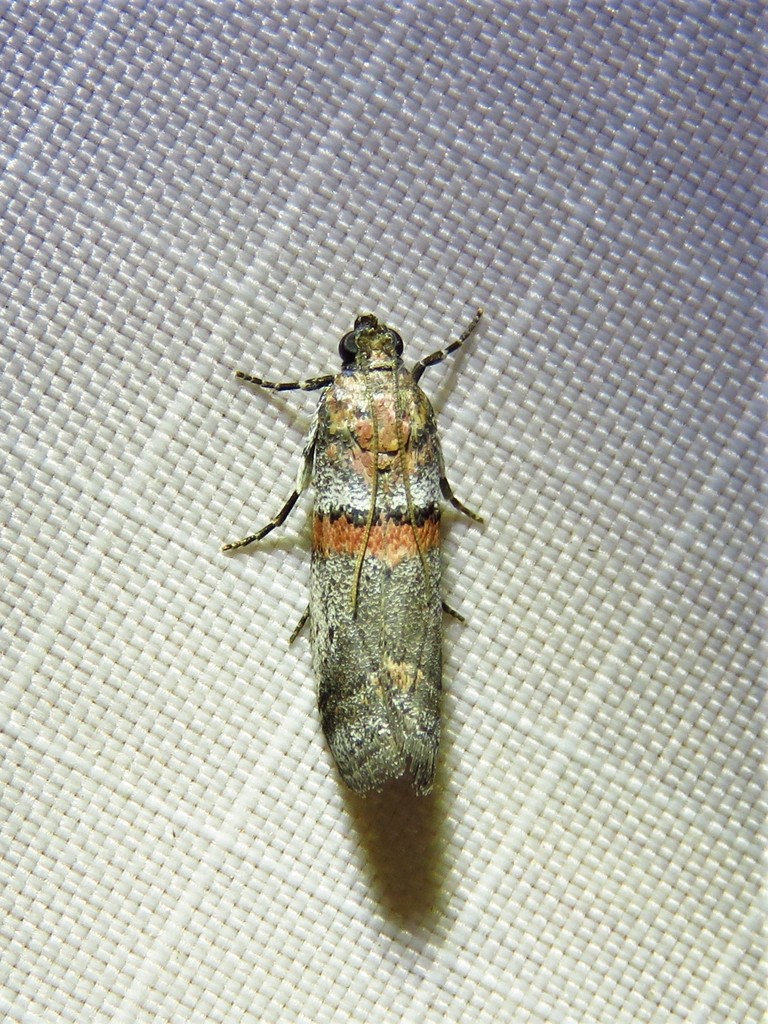
(c) Annika Lindqvist, some rights reserved (CC BY) · licence
Family: Pyralidae · Class: Insecta · Order: Lepidoptera
Acrobasis comptella is a California animal in the Pyralidae family.
Acrobasis comptella is a small moth in the family Pyralidae, commonly known as a leaf-rolling or stem-boring moth. Adults typically measure 12-15 mm in wingspan, with forewings displaying a mottled brown and gray pattern that provides effective camouflage against tree bark. The forewings feature darker crosslines and pale spots, while the hindwings are uniformly pale gray-brown. The head and thorax are covered in brownish scales, and the antennae are thread-like in both sexes. This species has a broad distribution across North America, including documented occurrences in California. The moth is found throughout much of the United States and southern Canada, with California populations representing the western extent of its range. Within California, records suggest presence in both coastal and inland regions, though specific county-level distribution data requires further documentation. Acrobasis comptella inhabits deciduous and mixed forests where its host plants occur. The species shows a preference for areas with oak woodlands, riparian forests, and urban landscapes with suitable tree species. Adults are typically found from sea level to moderate elevations, though specific elevation ranges in California have not been thoroughly documented. The species appears to tolerate various moisture conditions and can persist in both natural and moderately disturbed habitats. The larvae of Acrobasis comptella are leaf-rollers and stem borers, feeding primarily on deciduous trees and shrubs. Host plants include various oak species (Quercus spp.), willow (Salix spp.), and other broadleaf trees. Larvae construct shelters by rolling leaves or boring into stems and twigs, where they feed on plant tissues. The species is univoltine in most regions, with adults emerging in late spring to early summer, typically from May through July. Females deposit eggs on host plant foliage, and larvae develop through five instars before pupating within their feeding shelters or in soil debris. The flight period extends from late spring through mid-summer, with peak activity occurring in June and July. Adults are primarily nocturnal and are attracted to artificial lights. Mating occurs shortly after emergence, and the species overwinters as pupae in the soil or plant debris. Acrobasis comptella is not currently listed under federal or state endangered species legislation and appears to maintain stable populations throughout its range. The species benefits from the widespread distribution of its host plants and demonstrates adaptability to various habitat conditions. In California, the moth may face localized pressures from habitat conversion and urbanization, particularly in areas where oak woodlands are being developed. However, the species' broad host plant range and apparent ecological flexibility suggest it is not currently at significant conservation risk. Climate change impacts on oak ecosystems could potentially affect future populations, but current population trends indicate the species remains secure across its California range.
Classification
Class: Insecta · Order: Lepidoptera · Family: Pyralidae
Frequently asked questions
How is Acrobasis comptella classified?
Acrobasis comptella belongs to class Insecta, order Lepidoptera, family Pyralidae.
What family does Acrobasis comptella belong to?
Acrobasis comptella is in the Pyralidae family.
What is Acrobasis comptella?
Acrobasis comptella is a small moth in the family Pyralidae, commonly known as a leaf-rolling or stem-boring moth.
Is Acrobasis comptella found in California?
Yes. Acrobasis comptella is recorded in California in The California Species Project's catalogue.
Related species
Other California species in the same genus, family, or bioregion.
Data from The California Species Project — 14,000+ California species with verified data from CNPS, CDFW, USFWS, and more.