Acrobasis tricolorella
Destructive Pruneworm Moth
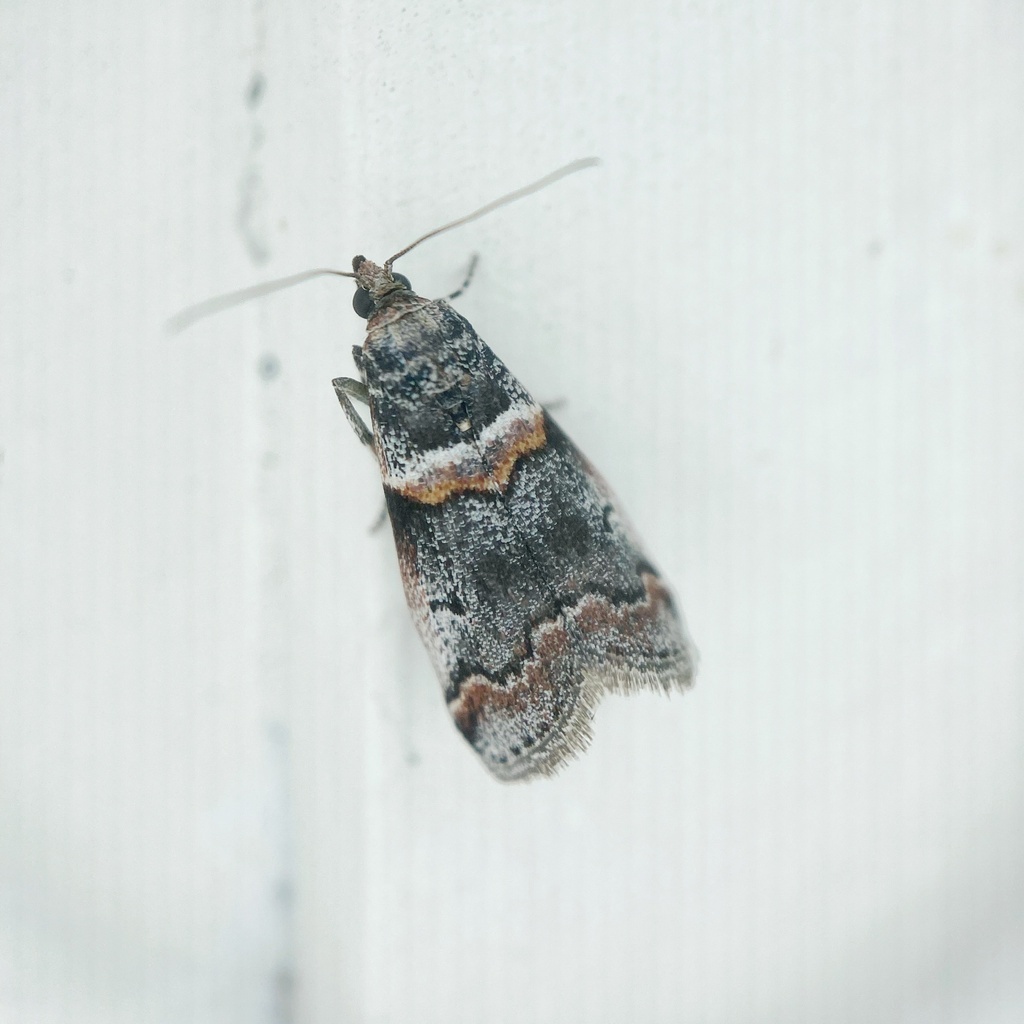
(c) Nathan Odgers, some rights reserved (CC BY) · licence
Family: Pyralidae · Class: Insecta · Order: Lepidoptera
Acrobasis tricolorella (Destructive Pruneworm Moth) is a California animal in the Pyralidae family.
The Destructive Pruneworm Moth (Acrobasis tricolorella) is a small pyralid moth in the snout moth family. Adults display mottled forewings with a characteristic tricolored pattern of brown, tan, and darker markings that give the species its alternate common name, Tricolored Acrobasis Moth. The wingspan typically measures 15-20 mm, with the forewings showing distinct banding patterns and the hindwings appearing pale gray to whitish. The moth's labial palps project forward in the typical snout moth configuration. This species occurs across southern Canada and the northern United States, with its western range extending through mountainous regions (BugGuide). In North America, the moth has been documented from coast to coast, though specific distribution data for California populations remains limited. The species was originally described by Augustus Radcliffe Grote in 1878. Destructive Pruneworm Moths inhabit areas where their larval host plants are present, primarily associated with stone fruit trees and related Rosaceae species. The larvae are known to be particularly destructive to cultivated prunes, plums, and other Prunus species, boring into the fruit and causing significant agricultural damage. Adults are typically found in orchards, wild cherry stands, and mixed deciduous forests where suitable host plants occur. The larvae are the economically significant life stage, earning the species its common name through their feeding behavior. Caterpillars bore into developing fruits of stone fruit trees, creating tunnels and galleries that render the fruit unmarketable. The species typically produces one generation per year, with adults emerging in late spring to early summer. Females lay eggs on or near host fruit, and the resulting larvae feed within the fruit throughout the growing season. Overwintering likely occurs in the larval or pupal stage, though specific details of the life cycle timing have not been thoroughly documented in the scientific literature. The Destructive Pruneworm Moth currently has no formal conservation status at state or federal levels. NatureServe has not assigned a global conservation rank to this species, indicating it is not currently assessed as threatened or endangered (Grokipedia). In Massachusetts, automated assessments classify the species as having a restricted distribution and being rare, though it carries no official endangered species protection (Mass Moths). The species' primary conservation concern relates to its status as an agricultural pest rather than population decline. Integrated pest management strategies in commercial orchards may impact local populations, but the species' broad North American range suggests overall population stability. Climate change and habitat modification could potentially affect future distribution patterns, particularly at range margins, but specific population trend data is not currently available for this species.
Classification
Class: Insecta · Order: Lepidoptera · Family: Pyralidae
Frequently asked questions
How is Acrobasis tricolorella classified?
Acrobasis tricolorella belongs to class Insecta, order Lepidoptera, family Pyralidae.
What family does Acrobasis tricolorella belong to?
Acrobasis tricolorella is in the Pyralidae family.
What is Acrobasis tricolorella?
The Destructive Pruneworm Moth (Acrobasis tricolorella) is a small pyralid moth in the snout moth family.
Is Acrobasis tricolorella found in California?
Yes. Acrobasis tricolorella is recorded in California in The California Species Project's catalogue.
Related species
Other California species in the same genus, family, or bioregion.
Data from The California Species Project — 14,000+ California species with verified data from CNPS, CDFW, USFWS, and more.