Acrocephalus luscinia
Nightingale reed warbler (old world warbler)
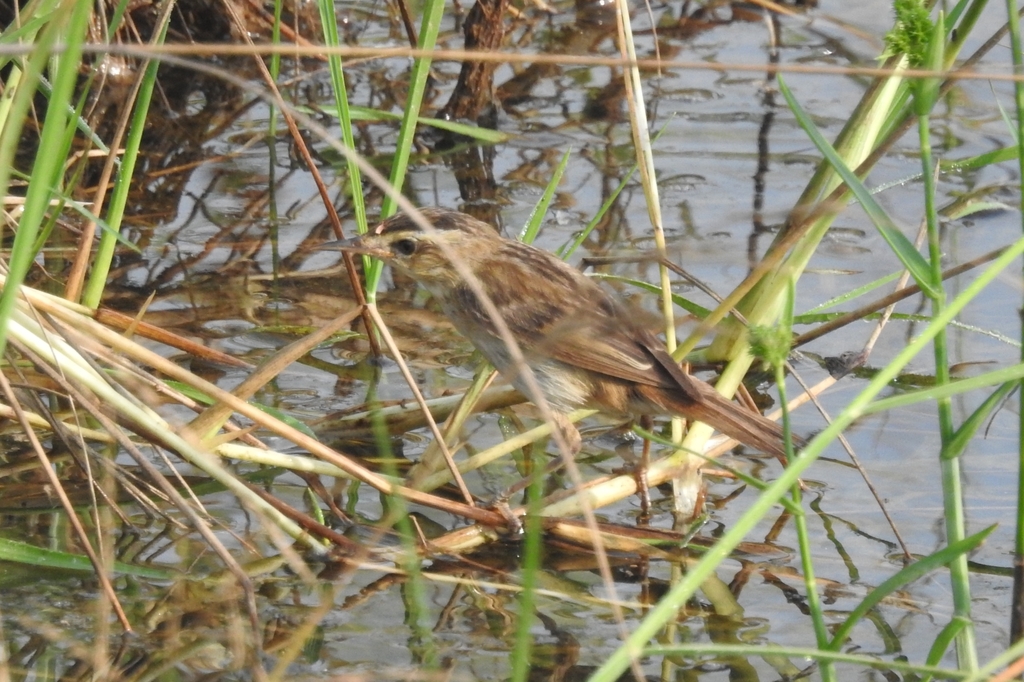
(c) Manoj Karingamadathil, some rights reserved (CC BY-SA) · licence
Family: Acrocephalidae · Class: Aves · Order: Passeriformes
Conservation status: Endangered
Acrocephalus luscinia (Nightingale reed warbler (old world warbler)) is a California animal in the Acrocephalidae family.
The nightingale reed warbler is a small passerine bird endemic to the Mariana Islands in Micronesia. This endangered old world warbler belongs to the genus Acrocephalus, which comprises primarily marsh and wetland-dwelling species. Adults measure approximately 15-16 centimeters (5.9-6.3 inches) in length with a slender build typical of reed warblers. The species displays brownish upperparts with lighter, buff-colored underparts and a relatively long, pointed bill adapted for insectivorous feeding. Historically, the nightingale reed warbler occurred throughout the Mariana Islands archipelago. Currently, the species is restricted to a few islands within this Pacific island chain, including confirmed populations on Alamagan and Aguiguan islands. According to recovery documentation, the species also occurs rarely in limestone forest habitats on Saipan (USFWS 1998). The dramatic range contraction represents a significant reduction from the species' historical distribution across the island group. The nightingale reed warbler inhabits native forest ecosystems, particularly favoring dense understory vegetation within mature forest stands. On Alamagan and Aguiguan, the species shares forest habitat with the endangered Micronesian megapode. The warbler shows preference for areas with substantial canopy cover and dense shrub layers that provide both foraging opportunities and nesting sites. Limestone forest habitats on Saipan represent marginal habitat where the species occurs only occasionally. As an insectivorous species, the nightingale reed warbler forages primarily for small arthropods, including insects and spiders, gleaning prey from foliage and bark surfaces. The species exhibits typical warbler behavior, moving actively through vegetation while searching for food. Breeding biology remains poorly documented, though like other Acrocephalus species, the nightingale reed warbler likely constructs cup-shaped nests in dense vegetation. Seasonal movements and detailed reproductive cycles require further scientific study. The U.S. Fish and Wildlife Service listed the nightingale reed warbler as endangered on June 2, 1970, with the designation applying wherever the species is found. A recovery plan was finalized on April 10, 1998, outlining conservation strategies and recovery objectives. Federal expenditure reports from the late 1990s and 2000s document ongoing conservation investments, with annual federal spending ranging from $8,000 to $78,000 for species recovery efforts. According to the most recent recovery assessments, the population trend was classified as declining as of 2010. Primary threats to the nightingale reed warbler include habitat loss and degradation from human development, invasive plant species that alter forest structure, and predation by introduced mammals. The species' restriction to small island populations makes it particularly vulnerable to stochastic events such as typhoons, which can devastate limited habitat areas. Climate change poses additional long-term threats through sea level rise and altered precipitation patterns affecting forest ecosystems. Conservation efforts focus on habitat protection, invasive species control, and monitoring of remaining populations to prevent further decline toward extinction.
Classification
Class: Aves · Order: Passeriformes · Family: Acrocephalidae
Conservation status
Endangered
Frequently asked questions
How is Acrocephalus luscinia classified?
Acrocephalus luscinia belongs to class Aves, order Passeriformes, family Acrocephalidae.
What family does Acrocephalus luscinia belong to?
Acrocephalus luscinia is in the Acrocephalidae family.
Is Acrocephalus luscinia protected or of conservation concern?
Acrocephalus luscinia carries the following status: Endangered.
What is Acrocephalus luscinia?
The nightingale reed warbler is a small passerine bird endemic to the Mariana Islands in Micronesia.
Is Acrocephalus luscinia found in California?
Yes. Acrocephalus luscinia is recorded in California in The California Species Project's catalogue.
More California species
This species has no close relatives in our California data — here are other species to explore.
Data from The California Species Project — 14,000+ California species with verified data from CNPS, CDFW, USFWS, and more.