Acrolophus pyramellus
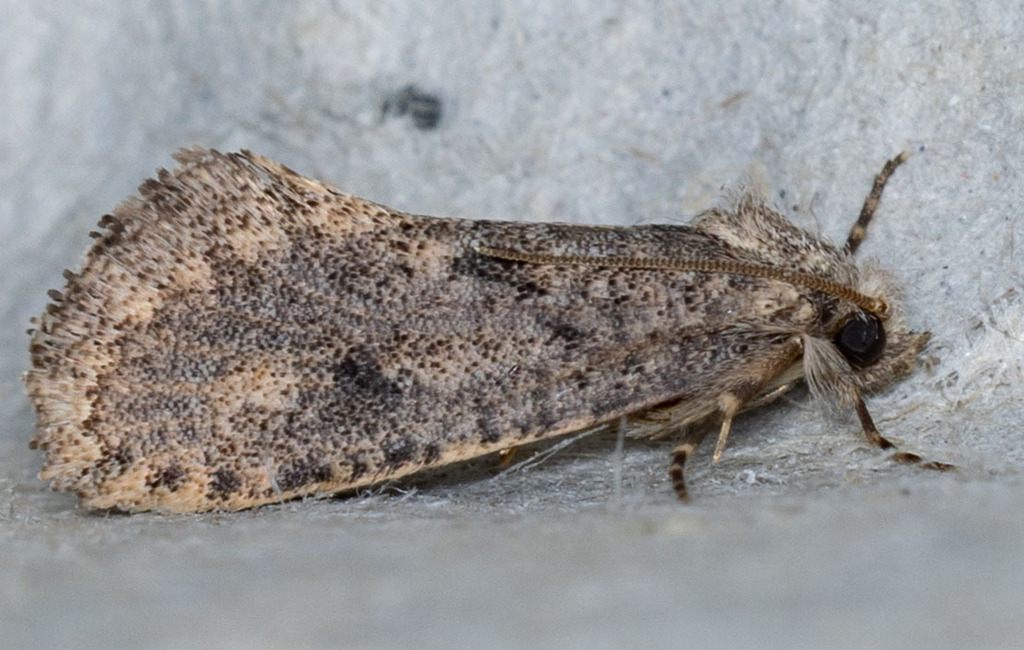
(c) Pinnacles National Park, some rights reserved (CC BY) · licence
Family: Tineidae · Class: Insecta · Order: Lepidoptera
Acrolophus pyramellus is a California animal in the Tineidae family.
Acrolophus pyramellus is a small moth in the family Tineidae, a group commonly known as fungus moths or tineid moths. This species belongs to the genus Acrolophus, which comprises moths whose larvae typically develop in organic debris, fungi, or decaying plant material. The adult moths are characterized by narrow forewings and relatively simple wing patterns typical of the family Tineidae. Physical description information for A. pyramellus is limited in available literature. Like other members of the genus Acrolophus, adults likely measure 8 to 15 mm in wingspan. The forewings are typically elongated and narrow, with subdued coloration ranging from brown to gray tones. The hindwings are generally paler and more translucent than the forewings. Antennae are thread-like, and the proboscis is often reduced or absent in this family. The geographic range of Acrolophus pyramellus appears to be restricted, though specific distribution data is scarce in current taxonomic databases. The species has been documented in North America, but detailed range maps and occurrence records are not readily available through standard entomological resources. This limited documentation may reflect either genuine rarity or insufficient survey effort for this small, cryptic moth species. Habitat preferences for A. pyramellus are not well-documented in available literature. Based on the ecology of related Acrolophus species, adults likely inhabit areas with abundant organic debris where larvae can develop. This may include forest edges, woodland clearings, or areas with accumulated leaf litter and decaying vegetation. The species may be associated with specific fungal communities or microhabitats that support larval development. Behavioral and ecological information for this species is extremely limited. Like other Tineidae, A. pyramellus likely has a complete metamorphosis with egg, larval, pupal, and adult stages. Larvae probably feed on fungi, decaying organic matter, or decomposing plant material. Adults are presumably nocturnal, as is typical for most moths in this family. Flight period, mating behavior, and specific host associations remain undocumented in accessible scientific literature. The conservation status of Acrolophus pyramellus is not established through standard conservation databases. The species does not appear on federal or state endangered species lists, nor is it assessed by the International Union for Conservation of Nature. This absence from conservation frameworks may reflect insufficient data rather than actual conservation security. Many small moths, particularly those in the family Tineidae, remain poorly studied with regard to population status, distribution, and threats. The apparent rarity of collection records and limited ecological information suggest that A. pyramellus may warrant further taxonomic and conservation research to establish baseline population data and habitat requirements.
Classification
Class: Insecta · Order: Lepidoptera · Family: Tineidae
Frequently asked questions
How is Acrolophus pyramellus classified?
Acrolophus pyramellus belongs to class Insecta, order Lepidoptera, family Tineidae.
What family does Acrolophus pyramellus belong to?
Acrolophus pyramellus is in the Tineidae family.
What is Acrolophus pyramellus?
Acrolophus pyramellus is a small moth in the family Tineidae, a group commonly known as fungus moths or tineid moths.
Is Acrolophus pyramellus found in California?
Yes. Acrolophus pyramellus is recorded in California in The California Species Project's catalogue.
Related species
Other California species in the same genus, family, or bioregion.
Data from The California Species Project — 14,000+ California species with verified data from CNPS, CDFW, USFWS, and more.