Acrolophus variabilis
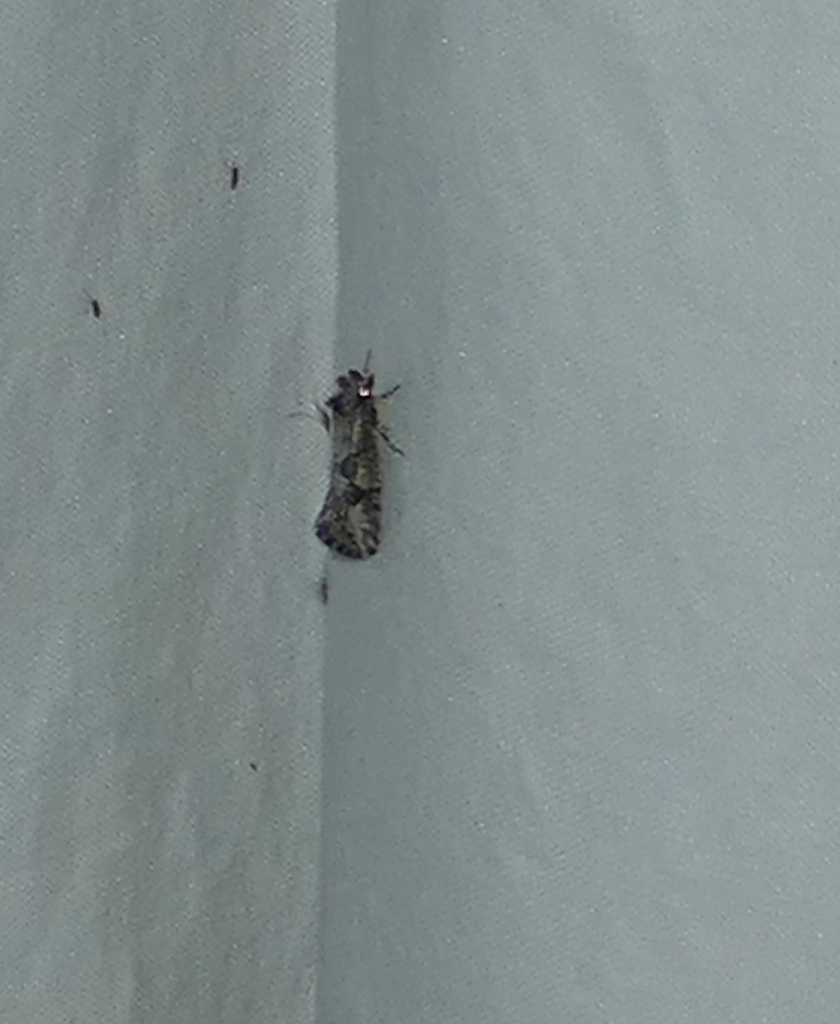
(c) Wendy McCrady, some rights reserved (CC BY) · licence
Family: Tineidae · Class: Insecta · Order: Lepidoptera
Acrolophus variabilis is a California animal in the Tineidae family.
Acrolophus variabilis is a small moth in the family Tineidae, a group commonly known as fungus moths or tineid moths. This species belongs to the genus Acrolophus, which comprises numerous small moths found throughout North America. The adult moths are typically small with wingspans measuring approximately 10-15 mm, displaying muted coloration patterns characteristic of the Tineidae family. The forewings are generally brownish or grayish with subtle darker markings, while the hindwings are typically paler and more uniform in coloration. The antennae are thread-like, and the moths have a relatively slender build typical of tineid species. The distribution and range of Acrolophus variabilis in California remains poorly documented in current literature. Limited collection records suggest the species may occur in various regions of the state, though specific county-level distribution data is not readily available from major databases. The species name 'variabilis' suggests morphological variation across populations, which may reflect adaptation to different regional conditions or host plant associations. Habitat requirements for Acrolophus variabilis are not well-established in published literature. Like other members of the Tineidae family, this species likely inhabits areas where suitable host materials are available. Many tineid moths are associated with fungal growth, decaying organic matter, or specific plant materials. The species may occur across a range of elevations and habitat types, from coastal areas to interior valleys and foothills, depending on the availability of appropriate larval food sources. The life cycle and behavior of Acrolophus variabilis follows the typical pattern of tineid moths, with complete metamorphosis through egg, larval, pupal, and adult stages. Larvae likely feed on organic matter such as fungal material, decaying plant matter, or potentially stored products, as is common among Tineidae species. The feeding habits of the larvae may vary considerably, as suggested by the species epithet 'variabilis.' Adult moths are typically nocturnal and may be attracted to artificial lights. Mating and reproductive behavior likely occur during warmer months, though specific timing has not been documented for this species. The conservation status of Acrolophus variabilis is not formally assessed by federal or state agencies. The species lacks official listing status under the Endangered Species Act or California Endangered Species Act. Population trends and conservation needs remain unknown due to limited research and survey data. Like many small moths, this species may face threats from habitat loss, pesticide use, and climate change, though the extent of these impacts has not been quantified. The cryptic nature and small size of tineid moths often results in their being overlooked in biodiversity surveys, contributing to knowledge gaps regarding their distribution, abundance, and conservation status. Further taxonomic and ecological research is needed to better understand this species' role in California's ecosystems and any conservation measures that may be appropriate.
Classification
Class: Insecta · Order: Lepidoptera · Family: Tineidae
Frequently asked questions
How is Acrolophus variabilis classified?
Acrolophus variabilis belongs to class Insecta, order Lepidoptera, family Tineidae.
What family does Acrolophus variabilis belong to?
Acrolophus variabilis is in the Tineidae family.
What is Acrolophus variabilis?
Acrolophus variabilis is a small moth in the family Tineidae, a group commonly known as fungus moths or tineid moths.
Is Acrolophus variabilis found in California?
Yes. Acrolophus variabilis is recorded in California in The California Species Project's catalogue.
Related species
Other California species in the same genus, family, or bioregion.
Data from The California Species Project — 14,000+ California species with verified data from CNPS, CDFW, USFWS, and more.