Acronicta dactylina
Fingered Dagger Moth
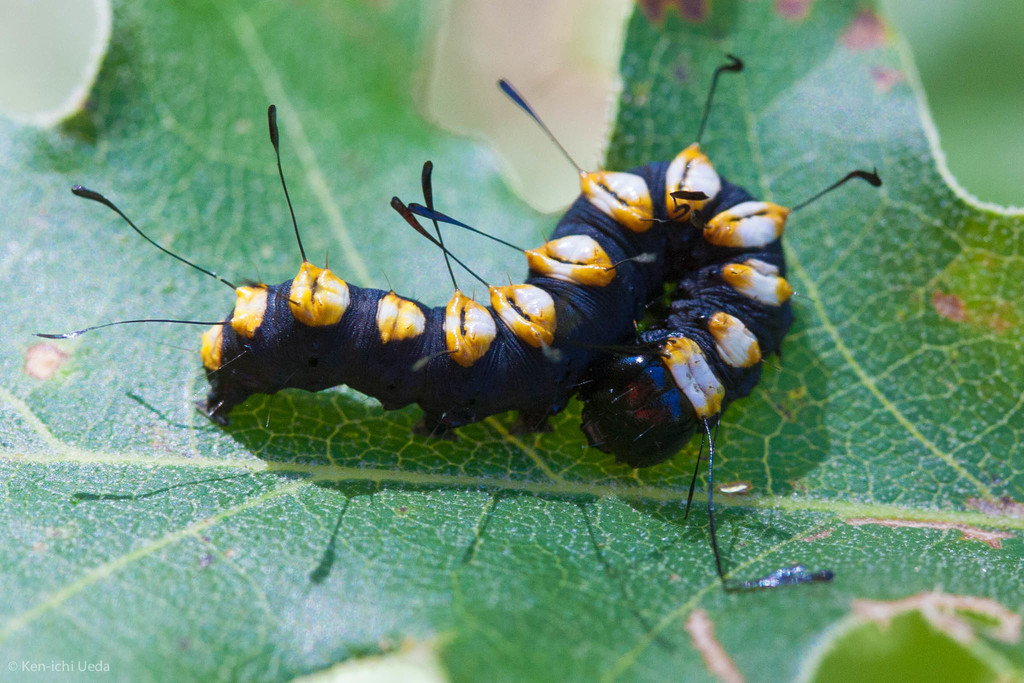
(c) Ken-ichi Ueda, some rights reserved (CC BY) · licence
Family: Noctuidae · Class: Insecta · Order: Lepidoptera
Acronicta dactylina (Fingered Dagger Moth) is a California animal in the Noctuidae family.
The Fingered Dagger Moth (Acronicta dactylina) is a medium-sized noctuidae moth with powdery gray forewings marked with darker patterns and whitish hindwings. The forewings display somewhat broken and blurred markings typical of the dagger moth group, with the outer portion of the postmedian line and partial additional markings creating a distinctive pattern. Males possess white hindwings while females have gray hindwings, providing a reliable method for sex determination. The species is distinguished from the closely related American Dagger Moth by its slightly smaller size and the absence of a median line on the hindwing. The Fingered Dagger Moth ranges from Newfoundland to the mountains of North Carolina, extending westward to Manitoba and Illinois. According to iNaturalist, the species also occurs west to the Pacific coast, indicating a broader transcontinental distribution than previously documented in some sources. This extensive range encompasses diverse forested regions across much of temperate North America, from the boreal forests of Canada to the montane regions of the southeastern United States. This species inhabits deciduous and mixed forests where its host plants are abundant. The moth shows a strong association with riparian and wetland edge habitats that support its preferred host species. Adults are attracted to light sources and can be found in both natural forest settings and areas with appropriate tree cover near human habitation. Fingered Dagger Moth larvae feed on a variety of deciduous trees and shrubs, including alders (Alnus species), birches (Betula species), cottonwood (Populus deltoides), poplars (Populus species), and willows (Salix species). This broad host plant range allows the species to exploit diverse forest habitats across its extensive geographic range. The larvae are typical dagger moth caterpillars, likely displaying the characteristic dense setae and warning coloration common to the genus. Adults are nocturnal and most active during summer months, when they can be collected at light traps and sugar bait. The species appears to have a stable population across most of its range, with no current federal or state conservation listing status. Records from lepidopterist surveys indicate the moth occurs regularly throughout suitable habitat, including collections from Wyoming County and other locations documented in lepidopterological literature. The Fingered Dagger Moth benefits from the widespread distribution of its host plants, particularly in riparian corridors and mixed forest systems that remain common across much of its range. Scientific documentation for this species remains somewhat limited compared to more extensively studied noctuidae. The information presented here is based on available sources including taxonomic databases and lepidopterological records. If you have additional verified information about this species' biology, distribution, or ecology, please contact us to help improve this species account.
Classification
Class: Insecta · Order: Lepidoptera · Family: Noctuidae
Frequently asked questions
How is Acronicta dactylina classified?
Acronicta dactylina belongs to class Insecta, order Lepidoptera, family Noctuidae.
What family does Acronicta dactylina belong to?
Acronicta dactylina is in the Noctuidae family.
What is Acronicta dactylina?
The Fingered Dagger Moth (Acronicta dactylina) is a medium-sized noctuidae moth with powdery gray forewings marked with darker patterns and whitish hindwings.
Is Acronicta dactylina found in California?
Yes. Acronicta dactylina is recorded in California in The California Species Project's catalogue.
Related species
Other California species in the same genus, family, or bioregion.
Data from The California Species Project — 14,000+ California species with verified data from CNPS, CDFW, USFWS, and more.