Acronicta funeralis
Funerary Dagger Moth
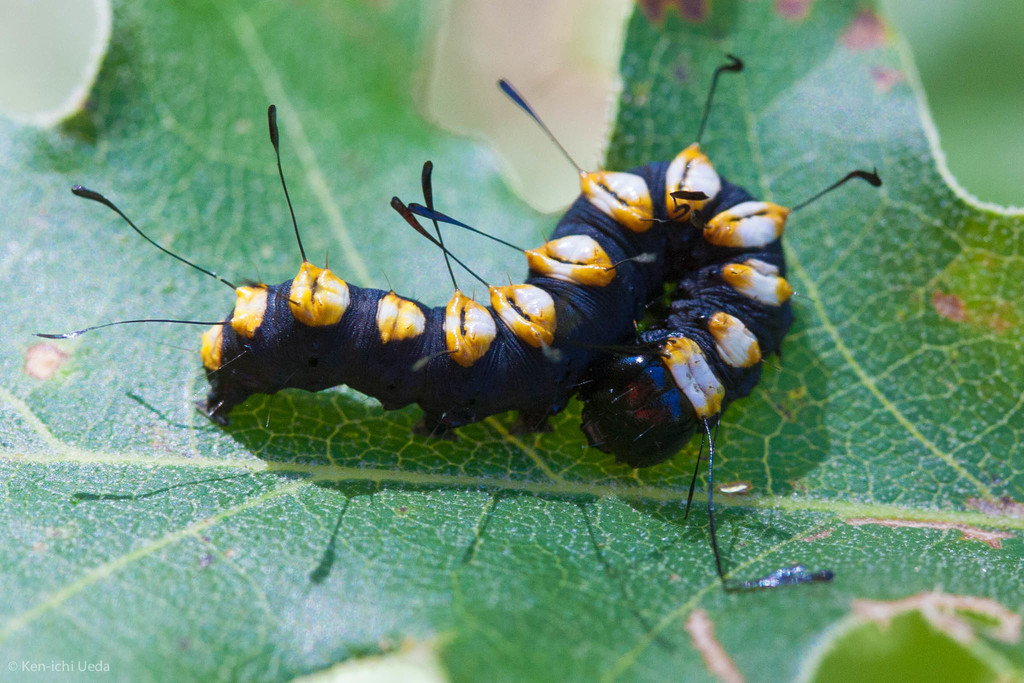
(c) Ken-ichi Ueda, some rights reserved (CC BY) · licence
Family: Noctuidae · Class: Insecta · Order: Lepidoptera
Acronicta funeralis (Funerary Dagger Moth) is a California animal in the Noctuidae family.
The Funerary Dagger Moth (Acronicta funeralis) is a medium-sized noctuid moth in the subfamily Acronictinae. Adults display distinctive wing patterns with forewings that are gray on the proximal half and lighter gray on the distal half, marked by prominent dark gray veins. The species exhibits sexual dimorphism in wing coloration and patterning typical of the Acronicta genus. This species has a notably patchy distribution across North America, ranging from Manitoba to Nova Scotia in the north, extending south to Maryland, with disjunct populations in Georgia, Mississippi, and Texas. Along the western coast, the species occurs from California north to British Columbia, but is apparently absent from much of the midwest and several southern states (BugGuide). In California, the species represents part of the state's diverse noctuid fauna. Funerary Dagger Moths inhabit areas where their primary host plants occur. Larvae feed exclusively on alder species (Alnus spp.), making the moths dependent on riparian and wetland habitats where these trees grow. The species' patchy distribution likely reflects the availability of suitable alder stands across its range. Adults are attracted to artificial lights and can be found in forested areas and along waterways where alder trees are present. Adults are active from May through August, with peak flight periods varying by geographic location. The species produces one generation per year in most areas. Larvae, known as "Paddle Caterpillars," are active during July and August. Early instar caterpillars are brown with white markings, but undergo dramatic transformation in the fourth instar, becoming black with distinctive middorsal light yellow markings that are triangular to elliptical in shape with transverse black streaks through the center. Most notably, fourth instar larvae possess a pair of long black hairs with flattened, paddle-like tips that give them their common name (BugGuide). This unique morphological feature serves an unknown function but may provide protection from predators or parasitoids. The species has no federal conservation listing, though it appears on New York's Species of Greatest Conservation Need list, indicating regional conservation concern in that state (BugGuide). The patchy distribution pattern suggests the species may be vulnerable to habitat fragmentation and loss of riparian alder habitats. Climate change and altered precipitation patterns could affect alder distribution and subsequently impact moth populations. Urban development along waterways and changes in forest management practices may pose additional threats to suitable breeding habitat. Like many specialized herbivorous insects, Acronicta funeralis faces conservation challenges related to its narrow host plant requirements. The species' dependence on alder trees makes it vulnerable to factors affecting these plants, including invasive species, altered hydrology, and habitat conversion. Monitoring populations across the species' fragmented range would provide valuable information about population trends and conservation needs.
Classification
Class: Insecta · Order: Lepidoptera · Family: Noctuidae
Frequently asked questions
How is Acronicta funeralis classified?
Acronicta funeralis belongs to class Insecta, order Lepidoptera, family Noctuidae.
What family does Acronicta funeralis belong to?
Acronicta funeralis is in the Noctuidae family.
What is Acronicta funeralis?
The Funerary Dagger Moth (Acronicta funeralis) is a medium-sized noctuid moth in the subfamily Acronictinae.
Is Acronicta funeralis found in California?
Yes. Acronicta funeralis is recorded in California in The California Species Project's catalogue.
Related species
Other California species in the same genus, family, or bioregion.
Data from The California Species Project — 14,000+ California species with verified data from CNPS, CDFW, USFWS, and more.