Acronicta impressa
Impressive Dagger Moth
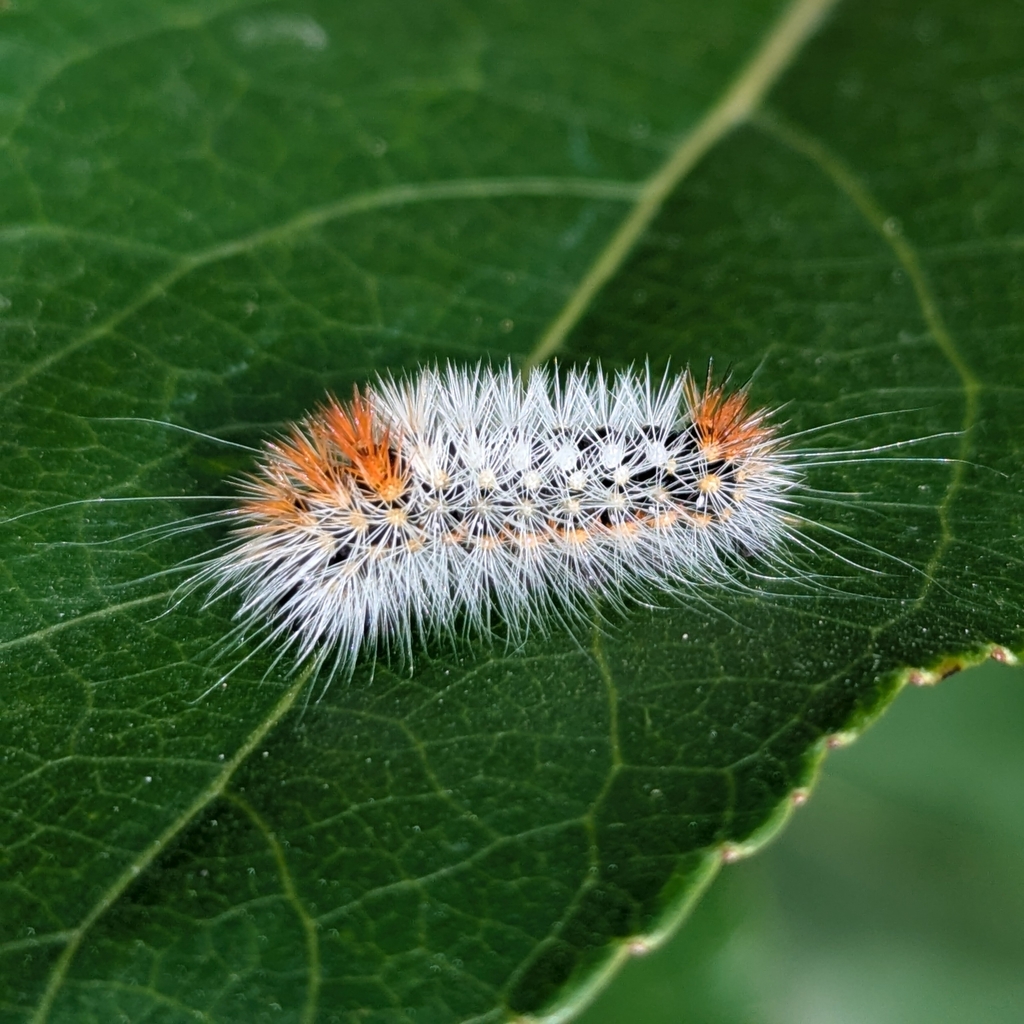
(c) Ramsey Sullivan, some rights reserved (CC BY) · licence
Family: Noctuidae · Class: Insecta · Order: Lepidoptera
Acronicta impressa (Impressive Dagger Moth) is a California animal in the Noctuidae family.
The Impressed Dagger Moth (Acronicta impressa) is a member of the large owlet moth family Noctuidae. Like other dagger moths in the genus Acronicta, adults are medium-sized moths with forewings typically displaying muted gray and brown coloration patterns that provide effective camouflage against tree bark and woody substrates. The species can be distinguished from closely related dagger moths by specific wing markings and genitalic characteristics, though field identification often requires expert examination. Acronicta impressa occurs across much of North America, with documented populations extending from southern Canada southward through the United States. The species has been recorded from various western states including Colorado, where specimens have been collected at elevations ranging from approximately 5,500 to 8,455 feet (Powell & Opler 2009). Collections from Colorado include locations near Eagle, Littleton, and Pine Junction (Powell & Opler 2009), with moths captured at ultraviolet light traps in mixed woodland habitats (News of the Lepidopterists' Society 2013). The species inhabits deciduous and mixed forest environments, particularly areas with oak, poplar, alder, and cherry trees. In Colorado, specimens have been collected in associations including pine, rabbitbrush, and sage communities, as well as areas with greasewood, juniper, and sagebrush in dry canyon settings (News of the Lepidopterists' Society 2013). Adults are attracted to artificial light sources and are typically active during nighttime hours when they engage in mating and feeding behaviors. Adult flight periods vary by location and elevation, with Colorado records indicating activity from early May through late July. Peak emergence appears to occur in mid to late May based on collection data. Like other Acronicta species, larvae are likely caterpillars that feed on deciduous tree foliage, though specific host plant relationships for A. impressa have not been thoroughly documented in the literature. The species presumably overwinters in the pupal stage, with adults emerging the following spring and summer. The conservation status of Acronicta impressa has not been formally assessed at federal or state levels. The species is included in New York's Species of Greatest Conservation Need list, indicating some level of conservation concern in that state (New York State Department of Environmental Conservation 2015). Population trends and specific threats to the species remain poorly documented, reflecting the general lack of comprehensive monitoring for most moth species. Habitat loss and fragmentation affecting deciduous forest ecosystems could potentially impact local populations, though the species' apparent broad distribution suggests it may be relatively resilient to localized disturbances. Climate change effects on host plant phenology and forest composition represent potential long-term concerns for this and other forest-associated moth species. Detailed ecological studies of this species are lacking. The above information synthesizes available observations from entomological surveys and collection records. Additional research on host plant relationships, population dynamics, and habitat requirements would enhance understanding of this species' conservation needs.
Classification
Class: Insecta · Order: Lepidoptera · Family: Noctuidae
Frequently asked questions
How is Acronicta impressa classified?
Acronicta impressa belongs to class Insecta, order Lepidoptera, family Noctuidae.
What family does Acronicta impressa belong to?
Acronicta impressa is in the Noctuidae family.
What is Acronicta impressa?
The Impressed Dagger Moth (Acronicta impressa) is a member of the large owlet moth family Noctuidae.
Is Acronicta impressa found in California?
Yes. Acronicta impressa is recorded in California in The California Species Project's catalogue.
Related species
Other California species in the same genus, family, or bioregion.
Data from The California Species Project — 14,000+ California species with verified data from CNPS, CDFW, USFWS, and more.