Acronicta interrupta
Interrupted Dagger Moth
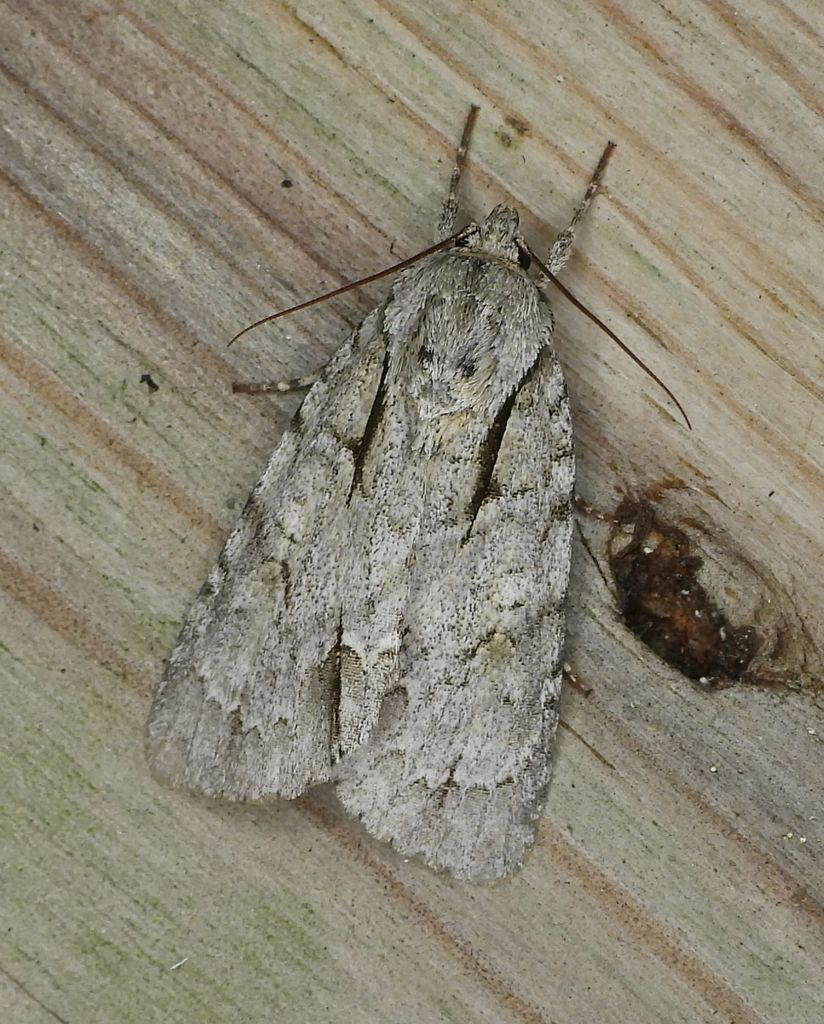
(c) Peter Waycik, some rights reserved (CC BY) · licence
Family: Noctuidae · Class: Insecta · Order: Lepidoptera
Acronicta interrupta (Interrupted Dagger Moth) is a California animal in the Noctuidae family.
The interrupted dagger moth (Acronicta interrupta) is a medium-sized nocturnal moth in the family Noctuidae. Adults have a wingspan of approximately 35-45 mm and display distinctive wing patterns that give the species its common name. The forewings are grayish-brown with characteristic dark markings, including interrupted black lines and dagger-like streaks. The hindwings are lighter, typically pale gray or whitish. The moth's thorax is covered in dense, grayish setae, and the antennae are filiform in both sexes. The interrupted dagger moth has a broad North American distribution, ranging across southern Canada from New Brunswick west to eastern Alberta, extending south through much of the United States to Georgia, Nebraska, and Arizona (Butterflies and Moths of North America). In California, the species likely occurs in northern and montane regions, though specific distributional data within the state remains limited in published literature. This species inhabits deciduous and mixed forests, woodland edges, and areas with abundant hardwood trees. The moths are typically found in association with their larval host plants, which include various deciduous trees. Adults are attracted to artificial lights and sugar baits, making them occasionally observable during nocturnal surveys. They prefer areas with moderate canopy cover and appear to tolerate some habitat disturbance. Interrupted dagger moths are univoltine, producing one generation per year in most of their range. Adults are active from late spring through mid-summer, typically May through August, with peak flight periods varying by latitude and elevation. Females deposit eggs on the leaves of host plants, and larvae develop through five instars before pupating. The caterpillars are typical dagger moth larvae, featuring dense setae and distinctive coloration patterns. Pupation occurs in the soil or leaf litter, with the species overwintering in the pupal stage. Adults are primarily nocturnal and are attracted to various flowering plants for nectar feeding. The interrupted dagger moth does not currently hold any special conservation status at federal or state levels. The species appears to maintain stable populations across much of its range, though comprehensive population monitoring data is lacking. As with many forest-associated moths, potential threats include habitat fragmentation, intensive forest management practices, and light pollution that can disrupt natural behavior patterns. Climate change may also affect the species through alterations to forest composition and the phenology of host plants. The moth's broad geographic range and apparent habitat flexibility suggest some resilience to environmental changes, but continued monitoring would be valuable given the general decline patterns observed in many moth species across North America. Scientific documentation for this species remains limited, and additional research on its specific habitat requirements, host plant relationships, and population trends in California would enhance conservation planning efforts.
Classification
Class: Insecta · Order: Lepidoptera · Family: Noctuidae
Frequently asked questions
How is Acronicta interrupta classified?
Acronicta interrupta belongs to class Insecta, order Lepidoptera, family Noctuidae.
What family does Acronicta interrupta belong to?
Acronicta interrupta is in the Noctuidae family.
What is Acronicta interrupta?
The interrupted dagger moth (Acronicta interrupta) is a medium-sized nocturnal moth in the family Noctuidae.
Is Acronicta interrupta found in California?
Yes. Acronicta interrupta is recorded in California in The California Species Project's catalogue.
Related species
Other California species in the same genus, family, or bioregion.
Data from The California Species Project — 14,000+ California species with verified data from CNPS, CDFW, USFWS, and more.