Acronicta marmorata
Marble Dagger Moth
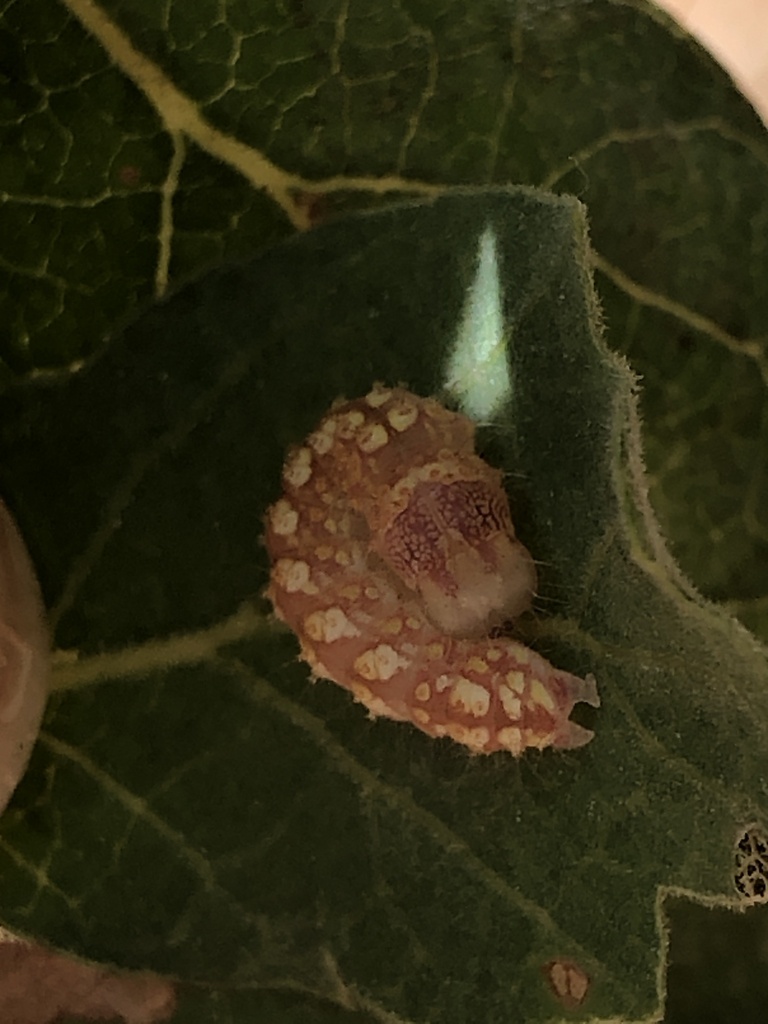
(c) LJ Moore-McClelland, some rights reserved (CC BY) · licence
Family: Noctuidae · Class: Insecta · Order: Lepidoptera
Acronicta marmorata (Marble Dagger Moth) is a California animal in the Noctuidae family.
The Marble Dagger Moth (Acronicta marmorata) is a medium-sized nocturid moth with distinctive marbled wing patterns that provide effective camouflage against tree bark. Adults have a wingspan ranging from 32 to 42 mm (1.3 to 1.7 inches). The forewings display a complex pattern of gray, brown, and white markings that create a marbled appearance, with prominent black dagger-like streaks near the wing tips that give the species its common name. The hindwings are lighter, typically pale gray to white with darker marginal bands. The thorax and abdomen are densely covered with gray-brown scales that match the forewing coloration. The Marble Dagger Moth ranges from western British Columbia south through the Pacific Coast states to southern California. In California, the species occurs primarily in oak woodlands and mixed forests from sea level to approximately 1,500 meters (4,900 feet) elevation. Populations are documented in the Coast Ranges, Sierra Nevada foothills, and scattered locations in southern California where suitable oak habitat exists. This species inhabits oak-dominated ecosystems, including coastal oak woodlands, mixed evergreen forests, and riparian areas with significant oak components. Adults are typically found in areas with mature oak canopy that provides both larval host plants and adult roosting sites. The moths prefer areas with moderate canopy cover that offers protection from wind and predators while maintaining access to host trees. Marble Dagger Moth larvae are specialist feeders on oak species (Quercus spp.), including coast live oak, valley oak, canyon live oak, and other native California oaks. Caterpillars are densely hairy with distinctive tufts of setae and feed primarily on oak leaves from late spring through early fall. The species is univoltine in most of its range, with a single generation per year. Adults emerge in late summer and early fall, typically from August through October, when they mate and females deposit eggs on oak twigs and branches. Eggs overwinter and hatch the following spring when new oak foliage emerges. Adults are nocturnal and are attracted to artificial lights, making them occasionally observed at porch lights and moth traps in oak woodland areas. The Marble Dagger Moth is not federally or state listed and appears to maintain stable populations throughout much of its range where oak habitat remains intact. However, like many oak-dependent species in California, it faces threats from habitat conversion, urban development, and oak woodland fragmentation. Sudden oak death syndrome, caused by the pathogen Phytophthora ramorum, poses an emerging threat to oak ecosystems and could impact populations in affected areas. Climate change may alter the distribution and phenology of both the moth and its oak hosts. Conservation efforts focused on protecting and restoring oak woodlands benefit this species along with numerous other oak-dependent taxa. The moth's specialized relationship with native oaks makes it an indicator species for oak woodland ecosystem health.
Classification
Class: Insecta · Order: Lepidoptera · Family: Noctuidae
Frequently asked questions
How is Acronicta marmorata classified?
Acronicta marmorata belongs to class Insecta, order Lepidoptera, family Noctuidae.
What family does Acronicta marmorata belong to?
Acronicta marmorata is in the Noctuidae family.
What is Acronicta marmorata?
The Marble Dagger Moth (Acronicta marmorata) is a medium-sized nocturid moth with distinctive marbled wing patterns that provide effective camouflage against tree bark.
Is Acronicta marmorata found in California?
Yes. Acronicta marmorata is recorded in California in The California Species Project's catalogue.
Related species
Other California species in the same genus, family, or bioregion.
Data from The California Species Project — 14,000+ California species with verified data from CNPS, CDFW, USFWS, and more.