Acronicta perdita
Pacific Dagger
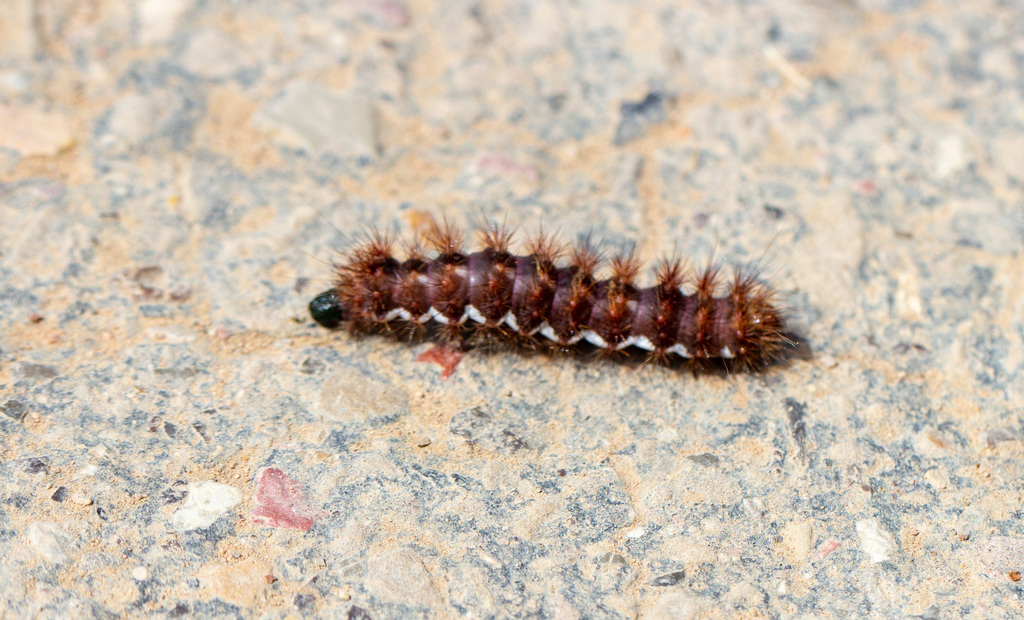
(c) threelark, some rights reserved (CC BY) · licence
Family: Noctuidae · Class: Insecta · Order: Lepidoptera
Acronicta perdita (Pacific Dagger) is a California animal in the Noctuidae family.
The Pacific Dagger (Acronicta perdita) is a nocturnal moth in the family Noctuidae, subfamily Acronictinae. This species belongs to the dagger moth genus Acronicta, which is characterized by distinctive wing patterns and cryptic coloration. Adult Pacific Dagger moths display the typical dagger moth morphology with forewings marked by dark dagger-like streaks against a mottled gray-brown background, though specific morphological details for this species remain poorly documented in the scientific literature. The Pacific Dagger occurs along the western United States, with confirmed records from California, Oregon, Idaho, and potentially other western states. In California, the species has been documented from multiple counties including Inyo County, where specimens were collected at Lone Pine Campground in May 2018 (News of the Lepidopterists' Society 2019). Additional western records include observations from Idaho's Power County at Massacre Rocks State Park in July 2010 (News of the Lepidopterists' Society 2011). The species appears to have a broader western distribution than initially recognized, with records extending from the Pacific Coast inland through mountainous regions. Habitat preferences for Acronicta perdita have not been thoroughly documented, though collection localities suggest an association with montane and semi-arid environments. Specimens have been recorded from campgrounds and state parks, typically in areas with mixed vegetation communities. The elevation range and specific plant community associations remain to be systematically studied. Like other Acronicta species, Pacific Dagger moths likely inhabit areas supporting their larval host plants, though these relationships have not been definitively established for this species. Little is known about the specific biology and ecology of the Pacific Dagger. As with other dagger moths, adults are presumed to be nocturnal and attracted to artificial lights, as evidenced by collection records from moth surveys and UV trapping efforts. Flight period data from available records suggest activity during late spring through mid-summer, with May through July observations documented. The larval biology, including host plant relationships, development time, and overwintering strategy, remains unstudied. Other Acronicta species typically feed on woody plants during their caterpillar stage, but specific host plants for A. perdita are unknown. The conservation status of Acronicta perdita has not been formally assessed by state or federal agencies. The species does not appear on current endangered species lists or species of concern designations. However, the limited scientific documentation and apparently scattered distribution pattern suggest this moth may be naturally uncommon or overlooked in surveys. The paucity of recent collection records and ecological data represents a significant knowledge gap that hampers conservation assessment. Climate change and habitat modification in western montane regions could potentially impact populations, but specific threats cannot be evaluated without better understanding of the species' habitat requirements and population status. Scientific documentation for this species remains extremely limited. The information presented here synthesizes available records from lepidopterological literature and specimen databases. Additional research is needed to document basic biological parameters, host plant relationships, and distribution patterns. We welcome contributions of verified scientific data, photographs, or field observations to enhance this species account.
Classification
Class: Insecta · Order: Lepidoptera · Family: Noctuidae
Frequently asked questions
How is Acronicta perdita classified?
Acronicta perdita belongs to class Insecta, order Lepidoptera, family Noctuidae.
What family does Acronicta perdita belong to?
Acronicta perdita is in the Noctuidae family.
What is Acronicta perdita?
The Pacific Dagger (Acronicta perdita) is a nocturnal moth in the family Noctuidae, subfamily Acronictinae.
Is Acronicta perdita found in California?
Yes. Acronicta perdita is recorded in California in The California Species Project's catalogue.
Related species
Other California species in the same genus, family, or bioregion.
Data from The California Species Project — 14,000+ California species with verified data from CNPS, CDFW, USFWS, and more.