Acronicta spinigera
Nondescript Dagger Moth
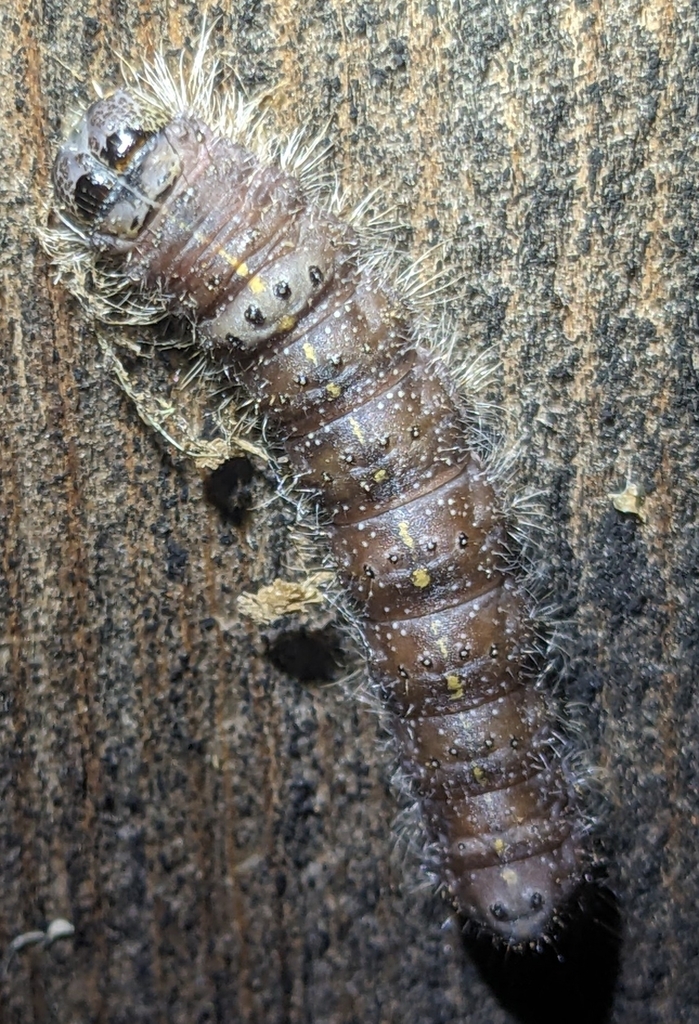
(c) Norah Tempus, some rights reserved (CC BY) · licence
Family: Noctuidae · Class: Insecta · Order: Lepidoptera
Acronicta spinigera (Nondescript Dagger Moth) is a California animal in the Noctuidae family.
The Nondescript Dagger Moth is a member of the family Noctuidae, one of the largest families of moths worldwide. As suggested by its common name, this species exhibits relatively subdued coloration and markings typical of many dagger moths in the genus Acronicta. Like other members of this genus, adults likely display the characteristic dagger-like markings on the forewings that give the group its common name, though specific morphological details for this species remain poorly documented in available literature. Acronyicta spinigera has a broad North American distribution, with records spanning from the eastern United States westward to California. According to NatureServe, the species has a global conservation rank of G4, indicating it is apparently secure across its range (NatureServe Explorer). The species has been documented in various states including California, though specific county-level distribution data within the state requires further documentation. Regional checklists indicate the species occurs across multiple biogeographic regions (Butterflies and Moths of North America). Habitat preferences for the Nondescript Dagger Moth have not been thoroughly documented in available scientific literature. However, like many Acronicta species, it likely inhabits forested areas and woodland edges where suitable host plants occur. The genus Acronicta typically includes species that utilize a variety of deciduous trees and shrubs as larval host plants, though specific host plant relationships for A. spinigera require further research and documentation. Behavioral and ecological information for this species remains limited in published sources. Adult flight periods and seasonal activity patterns have not been well-documented, though scattered records suggest the species may be active during typical moth flight seasons. Like other noctuids, adults are likely nocturnal and attracted to artificial lights. Larval ecology, including feeding behavior and development patterns, requires additional study. The caterpillars presumably feed on foliage of woody plants, following the general pattern observed in related Acronicta species. The Nondescript Dagger Moth does not appear on federal or state endangered species lists and is not assigned special conservation status. With its G4 global ranking, populations appear stable across the species' range, though this assessment may reflect limited survey data rather than comprehensive population monitoring. The species faces typical threats common to many moths, including habitat loss from development and forest management practices, light pollution affecting adult behavior, and potential climate change impacts on host plant distributions and phenology. Scientific documentation for this species remains limited despite its apparent broad distribution. The information presented here synthesizes available data from taxonomic databases and regional species lists. Additional research is needed to better understand the species' ecology, life history, host plant relationships, and detailed distribution patterns within California. Field studies focusing on habitat requirements, seasonal activity patterns, and population trends would significantly enhance our understanding of this species' biology and conservation needs.
Classification
Class: Insecta · Order: Lepidoptera · Family: Noctuidae
Frequently asked questions
How is Acronicta spinigera classified?
Acronicta spinigera belongs to class Insecta, order Lepidoptera, family Noctuidae.
What family does Acronicta spinigera belong to?
Acronicta spinigera is in the Noctuidae family.
What is Acronicta spinigera?
The Nondescript Dagger Moth is a member of the family Noctuidae, one of the largest families of moths worldwide.
Is Acronicta spinigera found in California?
Yes. Acronicta spinigera is recorded in California in The California Species Project's catalogue.
Related species
Other California species in the same genus, family, or bioregion.
Data from The California Species Project — 14,000+ California species with verified data from CNPS, CDFW, USFWS, and more.