Actinemys pallida
Southwestern pond turtle
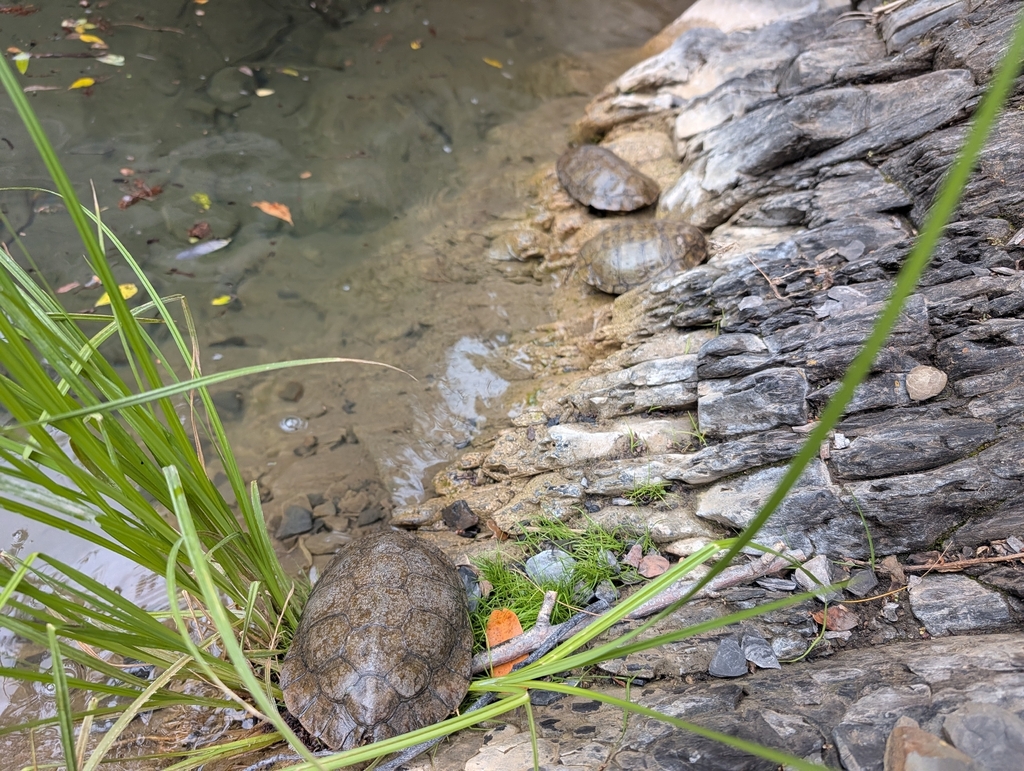
(c) Zack Abbey, some rights reserved (CC BY) · licence
Family: Emydidae · Class: Reptilia · Order: Testudines
Conservation status: Proposed Threatened · G2G3 SNR
Actinemys pallida (Southwestern pond turtle) is a California animal in the Emydidae family.
The southwestern pond turtle is a medium-sized aquatic turtle with a carapace length typically ranging from 15 to 20 cm (6 to 8 inches). The carapace varies from olive-brown to dark brown with darker radiating lines or spots on each scute, while the plastron is yellowish with dark blotches along the seam lines. Adults exhibit sexual dimorphism, with males displaying a lighter throat coloration than females and a significantly longer tail that extends past the edge of the shell. The male's plastron is also slightly concave compared to the female's flat underside. The species can be distinguished from the closely related northwestern pond turtle by subtle morphological differences and genetic markers. The southwestern pond turtle occurs in southern California from Monterey County south through Los Angeles, Riverside, and San Diego Counties, extending into northern Baja California, Mexico (USFWS 2023). Historically, the species had a broader distribution but has experienced significant range reduction. By the mid-1990s, most occupied habitat was concentrated in Monterey, San Luis Obispo, and Santa Barbara counties, with only 5 sites remaining south of the Tehachapi Mountains from more than 80 historic locations. Currently, the species maintains populations in coastal and inland areas but has been extirpated from much of its former range. Southwestern pond turtles inhabit a variety of aquatic environments including rivers, lakes, ponds, streams, and other freshwater sources, as well as associated terrestrial habitats throughout their life cycle. They prefer areas with slow-moving or still water that provide adequate basking sites such as logs, rocks, or vegetation mats. The species utilizes both permanent and seasonal water bodies, moving between aquatic and terrestrial environments for feeding, nesting, and overwintering. Nesting typically occurs in areas with well-drained soils within several hundred meters of water sources. These turtles are omnivorous, feeding on aquatic invertebrates, small fish, amphibians, algae, and aquatic vegetation. Mating occurs in spring, with females laying clutches of 2 to 13 eggs in terrestrial nest sites during late spring and early summer. Hatchlings emerge in late summer or fall, though some may overwinter in the nest. The species exhibits temperature-dependent sex determination, with cooler incubation temperatures producing males and warmer temperatures producing females. The U.S. Fish and Wildlife Service proposed the southwestern pond turtle for listing as threatened under the Endangered Species Act in September 2023. The species faces multiple threats including urban development, agricultural conversion, water diversions, invasive species, and disease. Introduced predators such as bullfrogs and non-native fish prey heavily on juvenile turtles, while habitat fragmentation limits population connectivity. Range reduction has reached approximately 70% of historic distribution. Current conservation efforts include development of range-wide management strategies, collaboration with military installations for habitat management, and implementation of habitat conservation plans to protect remaining populations and restore degraded habitats.
Classification
Class: Reptilia · Order: Testudines · Family: Emydidae
Conservation status
Proposed Threatened · G2G3 SNR
Frequently asked questions
How is Actinemys pallida classified?
Actinemys pallida belongs to class Reptilia, order Testudines, family Emydidae.
What family does Actinemys pallida belong to?
Actinemys pallida is in the Emydidae family.
Is Actinemys pallida protected or of conservation concern?
Actinemys pallida carries the following status: Proposed Threatened · G2G3 SNR.
What is Actinemys pallida?
The southwestern pond turtle is a medium-sized aquatic turtle with a carapace length typically ranging from 15 to 20 cm (6 to 8 inches).
Is Actinemys pallida found in California?
Yes. Actinemys pallida is recorded in California in The California Species Project's catalogue.
Related species
Other California species in the same genus, family, or bioregion.
Data from The California Species Project — 14,000+ California species with verified data from CNPS, CDFW, USFWS, and more.