Actitis macularius
Spotted Sandpiper
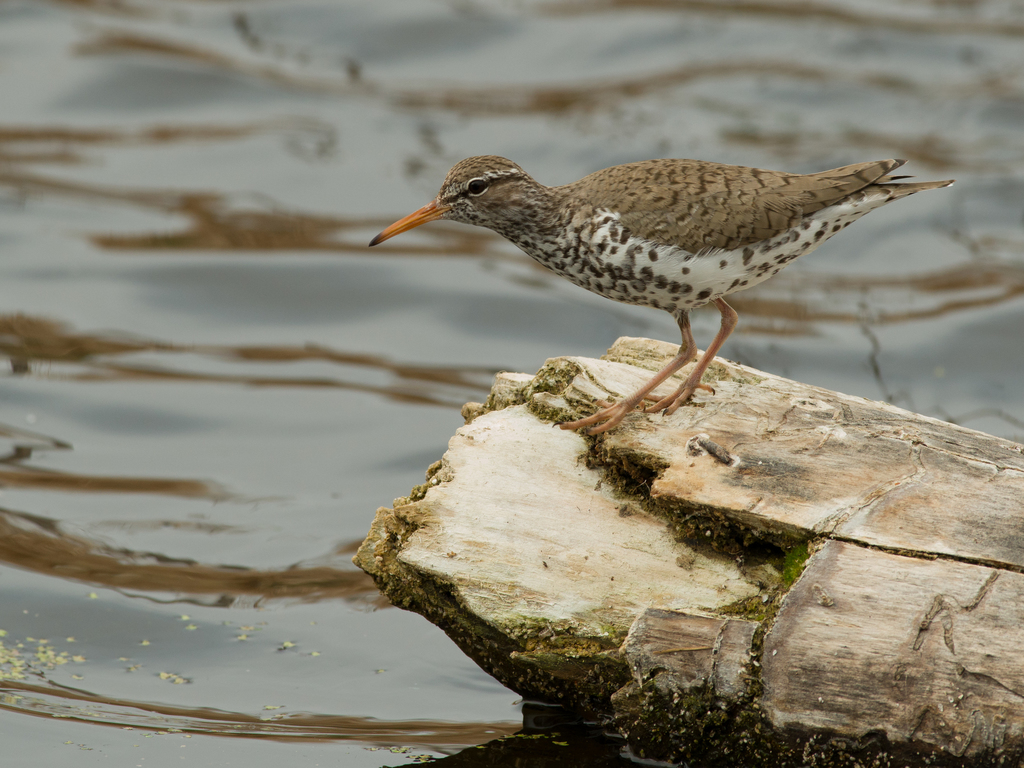
no rights reserved · CC0
Family: Scolopacidae · Class: Aves · Order: Charadriiformes
Actitis macularius (Spotted Sandpiper) is a California animal in the Scolopacidae family.
The Spotted Sandpiper is a medium-sized shorebird measuring 18-20 cm (7.1-7.9 inches) in length with a wingspan of 37-40 cm (14.6-15.7 inches). Adults weigh 34-50 grams (1.2-1.8 ounces). During breeding season, adults display distinctive dark brown spots on white underparts, olive-brown upperparts with dark barring, and a straight, dark-tipped bill. The legs are yellowish to greenish-yellow. Non-breeding adults lose the spotted plumage, showing plain grayish-brown upperparts and white underparts with a faint brownish wash across the breast. A white eyering and supercilium contrast with the darker crown and eye line. Juveniles resemble non-breeding adults but show more distinct barring on the upperparts. The species breeds across much of North America from Alaska to the Atlantic provinces and south to the central United States. In California, Spotted Sandpipers breed primarily in the Sierra Nevada mountains, Cascade Range, and northern coastal regions. During migration and winter, they occur throughout the state along coastlines, rivers, lakes, and wetlands. According to eBird data, the species is present year-round in California, with breeding populations concentrated in montane areas above 1,200 meters (4,000 feet) elevation. Spotted Sandpipers inhabit shorelines of freshwater lakes, rivers, streams, and ponds during breeding season, typically selecting areas with rocky, sandy, or pebbly substrates and sparse vegetation. They also utilize temporary pools and beaver ponds. During migration and winter, the species frequents similar freshwater habitats as well as saltwater environments including mudflats, rocky shores, jetties, and tidal pools. They prefer areas with exposed substrates for foraging and low vegetation or debris for cover. The species exhibits unique breeding behavior with reversed sex roles, where females are polyandrous and males provide primary parental care. Females establish territories in May and compete for males, often mating with multiple partners. Males construct ground nests in shallow depressions lined with grass, leaves, and small stones, typically within 100 meters of water. Clutch size is usually 4 eggs, incubated by males for 19-22 days. Chicks are precocial and leave the nest within hours of hatching, reaching independence at 17-18 days. Spotted Sandpipers are opportunistic foragers, capturing invertebrates including flies, beetles, worms, crustaceans, and mollusks through visual hunting along water edges. They exhibit characteristic behavior of constant tail-bobbing and low, stiff-winged flight with alternating rapid wingbeats and brief glides. The Spotted Sandpiper is not federally or state listed and maintains stable populations across most of its range. According to the North American Breeding Bird Survey, continental populations have remained relatively stable since 1970, though some regional declines have been documented. In California, breeding populations appear secure in suitable montane habitats. Primary threats include habitat loss from shoreline development, water diversions affecting stream flows, and disturbance at nesting sites from recreational activities. Climate change may affect high-elevation breeding habitats and alter hydrological patterns in aquatic ecosystems.
Classification
Class: Aves · Order: Charadriiformes · Family: Scolopacidae
Frequently asked questions
How is Actitis macularius classified?
Actitis macularius belongs to class Aves, order Charadriiformes, family Scolopacidae.
What family does Actitis macularius belong to?
Actitis macularius is in the Scolopacidae family.
What is Actitis macularius?
The Spotted Sandpiper is a medium-sized shorebird measuring 18-20 cm (7.1-7.9 inches) in length with a wingspan of 37-40 cm (14.6-15.7 inches).
Is Actitis macularius found in California?
Yes. Actitis macularius is recorded in California in The California Species Project's catalogue.
Related species
Other California species in the same genus, family, or bioregion.
Data from The California Species Project — 14,000+ California species with verified data from CNPS, CDFW, USFWS, and more.