Aculepeira packardi
Northern Orbweaver
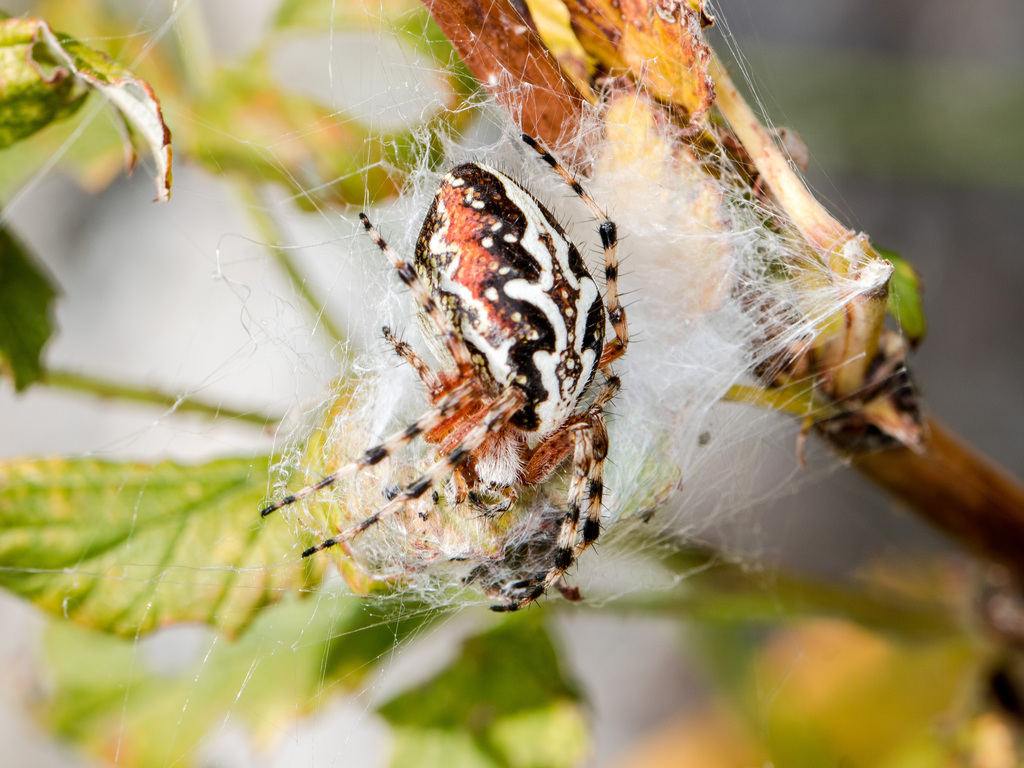
(c) Анатолий Озерной /Anatoly Ozernoy, some rights reserved (CC BY-SA) · licence
Family: Araneidae · Class: Arachnida · Order: Araneae
Aculepeira packardi (Northern Orbweaver) is a California animal in the Araneidae family.
Aculepeira packardi, commonly known as the Northern Orbweaver, is a member of the family Araneidae, the orb weaver spiders. This species belongs to the order Araneae within the class Arachnida. As with other orb weavers, this species constructs circular webs to capture prey, though specific details about web architecture and hunting behavior for A. packardi remain poorly documented in the scientific literature. The physical characteristics of the Northern Orbweaver have not been comprehensively described in readily available sources. Like other members of the Araneidae family, this species likely exhibits sexual dimorphism, with females typically being larger than males. Orb weavers in this family generally possess eight eyes arranged in two rows, and chelicerae equipped with fangs for subduing prey. The specific coloration patterns, size measurements, and distinguishing morphological features of A. packardi require further documentation. The distributional range of Aculepeira packardi appears to be associated with northern regions based on its common name, though precise geographic boundaries and habitat preferences within California have not been well established. Many Aculepeira species are found in temperate regions and may be associated with specific vegetation types or elevation ranges, but location-specific data for A. packardi is lacking in current literature. Habitat requirements for this species remain undocumented. Other Aculepeira species typically inhabit areas with suitable anchor points for web construction, such as shrubs, tall grasses, or forest edges. The Northern Orbweaver likely requires similar microhabitat features, including appropriate spacing between vegetation for web placement and sufficient prey availability. Behavioral and ecological information for A. packardi is extremely limited. As an orb weaver, this species presumably constructs spiral webs to capture flying insects and other small arthropods. Reproductive timing, egg-laying behavior, seasonal activity patterns, and specific dietary preferences have not been documented. Many orb weavers exhibit annual life cycles with mating occurring in late summer or fall, but species-specific data for A. packardi is not available. The conservation status of Aculepeira packardi has not been formally assessed by federal or state agencies. The species does not appear on current endangered species lists or conservation concern databases as of December 2025. The lack of comprehensive biological and ecological data makes it difficult to evaluate population trends or potential threats to this species. Scientific documentation for this species remains extremely limited. The information presented here represents the current state of available knowledge, which highlights significant gaps in our understanding of A. packardi's biology, distribution, and ecology. Systematic surveys and taxonomic studies are needed to better characterize this species and determine its conservation needs. We welcome contributions of verified scientific data, photographs, or field observations to enhance this species account.
Classification
Class: Arachnida · Order: Araneae · Family: Araneidae
Frequently asked questions
How is Aculepeira packardi classified?
Aculepeira packardi belongs to class Arachnida, order Araneae, family Araneidae.
What family does Aculepeira packardi belong to?
Aculepeira packardi is in the Araneidae family.
What is Aculepeira packardi?
Aculepeira packardi, commonly known as the Northern Orbweaver, is a member of the family Araneidae, the orb weaver spiders.
Is Aculepeira packardi found in California?
Yes. Aculepeira packardi is recorded in California in The California Species Project's catalogue.
Related species
Other California species in the same genus, family, or bioregion.
Data from The California Species Project — 14,000+ California species with verified data from CNPS, CDFW, USFWS, and more.