Aculops fuchsiae
Fuchsia Gall Mite
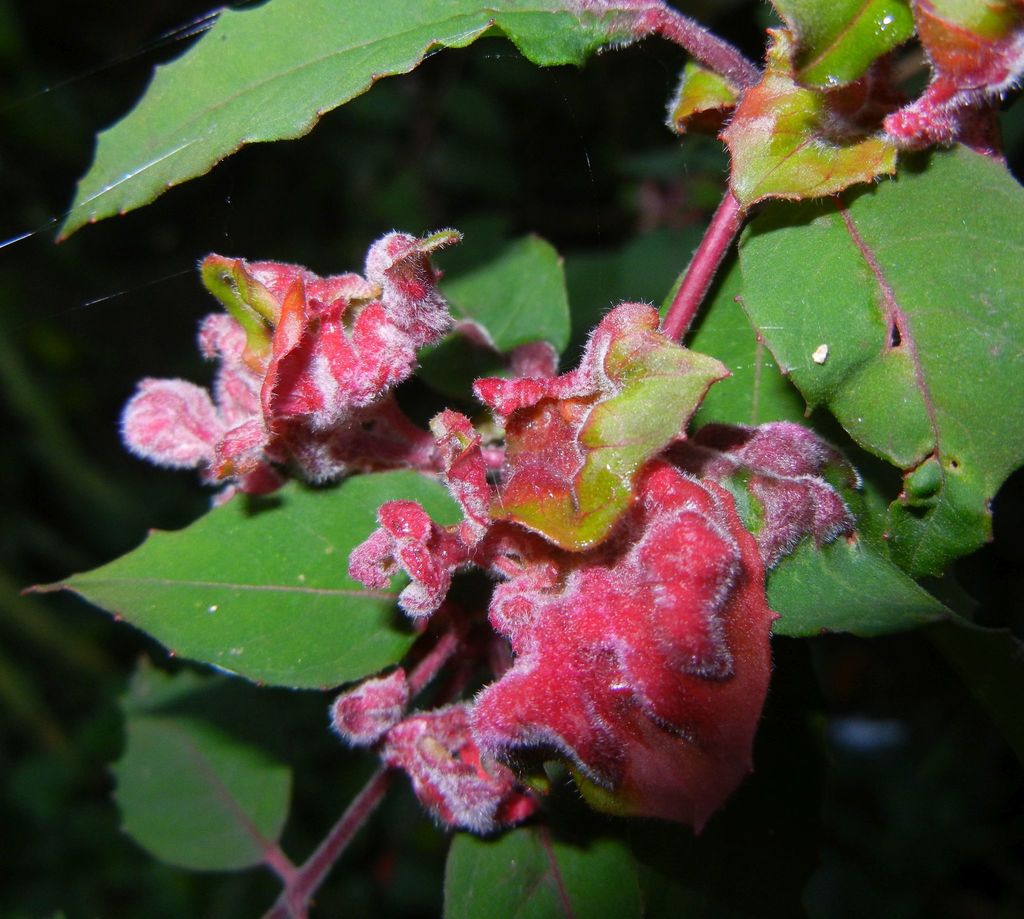
(c) Jon Mortin, some rights reserved (CC BY) · licence
Family: Eriophyidae · Class: Arachnida · Order: Trombidiformes
Aculops fuchsiae (Fuchsia Gall Mite) is a California animal in the Eriophyidae family.
The fuchsia gall mite (Aculops fuchsiae) is a microscopic eriophyid mite that causes distinctive gall formation on fuchsia plants. Like other members of the family Eriophyidae, these mites are extremely small, typically measuring less than 0.2 mm in length, with an elongated, worm-like body and only two pairs of legs located at the anterior end. The body is translucent to pale yellow and lacks the typical rounded appearance of other mite families. The distribution of A. fuchsiae appears to be closely tied to the cultivation and naturalization of fuchsia plants. According to the European and Mediterranean Plant Protection Organization, this mite has been documented on multiple fuchsia species including F. coccinea, F. magellanica, and F. procumbens (EPPO Datasheet). In California, the species likely occurs wherever ornamental or naturalized fuchsias are present, particularly in coastal and montane regions where these plants thrive. Fuchsia gall mites inhabit the growing tips, buds, and young leaves of their host plants. They create a specialized microhabitat within the plant tissues through their feeding activities, which induce abnormal cell growth and gall formation. These galls provide both shelter and nutrition for developing mite populations, protecting them from environmental extremes and predators. The feeding behavior of A. fuchsiae involves piercing plant cells with needle-like stylets and consuming cellular contents, which triggers the distinctive gall formation that characterizes this species. According to iNaturalist, the mites cause distortion of fuchsia plant tissues through their feeding activities. The induced galls appear as swollen, often reddish growths on shoots, leaves, and flower buds, significantly altering the plant's normal growth patterns. Reproduction occurs within these protective gall structures, with multiple generations possible throughout the growing season when host plants are actively growing. As an eriophyid mite, A. fuchsiae demonstrates high host specificity, feeding exclusively on plants in the genus Fuchsia. The EPPO datasheet indicates that this mite has been found to survive on all investigated Fuchsia species, suggesting broad compatibility within this plant genus. This specificity makes the mite's distribution largely dependent on the presence and health of fuchsia populations. The conservation status of A. fuchsiae has not been formally evaluated by major conservation organizations. As a specialized herbivore dependent on fuchsia plants, the species' long-term persistence in California may be influenced by factors affecting its host plants, including habitat modification, climate change, and horticultural practices. However, the widespread cultivation of fuchsias as ornamental plants likely provides stable populations throughout much of the mite's range. Scientific documentation for this species remains limited beyond basic taxonomic and host plant information. Additional research is needed to better understand the species' detailed ecology, population dynamics, and potential impacts on native California fuchsia species. If you have additional verified information about this species' biology, distribution, or ecology, please contact us to help improve this species account.
Classification
Class: Arachnida · Order: Trombidiformes · Family: Eriophyidae
Frequently asked questions
How is Aculops fuchsiae classified?
Aculops fuchsiae belongs to class Arachnida, order Trombidiformes, family Eriophyidae.
What family does Aculops fuchsiae belong to?
Aculops fuchsiae is in the Eriophyidae family.
What is Aculops fuchsiae?
The fuchsia gall mite (Aculops fuchsiae) is a microscopic eriophyid mite that causes distinctive gall formation on fuchsia plants.
Is Aculops fuchsiae found in California?
Yes. Aculops fuchsiae is recorded in California in The California Species Project's catalogue.
Related species
Other California species in the same genus, family, or bioregion.
Data from The California Species Project — 14,000+ California species with verified data from CNPS, CDFW, USFWS, and more.