Adaina ambrosiae
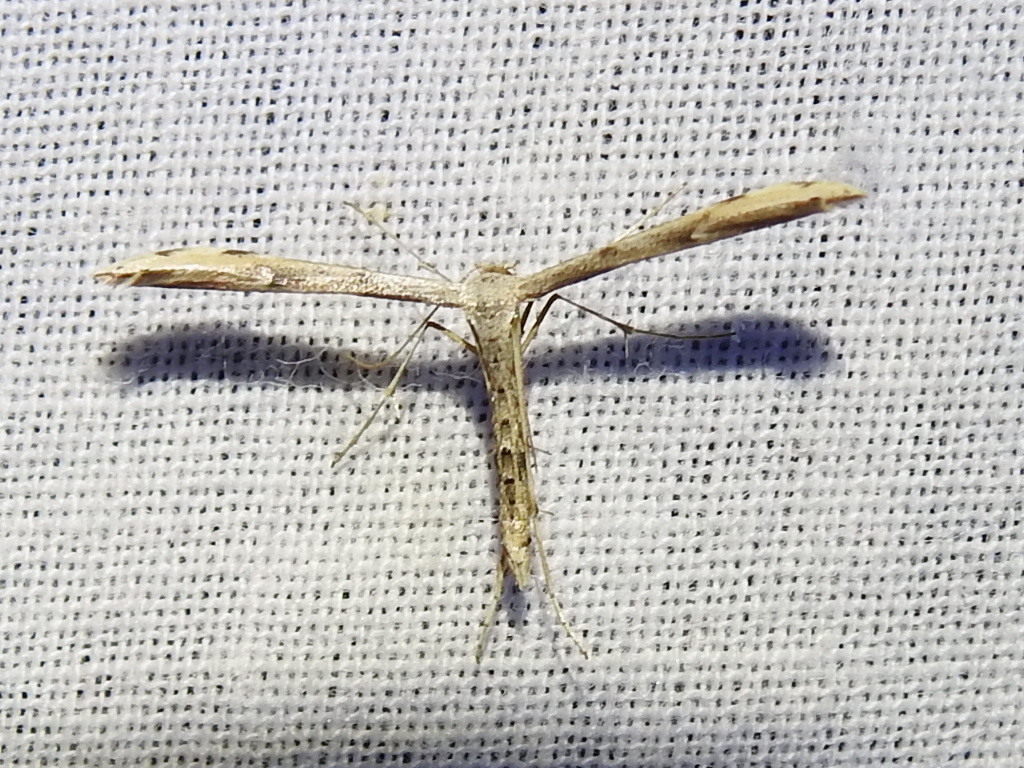
(c) Sam Kieschnick, some rights reserved (CC BY) · licence
Family: Pterophoridae · Class: Insecta · Order: Lepidoptera
Adaina ambrosiae is a California animal in the Pterophoridae family.
The ragweed plume moth (Adaina ambrosiae) is a small moth in the family Pterophoridae, commonly known as plume moths for their distinctive feathery wing structure. Like other members of this family, the species displays the characteristic T-shaped resting posture with wings held perpendicular to the body. The forewings are deeply divided into narrow plumes, giving the moth its distinctive feathered appearance when at rest. Adaina ambrosiae has an extensive distribution across North America, ranging from California east to Florida and north to Ontario. The species also occurs in tropical and subtropical regions including Bermuda, Costa Rica, Jamaica, Puerto Rico, and the Virgin Islands (iNaturalist). In California, this moth can be found throughout areas where its host plants occur, from coastal regions to inland valleys. The species inhabits diverse habitats where ragweed and related plants in the family Asteraceae are present. These include disturbed areas, agricultural margins, roadsides, vacant lots, and natural grasslands. The moth's distribution closely follows that of its primary host plants, which are common weeds that thrive in disturbed soils and open sunny locations. Ragweeds are particularly abundant in areas with regular soil disturbance, making this moth well-adapted to human-modified landscapes. The life cycle of Adaina ambrosiae is intimately tied to ragweed species (Ambrosia spp.), which serve as larval host plants. Adult females lay eggs on ragweed foliage, and the developing larvae feed by boring into stems and creating galls or feeding within flower heads. This feeding relationship makes the species both dependent on ragweed presence and potentially significant as a biological control agent for these allergenic weeds. The moth likely produces multiple generations per year in warmer regions, with adults active during periods when host plants are actively growing. Like many plume moths, adults are primarily nocturnal and are attracted to lights. The species exhibits the typical plume moth flight pattern, characterized by weak, fluttering movement. Adults rest during the day with wings folded tightly against vegetation, their cryptic coloration providing camouflage. Adaina ambrosiae appears to have no special conservation status and is likely stable across its range. The species benefits from the widespread distribution of ragweed species, which are considered noxious weeds in many agricultural and urban settings. The moth's ability to utilize these common, weedy host plants has likely contributed to its broad geographic distribution and apparent population stability. Rather than being of conservation concern, this species may actually provide ecological benefits through its role as a natural enemy of ragweed, potentially helping to control populations of these highly allergenic plants. Scientific documentation for this species remains limited beyond basic taxonomic and distribution information. The information presented here is based on available sources including iNaturalist observations and general knowledge of plume moth biology. If you have additional verified information about this species' detailed biology, seasonal activity patterns, or specific ecological relationships, please contact us to help improve this species account.
Classification
Class: Insecta · Order: Lepidoptera · Family: Pterophoridae
Frequently asked questions
How is Adaina ambrosiae classified?
Adaina ambrosiae belongs to class Insecta, order Lepidoptera, family Pterophoridae.
What family does Adaina ambrosiae belong to?
Adaina ambrosiae is in the Pterophoridae family.
What is Adaina ambrosiae?
The ragweed plume moth (Adaina ambrosiae) is a small moth in the family Pterophoridae, commonly known as plume moths for their distinctive feathery wing structure.
Is Adaina ambrosiae found in California?
Yes. Adaina ambrosiae is recorded in California in The California Species Project's catalogue.
Related species
Other California species in the same genus, family, or bioregion.
Data from The California Species Project — 14,000+ California species with verified data from CNPS, CDFW, USFWS, and more.