Adela eldorada
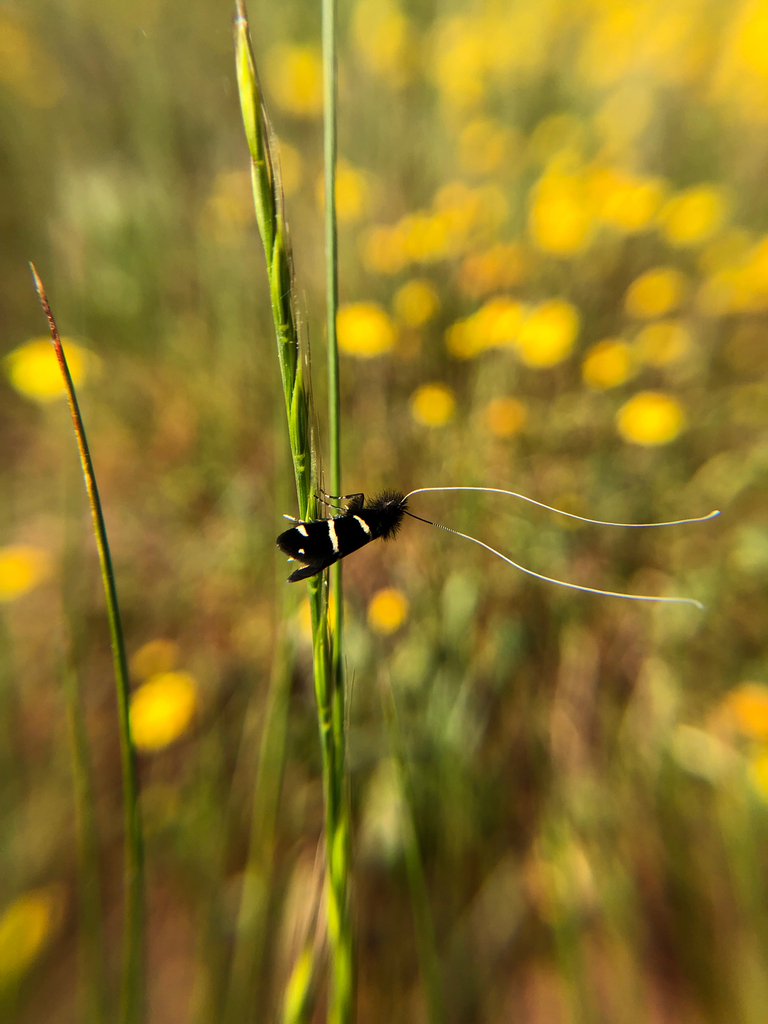
(c) Leo "Jake" Jacobsen, some rights reserved (CC BY) · licence
Family: Adelidae · Class: Insecta · Order: Lepidoptera
Adela eldorada is a California animal in the Adelidae family.
Adela eldorada is a small moth species belonging to the family Adelidae, commonly known as fairy moths or longhorn moths. This species represents one of the lesser-documented members of the genus Adela, with limited published information available regarding its detailed morphology and ecology. The physical characteristics of A. eldorada follow typical patterns observed in the Adelidae family. Adult moths are generally small-bodied insects with wingspans typically ranging from 8 to 15 millimeters. Males of Adelidae species characteristically possess extremely long, thread-like antennae that can extend well beyond the length of their forewings, while females have shorter, more conventional antennae. The wings are usually narrow and pointed, often displaying metallic or iridescent coloration that varies among species within the genus. The geographic distribution of Adela eldorada appears to be restricted to specific regions of California, though comprehensive range data remains limited in the scientific literature. The species name 'eldorada' suggests a possible connection to the Sierra Nevada region or areas historically associated with California's gold rush era, though this requires verification through additional field surveys and taxonomic research. Habitat requirements for A. eldorada likely correspond to patterns observed in related Adelidae species, which typically inhabit areas with abundant flowering plants that serve as nectar sources for adults. Many Adela species are associated with deciduous woodlands, riparian areas, or montane environments where their larval host plants occur. The specific elevation range and microhabitat preferences for this species have not been thoroughly documented. The life cycle of A. eldorada presumably follows the typical Adelidae pattern, with adults emerging during spring or early summer months when temperatures become favorable and host plants are actively growing. Adult moths are primarily diurnal, often observed visiting flowers for nectar during daylight hours. Males engage in characteristic swarming behavior, using their elongated antennae to detect female pheromones. Larvae of Adelidae species typically develop as leaf miners or feed on decomposing organic matter, though the specific larval biology of A. eldorada requires further investigation. The conservation status of Adela eldorada remains uncertain due to limited survey data and taxonomic research. The species lacks federal or state listing status, which may reflect either stable populations or insufficient data to assess population trends. California's diverse lepidopteran fauna includes numerous endemic species with restricted ranges, making comprehensive surveys challenging. Climate change, habitat fragmentation, and urbanization pose potential threats to specialized moths with limited distributions. Future research priorities for A. eldorada should include detailed morphological descriptions, genetic analysis to confirm taxonomic status, comprehensive distribution surveys, and ecological studies to identify critical habitat requirements and potential conservation needs. Understanding the species' role within California's ecosystem and its vulnerability to environmental changes will be essential for effective management decisions.
Classification
Class: Insecta · Order: Lepidoptera · Family: Adelidae
Frequently asked questions
How is Adela eldorada classified?
Adela eldorada belongs to class Insecta, order Lepidoptera, family Adelidae.
What family does Adela eldorada belong to?
Adela eldorada is in the Adelidae family.
What is Adela eldorada?
Adela eldorada is a small moth species belonging to the family Adelidae, commonly known as fairy moths or longhorn moths.
Is Adela eldorada found in California?
Yes. Adela eldorada is recorded in California in The California Species Project's catalogue.
Related species
Other California species in the same genus, family, or bioregion.
Data from The California Species Project — 14,000+ California species with verified data from CNPS, CDFW, USFWS, and more.