Adela oplerella
Opler's Longhorn Moth
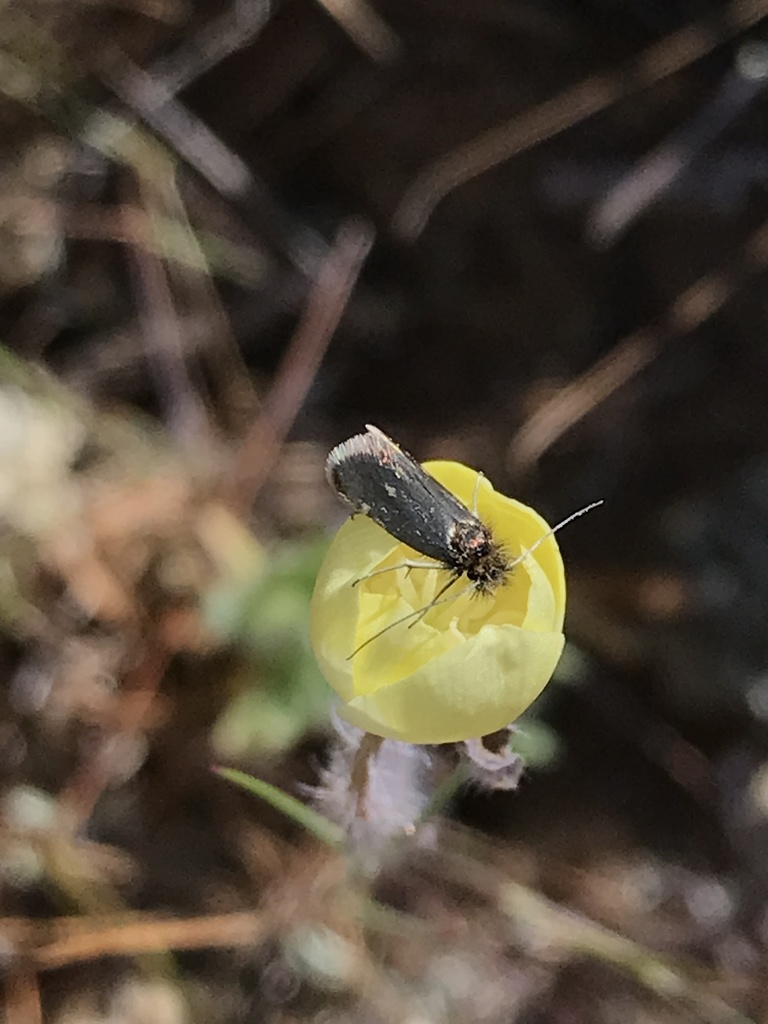
(c) LJ Moore-McClelland, some rights reserved (CC BY) · licence
Family: Adelidae · Class: Insecta · Order: Lepidoptera
Conservation status: G2 S2
Adela oplerella (Opler's Longhorn Moth) is a California animal in the Adelidae family.
Opler's longhorn moth is a small member of the fairy longhorn moth family (Adelidae) endemic to California. Adult moths are characterized by their distinctive long antennae, a defining feature of the Adelidae family. Males typically possess antennae that are several times longer than their body length, while females have shorter but still notably elongated antennae. The moths are small-bodied with narrow wings typical of the longhorn moth group. This species is endemic to California and has an extremely restricted distribution. Based on available records, Opler's longhorn moth occurs in a very limited range within the state, contributing to its G2 S2 conservation ranking, indicating it is imperiled both globally and within California due to rarity and restricted range. Opler's longhorn moth inhabits specialized serpentine grassland ecosystems. According to NatureServe, the species' habitat consists of grazed serpentine grassland with some associated chaparral, oak woodland, seeps, and rocky outcrops. Serpentine soils are characterized by their unique mineral composition and low nutrient content, supporting distinctive plant communities that many endemic California species depend upon. These habitats are naturally fragmented and have experienced significant conversion and degradation throughout California. Specific ecological and behavioral information for Adela oplerella remains poorly documented in the scientific literature. Like other members of the Adelidae family, adults are likely diurnal and may be associated with specific host plants for larval development. The timing of adult flight periods, mating behaviors, and larval host plant relationships have not been well characterized for this species. The specialized serpentine habitat requirements suggest the species may have co-evolved with particular plant species adapted to these unique soil conditions. Opler's longhorn moth was federally listed as endangered on December 20, 1990 (USFWS ECOS). The species faces significant conservation challenges due to its extremely limited range and dependence on serpentine grassland habitats. Serpentine ecosystems in California have experienced substantial habitat loss and fragmentation due to urban development, agricultural conversion, and altered grazing regimes. The species is included in recovery planning efforts for serpentine soil species of the San Francisco Bay Area, though specific population data and trends remain largely undocumented. Primary threats likely include habitat destruction, invasive plant species that alter serpentine grassland composition, and the inherent vulnerability associated with small population sizes and restricted distributions. The species' G2 S2 ranking reflects its precarious conservation status, indicating it faces a high risk of extinction without continued protection and habitat management. Scientific documentation for this species remains limited. The information presented here is based on available sources including USFWS ECOS database and NatureServe Explorer. If you have additional verified information about this species' biology, distribution, or ecology, please contact us to help improve this species account.
Classification
Class: Insecta · Order: Lepidoptera · Family: Adelidae
Conservation status
G2 S2
Frequently asked questions
How is Adela oplerella classified?
Adela oplerella belongs to class Insecta, order Lepidoptera, family Adelidae.
What family does Adela oplerella belong to?
Adela oplerella is in the Adelidae family.
Is Adela oplerella protected or of conservation concern?
Adela oplerella carries the following status: G2 S2.
What is Adela oplerella?
Opler's longhorn moth is a small member of the fairy longhorn moth family (Adelidae) endemic to California.
Is Adela oplerella found in California?
Yes. Adela oplerella is recorded in California in The California Species Project's catalogue.
Related species
Other California species in the same genus, family, or bioregion.
Data from The California Species Project — 14,000+ California species with verified data from CNPS, CDFW, USFWS, and more.