Adelges cooleyi
Douglas Fir Adelgid
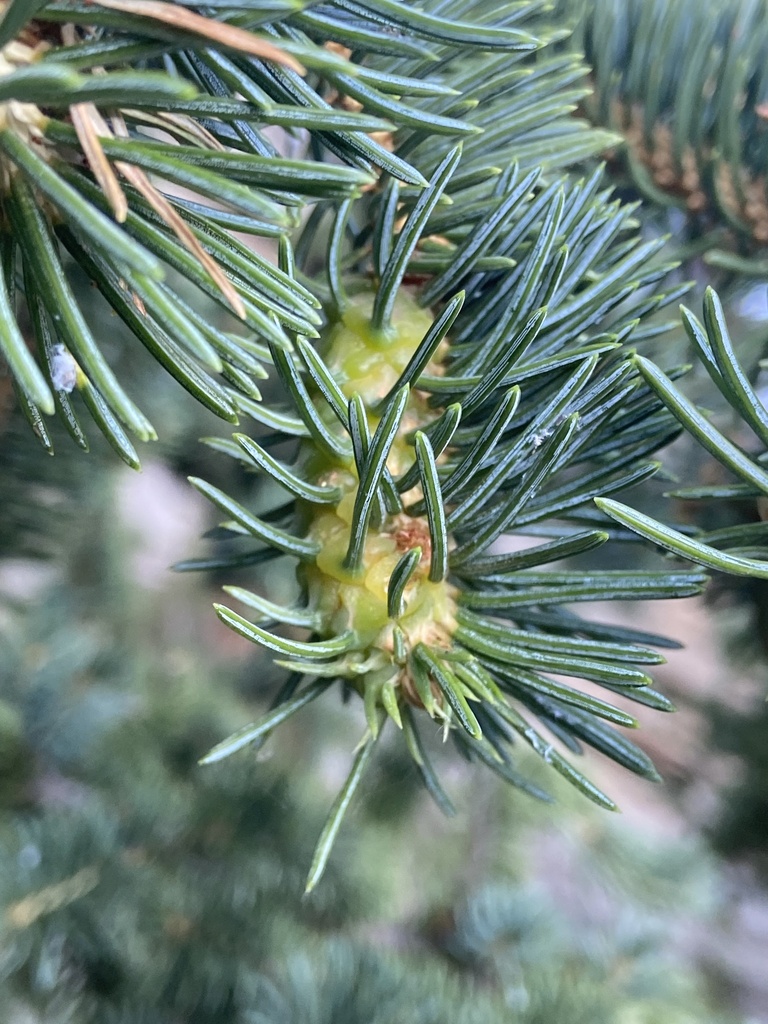
no rights reserved · CC0
Family: Adelgidae · Class: Insecta · Order: Hemiptera
Adelges cooleyi (Douglas Fir Adelgid) is a California animal in the Adelgidae family.
The Douglas fir adelgid (Adelges cooleyi) is a small aphid-like insect in the family Adelgidae that creates distinctive galls on coniferous trees. Adults measure approximately 1-2 mm in length and exhibit the characteristic features of adelgids, including reduced wing venation and specialized piercing-sucking mouthparts. The wingless forms are typically pale yellow to light brown, while winged forms may appear darker with translucent wings. This species has a complex distribution across western North America, extending from British Columbia south through Washington, Oregon, Idaho, and into northern California. According to NatureServe Explorer, Adelges cooleyi is globally secure with a conservation rank of G5 (NatureServe 2025). The species occurs from near sea level in coastal regions to montane elevations, demonstrating considerable ecological adaptability across different forest types and climatic conditions. Adelges cooleyi inhabits coniferous forests where it completes its complex life cycle on two host tree species. The primary host is Douglas fir (Pseudotsuga menziesii), where the insect forms characteristic cone-shaped galls at branch tips. The secondary host is typically Engelmann spruce (Picea engelmannii) or other spruce species, where different life stages develop on needles and bark. The species shows preference for mature forest stands but can also occur in younger growth and managed forests where suitable host trees are present. The life cycle of Douglas fir adelgid involves multiple generations and alternating host plants, typical of adelgid species. On Douglas fir, overwintering nymphs develop into adults in spring and lay eggs that develop into gall-forming stages. The distinctive galls, resembling small pine cones, develop at branch tips and provide protection for developing nymphs. These galls turn brown and woody as they mature, eventually opening to release winged adults that may migrate to spruce hosts. On spruce, the insects complete additional generations before producing forms that return to Douglas fir to complete the cycle. Feeding occurs through insertion of specialized stylets into plant tissues, extracting fluids while injecting saliva that stimulates gall formation on Douglas fir. The species typically produces one generation per year on Douglas fir, though the complete cycle involving spruce hosts may extend over multiple years. Peak adult emergence generally occurs in late spring to early summer, coinciding with new growth on host trees. As a native species with secure conservation status, Douglas fir adelgid does not face significant conservation threats. However, forest management practices, climate change impacts on host tree distributions, and potential interactions with introduced pest species could affect local populations. The species serves as part of the natural forest ecosystem and provides food resources for various predators and parasitoids that help maintain ecological balance in coniferous forest communities.
Classification
Class: Insecta · Order: Hemiptera · Family: Adelgidae
Frequently asked questions
How is Adelges cooleyi classified?
Adelges cooleyi belongs to class Insecta, order Hemiptera, family Adelgidae.
What family does Adelges cooleyi belong to?
Adelges cooleyi is in the Adelgidae family.
What is Adelges cooleyi?
The Douglas fir adelgid (Adelges cooleyi) is a small aphid-like insect in the family Adelgidae that creates distinctive galls on coniferous trees.
Is Adelges cooleyi found in California?
Yes. Adelges cooleyi is recorded in California in The California Species Project's catalogue.
More California species
This species has no close relatives in our California data — here are other species to explore.
Data from The California Species Project — 14,000+ California species with verified data from CNPS, CDFW, USFWS, and more.