Adelpha californica
California Sister
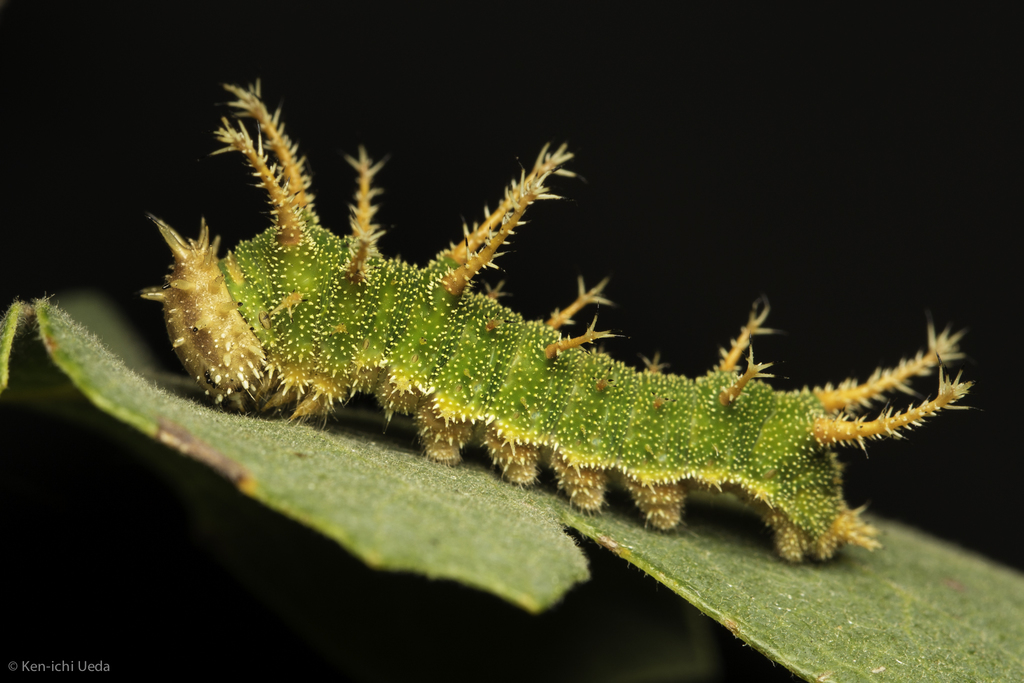
(c) Ken-ichi Ueda, some rights reserved (CC BY) · licence
Family: Nymphalidae · Class: Insecta · Order: Lepidoptera
Adelpha californica (California Sister) is a California animal in the Nymphalidae family.
The California sister is a medium-sized butterfly with distinctive black and white wing patterns. Adults have a wingspan of 70-85 mm (2.8-3.3 inches). The forewings are predominantly black with a broad white band extending from the leading edge toward the apex, and small white spots near the wing tips. The hindwings display a similar black base color with white banding and prominent orange patches near the anal angle. Males and females show similar coloration, though females are typically slightly larger. The underside of the wings features muted brown and gray tones with white markings that provide camouflage when the butterfly rests with wings folded. California sister occurs throughout most of California, with populations extending into southern Oregon and northern Nevada. The species is rarely found in desert regions or the Great Basin, though adults occasionally stray into western edges of California's deserts during fall months to seek water at springs or streams. The butterfly's distribution closely follows that of its host plants, primarily oak woodlands and mixed evergreen forests. This species inhabits oak woodlands, chaparral, and mixed coniferous forests from near sea level to approximately 2,100 meters (6,900 feet) in elevation. California sister is most commonly found in areas with canyon live oak and other oak species, particularly in riparian zones and north-facing slopes where moisture levels remain higher. Adults are often observed near streams, springs, and seeps, especially during dry periods. California sister larvae feed exclusively on various oak species, with canyon live oak (Quercus chrysolepis) serving as the primary host plant. Other utilized oak species include coast live oak (Q. agrifolia), interior live oak (Q. wislizeni), and occasionally deciduous oaks. Females deposit single eggs on oak leaves, typically on new growth. The species produces multiple broods per year, with flight periods extending from March through October, peaking during spring and early summer months. Adults are strong fliers and exhibit territorial behavior, with males establishing perching sites along ridgetops and canyon edges. They feed on tree sap, rotting fruit, dung, and occasionally flower nectar. The California sister is not federally or state listed and appears to maintain stable populations throughout its range. The species benefits from its association with widespread oak habitats, though localized populations may face pressure from habitat fragmentation and oak woodland conversion. Urban development in foothill areas poses the primary threat, as it removes host plants and fragments suitable habitat. Climate change may affect the species through altered precipitation patterns that impact oak health and distribution. Fire management practices that maintain oak regeneration support California sister populations, as the species requires both mature oaks for adult resources and younger growth for larval development.
Classification
Class: Insecta · Order: Lepidoptera · Family: Nymphalidae
Frequently asked questions
How is Adelpha californica classified?
Adelpha californica belongs to class Insecta, order Lepidoptera, family Nymphalidae.
What family does Adelpha californica belong to?
Adelpha californica is in the Nymphalidae family.
What is Adelpha californica?
The California sister is a medium-sized butterfly with distinctive black and white wing patterns.
Is Adelpha californica found in California?
Yes. Adelpha californica is recorded in California in The California Species Project's catalogue.
Related species
Other California species in the same genus, family, or bioregion.
Data from The California Species Project — 14,000+ California species with verified data from CNPS, CDFW, USFWS, and more.