Adelpha eulalia
Arizona Sister
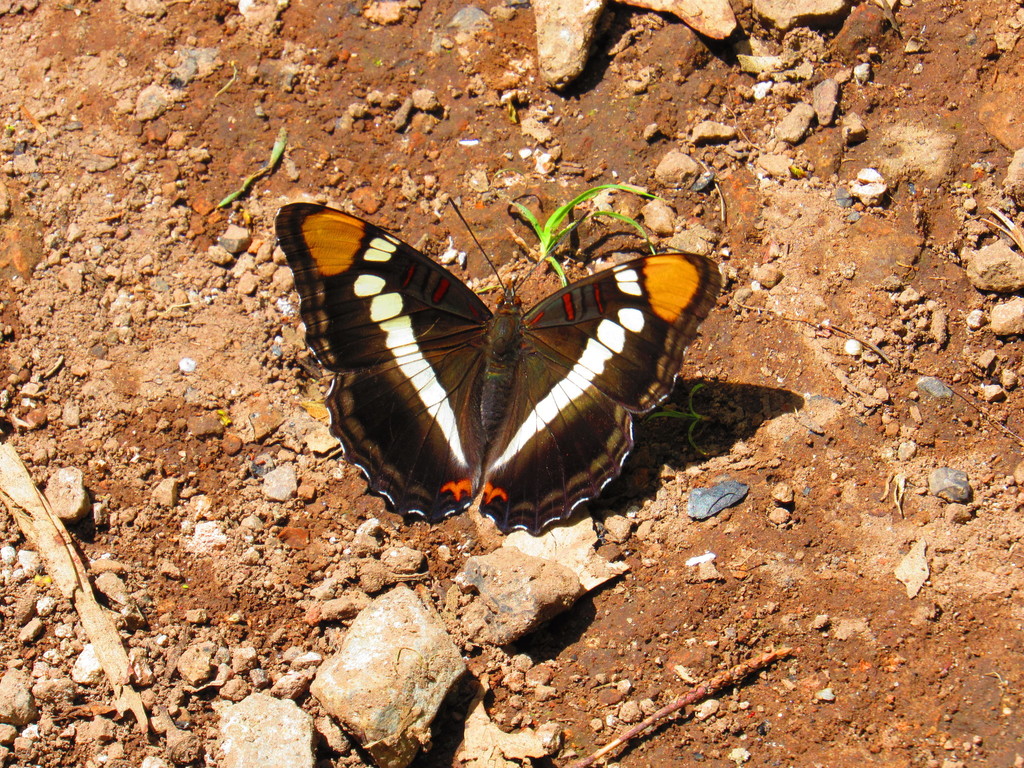
(c) Oscar Alejandro Morales Juárez, some rights reserved (CC BY-SA) · licence
Family: Nymphalidae · Class: Insecta · Order: Lepidoptera
Adelpha eulalia (Arizona Sister) is a California animal in the Nymphalidae family.
The Arizona Sister is a medium-sized butterfly belonging to the subfamily Limenitidinae within the family Nymphalidae. Adults have a wingspan ranging from 55 to 70 mm (2.2 to 2.8 inches). The wings display a distinctive black base coloration with prominent white bands and patches creating a striking pattern. The forewings feature a broad white median band and white apical patches, while the hindwings show white postmedian bands. Orange patches are present near the wing tips, and the undersides are lighter with similar white banding but more subdued coloration. Males and females are similar in appearance, though females tend to be slightly larger. Adelpha eulalia has a broad distribution across the southwestern United States and into Mexico. In California, the species is restricted to southeastern regions, specifically documented in the New York, Providence, and Granite Mountains north of Amboy in San Bernardino County. The range extends eastward through Arizona, southern Nevada, Utah, Colorado, New Mexico, Kansas, Oklahoma, and Texas. This represents one of the more extensive distributions among North American Adelpha species. The species inhabits oak woodlands and associated riparian areas, typically at elevations between 1,200 and 2,400 meters (4,000 to 8,000 feet). Arizona Sisters are closely associated with their host plants and are most commonly found in canyons and mountain slopes where oak species thrive. They prefer areas with partial shade and nearby water sources, often occurring along intermittent streams and in moist canyon bottoms. Larvae feed exclusively on several species of oaks (Quercus spp.), including Arizona white oak, Gambel oak, and other regional oak species. Adult butterflies are active from spring through fall, with peak flight periods varying by elevation and latitude. The species typically produces two broods annually in favorable conditions. Adults feed on tree sap, rotting fruit, and occasionally flower nectar, though they show a strong preference for fermenting organic matter. Males engage in territorial behavior, perching on prominent branches or rocks to watch for passing females and rivals. Mating occurs during warmer months, with females laying eggs singly on young oak leaves. The larvae are cryptically colored green with pale stripes and small spines, providing camouflage among the oak foliage. Pupation occurs in a chrysalis attached to the host plant, with the pupal stage lasting approximately two weeks during favorable conditions. The Arizona Sister does not currently hold federal or state conservation status in California. However, like many oak-dependent species, populations may face pressure from habitat modification, drought conditions affecting oak health, and urban development in foothill areas. The species' relatively broad distribution suggests stable populations across most of its range, though specific population data for California localities are limited. Climate change impacts on oak woodland ecosystems could potentially affect future population trends, particularly at the margins of the species' elevational range.
Classification
Class: Insecta · Order: Lepidoptera · Family: Nymphalidae
Frequently asked questions
How is Adelpha eulalia classified?
Adelpha eulalia belongs to class Insecta, order Lepidoptera, family Nymphalidae.
What family does Adelpha eulalia belong to?
Adelpha eulalia is in the Nymphalidae family.
What is Adelpha eulalia?
The Arizona Sister is a medium-sized butterfly belonging to the subfamily Limenitidinae within the family Nymphalidae.
Is Adelpha eulalia found in California?
Yes. Adelpha eulalia is recorded in California in The California Species Project's catalogue.
Related species
Other California species in the same genus, family, or bioregion.
Data from The California Species Project — 14,000+ California species with verified data from CNPS, CDFW, USFWS, and more.