Aedes sierrensis
Western Treehole Mosquito
no rights reserved · CC0
Family: Culicidae · Class: Insecta · Order: Diptera
Aedes sierrensis (Western Treehole Mosquito) is a California animal in the Culicidae family.
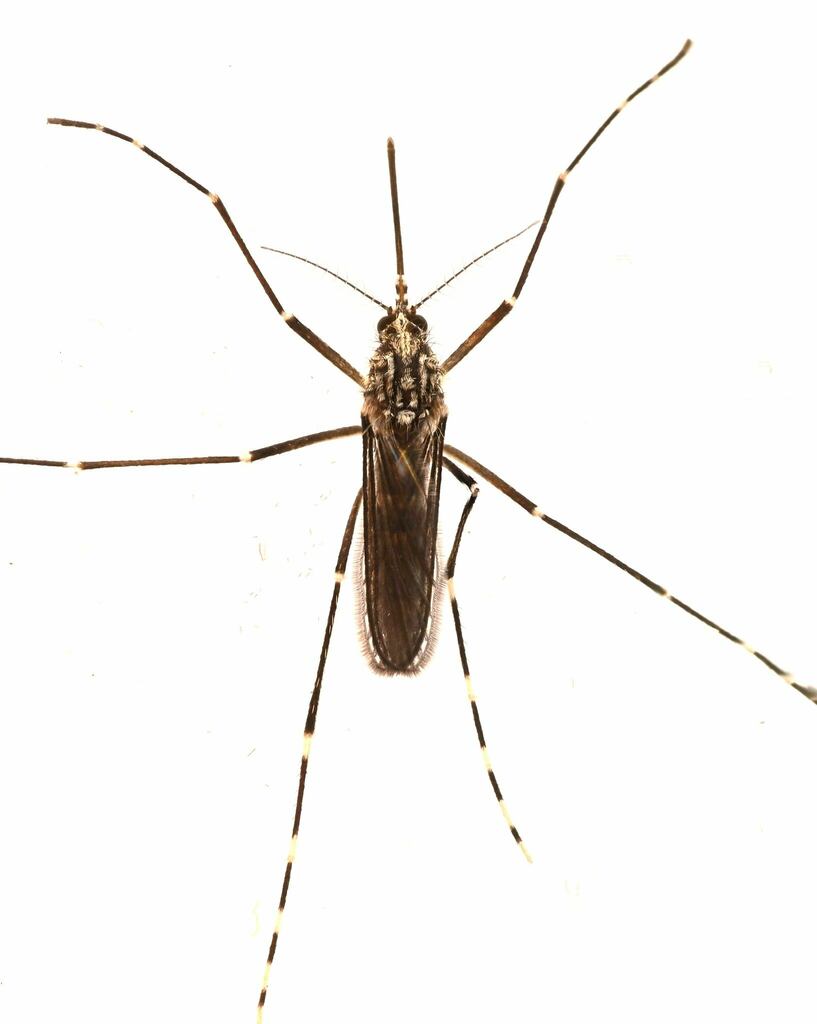
Aedes sierrensis, commonly known as the Western Treehole Mosquito, is a native mosquito species found throughout western North America. Adults are small, dark-colored mosquitoes typical of the genus Aedes, with distinctive white or pale markings on the legs and body segments that help distinguish them from other mosquito species. The species ranges from southern California north to British Columbia and extends eastward to Utah (iNaturalist). In California, the Western Treehole Mosquito is distributed throughout much of the state, particularly in areas with suitable oak woodland and mixed forest habitats. The species shows a strong association with regions containing mature trees that can develop the water-filled cavities necessary for larval development. Western Treehole Mosquitoes inhabit oak woodlands and mixed deciduous forests, where they breed exclusively in natural tree holes - water-filled rot cavities or depressions found in various tree species (Napa County Mosquito Abatement District). While oaks are the primary host trees, larvae also develop in cavities found in bay laurel, eucalyptus, and other tree species that can retain water in hollowed sections or damaged areas. These breeding sites are typically small, containing only a few ounces to several gallons of water, and are often shaded by the forest canopy. The species exhibits a container-breeding ecology typical of many Aedes mosquitoes. Females deposit eggs on moist substrates above the water line within tree holes, rather than directly on water surfaces (Santa Cruz County). Eggs can withstand dry periods and hatch when water levels rise from rainfall or irrigation. Larval development occurs entirely within these confined aquatic microhabitats, where larvae feed on organic debris, bacteria, and other microorganisms present in the tree hole ecosystem. Adults are active primarily during daylight hours and females require blood meals for egg production. The species can complete multiple generations per year when conditions are favorable. Like other native Aedes species, A. sierrensis serves as both predator and prey within forest ecosystems. Larvae help process organic matter in tree hole communities, while adults provide food for various insectivorous animals including birds, bats, and spiders. The species is considered a nuisance biter in some areas but is not known to be a significant vector of human diseases. Currently, Aedes sierrensis has no special conservation status and appears to be stable throughout its range. However, habitat loss due to oak woodland conversion and urban development may affect local populations. Forest management practices that remove dead or hollow trees can eliminate breeding sites, though the species' broad host tree range provides some resilience. Climate change impacts on precipitation patterns and forest composition may influence future distribution and abundance of this tree hole-dependent species.
Classification
Class: Insecta · Order: Diptera · Family: Culicidae
Frequently asked questions
How is Aedes sierrensis classified?
Aedes sierrensis belongs to class Insecta, order Diptera, family Culicidae.
What family does Aedes sierrensis belong to?
Aedes sierrensis is in the Culicidae family.
What is Aedes sierrensis?
Aedes sierrensis, commonly known as the Western Treehole Mosquito, is a native mosquito species found throughout western North America.
Is Aedes sierrensis found in California?
Yes. Aedes sierrensis is recorded in California in The California Species Project's catalogue.
Related species
Other California species in the same genus, family, or bioregion.
Data from The California Species Project — 14,000+ California species with verified data from CNPS, CDFW, USFWS, and more.