Aegialia concinna
Ciervo Aegialian Scarab Beetle
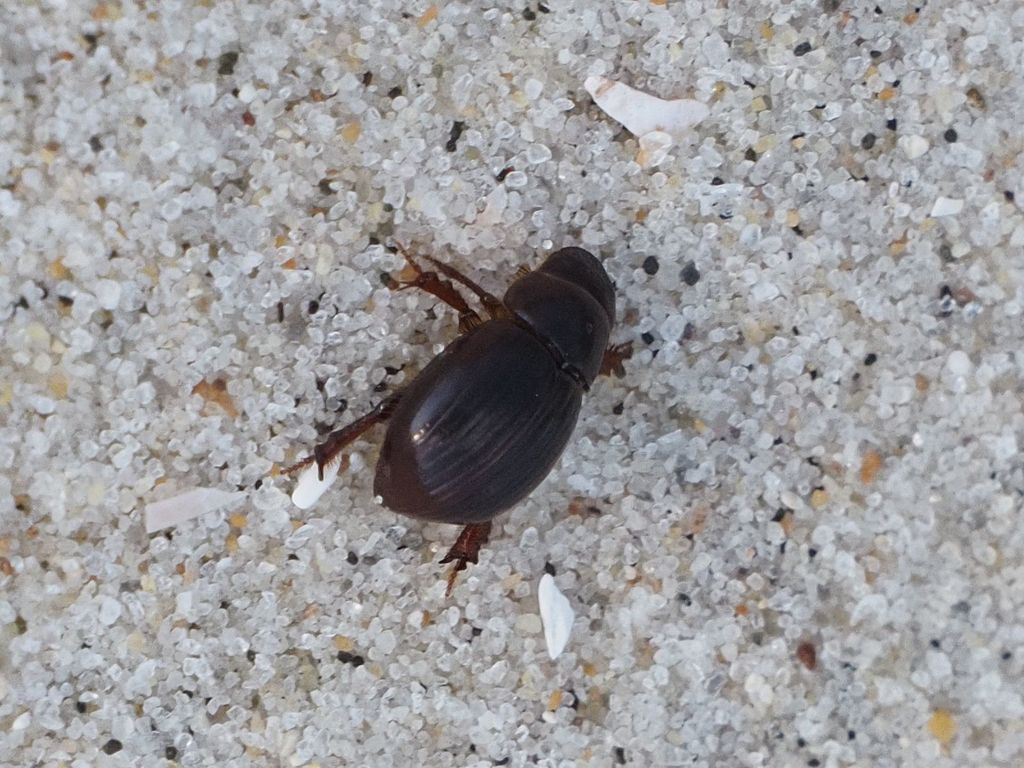
(c) Michael Knapp, some rights reserved (CC BY) · licence
Family: Scarabaeidae · Class: Insecta · Order: Coleoptera
Conservation status: G1 S1
Aegialia concinna (Ciervo Aegialian Scarab Beetle) is a California animal in the Scarabaeidae family.
The Ciervo Aegialian Scarab Beetle (Aegialia concinna) is a small scarab beetle belonging to the family Scarabaeidae, subfamily Aphodiinae and tribe Aegialiini. This species was first described by LeConte in 1858 from specimens collected during the United States and Mexican Boundary Commission survey under Major W.H. Emory (LeConte 1858). As a member of the aegialian scarab group, it exhibits the typical compact, oval body form characteristic of the genus Aegialia, though specific morphological measurements for this species have not been well documented in available literature. The species occurs in western North America, with its range extending through parts of California and adjacent regions. The common name "Ciervo" likely refers to a specific locality or region where the species was first collected or is particularly associated. Like other members of the genus Aegialia, this species is found in sandy or loose soil environments, though specific habitat preferences for A. concinna have not been thoroughly studied or documented in recent scientific literature. Aegialia concinna inhabits areas with well-drained, sandy soils typical of many aegialian scarab species. Members of this genus are generally associated with coastal dunes, sandy river terraces, and other sandy substrates where they can effectively burrow and move through loose sediment. The elevation range and specific microhabitat requirements for this particular species remain poorly documented, representing a significant knowledge gap in our understanding of its ecological needs. Like other scarab beetles in the subfamily Aphodiinae, A. concinna likely feeds on organic matter in soil, including decomposing plant material and possibly fungal matter. The specific diet, reproductive behavior, and seasonal activity patterns of this species have not been well studied. Adult beetles presumably emerge during warmer months, as is typical for temperate scarab species, but specific timing of reproduction and larval development periods are unknown. The larvae likely develop in sandy soil, feeding on organic debris, but detailed life cycle information is lacking. The conservation status of Aegialia concinna has not been formally assessed by state or federal agencies. The species does not appear on the U.S. Fish and Wildlife Service's list of threatened or endangered species as of December 2025, nor does it hold any special conservation designation in California. The limited scientific documentation for this species makes it difficult to assess population trends or identify specific threats. Potential concerns for sandy habitat specialists like aegialian scarabs include habitat loss due to coastal development, sand mining operations, and recreational activities that disturb sandy substrates. Climate change effects on coastal and sandy inland habitats may also pose long-term challenges. Detailed ecological studies of this species are lacking. This species is included on the California Department of Fish and Wildlife's Special Animals List. The above information synthesizes available sources including historical taxonomic literature and general knowledge of aegialian scarab ecology. Further research is needed to document the species' distribution, habitat requirements, life cycle, and conservation needs. Field surveys and ecological studies would significantly enhance our understanding of this understudied beetle species.
Classification
Class: Insecta · Order: Coleoptera · Family: Scarabaeidae
Conservation status
G1 S1
Frequently asked questions
How is Aegialia concinna classified?
Aegialia concinna belongs to class Insecta, order Coleoptera, family Scarabaeidae.
What family does Aegialia concinna belong to?
Aegialia concinna is in the Scarabaeidae family.
Is Aegialia concinna protected or of conservation concern?
Aegialia concinna carries the following status: G1 S1.
What is Aegialia concinna?
The Ciervo Aegialian Scarab Beetle (Aegialia concinna) is a small scarab beetle belonging to the family Scarabaeidae, subfamily Aphodiinae and tribe Aegialiini.
Is Aegialia concinna found in California?
Yes. Aegialia concinna is recorded in California in The California Species Project's catalogue.
Related species
Other California species in the same genus, family, or bioregion.
Data from The California Species Project — 14,000+ California species with verified data from CNPS, CDFW, USFWS, and more.