Aequorea victoria
Victoria's Crystal Jelly
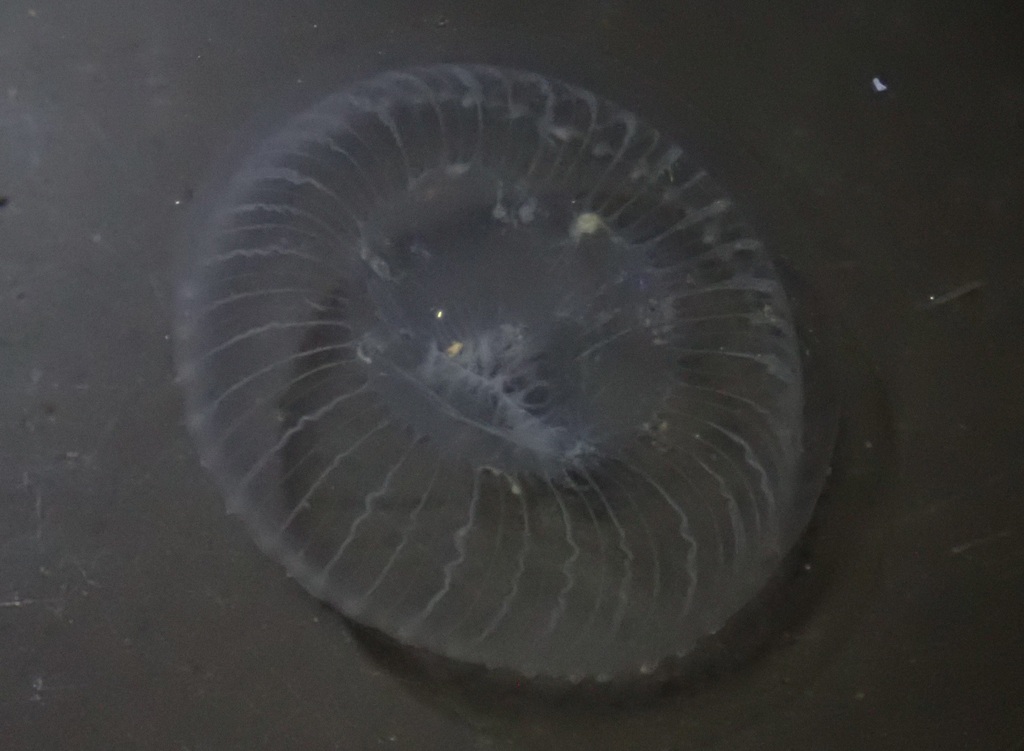
(c) Cricket Raspet, some rights reserved (CC BY) · licence
Family: Aequoreidae · Class: Hydrozoa · Order: Leptothecata
Aequorea victoria (Victoria's Crystal Jelly) is a California animal in the Aequoreidae family.
Victoria's crystal jelly (Aequorea victoria) is a bioluminescent hydrozoan jellyfish found off the west coast of North America. The medusa stage typically measures 10 to 25 centimeters (4 to 10 inches) in diameter, with a transparent, bell-shaped body that appears nearly colorless in water. The bell margin contains numerous small tentacles, while the mouth is located at the center of the subumbrellar surface. The species is renowned for its bioluminescence, producing blue-green light through the protein aequorin when disturbed. Aequorea victoria occurs along the Pacific coast from Alaska to California, with populations documented in British Columbia waters and extending south to central California. The species inhabits nearshore marine waters, typically found in bays, harbors, and coastal areas where it may aggregate near herring spawning grounds. Distribution appears to be influenced by ocean currents and seasonal temperature variations. This jellyfish occupies pelagic marine environments, preferring cooler water temperatures typical of the North Pacific. The species can be found from surface waters to depths of several meters, often moving vertically in the water column in response to light conditions and prey availability. Victoria's crystal jelly tolerates a range of salinity conditions but requires full marine environments for optimal survival. The species exhibits a complex life cycle alternating between polyp and medusa stages. The hydroid stage reproduces asexually through budding, while the medusa stage reproduces sexually by releasing gametes into the water column (SeaLifeBase). Adults are carnivorous, feeding primarily on small planktonic organisms, fish eggs, and other jellyfish. The species shows opportunistic feeding behavior, capturing prey with its tentacles and transporting it to the central mouth. Bioluminescence serves as both a defense mechanism and potentially aids in prey capture, with light production triggered by mechanical stimulation. Victoria's crystal jelly gained scientific prominence beyond marine biology when its green fluorescent protein (GFP) was isolated and developed as a revolutionary research tool in molecular biology. This protein, which fluoresces green under blue light, has become essential in genetic research and medical applications worldwide. Currently, Aequorea victoria has no formal conservation status listings at federal or state levels. The species maintains stable populations throughout its range, though like many marine organisms, it faces potential threats from ocean acidification, climate change, and pollution. Research into the species' ecology and population dynamics remains limited, with most studies focused on its biochemical properties rather than conservation needs. The jellyfish's role in marine ecosystems as both predator and prey makes it an important component of North Pacific food webs, though comprehensive population monitoring is lacking.
Classification
Class: Hydrozoa · Order: Leptothecata · Family: Aequoreidae
Frequently asked questions
How is Aequorea victoria classified?
Aequorea victoria belongs to class Hydrozoa, order Leptothecata, family Aequoreidae.
What family does Aequorea victoria belong to?
Aequorea victoria is in the Aequoreidae family.
What is Aequorea victoria?
Victoria's crystal jelly (Aequorea victoria) is a bioluminescent hydrozoan jellyfish found off the west coast of North America.
Is Aequorea victoria found in California?
Yes. Aequorea victoria is recorded in California in The California Species Project's catalogue.
More California species
This species has no close relatives in our California data — here are other species to explore.
Data from The California Species Project — 14,000+ California species with verified data from CNPS, CDFW, USFWS, and more.