Aethes razowskii
Razowski's Aethes Moth
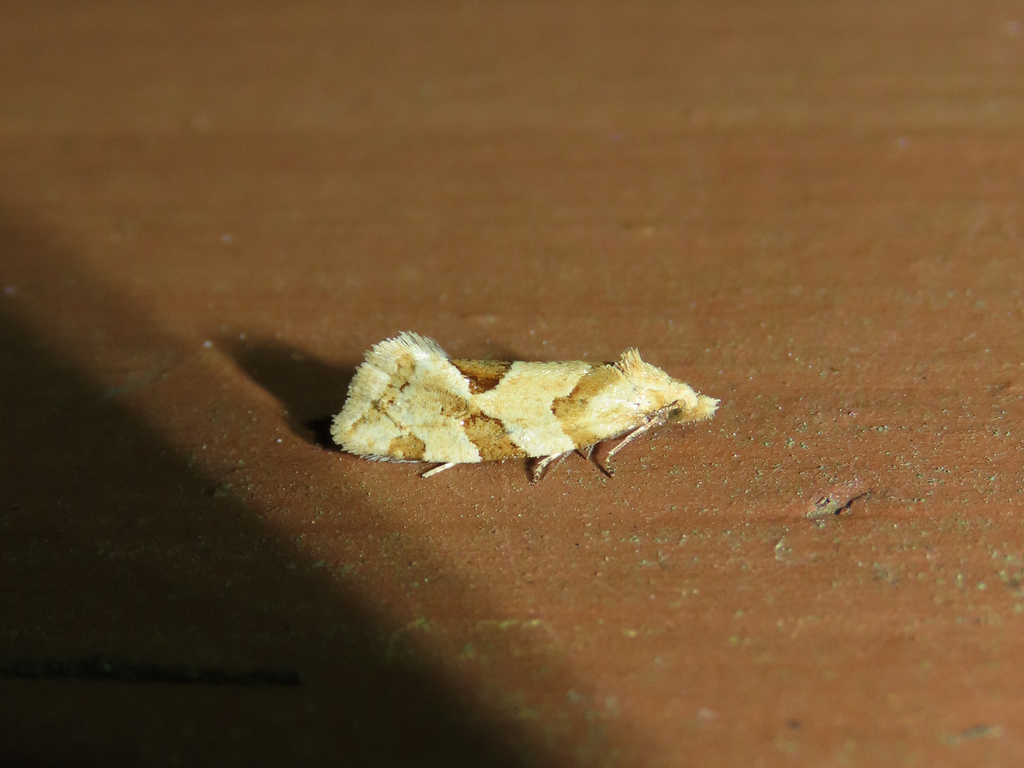
(c) Alina Martin, some rights reserved (CC BY) · licence
Family: Tortricidae · Class: Insecta · Order: Lepidoptera
Aethes razowskii (Razowski's Aethes Moth) is a California animal in the Tortricidae family.
Aethes razowskii, known as Razowski's Aethes Moth, is a small tortricid moth in the family Tortricidae. This species belongs to a diverse group of microlepidoptera commonly referred to as leafroller moths due to their larvae's characteristic behavior of rolling or folding leaves for shelter and feeding. Adult Aethes razowskii moths are small, typically measuring 8-12 millimeters (0.31-0.47 inches) in wingspan, consistent with other members of the genus Aethes. The forewings display muted earth tones, generally featuring brown and gray coloration with subtle markings that provide camouflage against tree bark and dried vegetation. The hindwings are typically lighter in color, often pale gray or whitish. Like other tortricid moths, the wings are held roof-like over the body when at rest, creating a triangular profile. The current distribution of Aethes razowskii appears to be limited and poorly documented. As with many microlepidoptera species, comprehensive range data is lacking due to the challenges of field identification and the specialized expertise required for accurate species determination. The species' presence in California, if confirmed, would likely be restricted to specific habitat types that support appropriate host plants. Habitat requirements for Aethes razowskii remain largely undocumented in available literature. Most Aethes species inhabit areas with diverse herbaceous vegetation, including meadows, forest edges, and riparian zones. The species likely requires specific host plants for larval development, as tortricid moths typically exhibit narrow host plant associations. Elevation preferences and microhabitat requirements have not been established for this species. The life cycle of Aethes razowskii follows the typical tortricid pattern, with larvae feeding within rolled or folded leaves of host plants. Adult moths are likely active during specific seasonal periods, though flight times have not been documented. Larvae create characteristic feeding shelters by spinning silk to bind leaf edges or fold leaves, creating protected spaces for feeding and development. The species presumably undergoes complete metamorphosis with egg, larval, pupal, and adult stages, though specific timing and duration of each stage remain unknown. The conservation status of Aethes razowskii is unclear due to limited taxonomic and ecological research. The species lacks formal protection under federal or California state endangered species legislation. Population trends, distribution extent, and primary threats have not been assessed. As with many microlepidoptera, potential threats may include habitat loss, pesticide use, and climate change effects on host plant communities. The species' conservation needs cannot be adequately evaluated without basic biological and ecological data, including confirmed host plant associations, detailed distribution mapping, and population monitoring. Further research is essential to determine whether Aethes razowskii requires conservation attention and to develop appropriate management strategies if needed.
Classification
Class: Insecta · Order: Lepidoptera · Family: Tortricidae
Frequently asked questions
How is Aethes razowskii classified?
Aethes razowskii belongs to class Insecta, order Lepidoptera, family Tortricidae.
What family does Aethes razowskii belong to?
Aethes razowskii is in the Tortricidae family.
What is Aethes razowskii?
Aethes razowskii, known as Razowski's Aethes Moth, is a small tortricid moth in the family Tortricidae.
Is Aethes razowskii found in California?
Yes. Aethes razowskii is recorded in California in The California Species Project's catalogue.
Related species
Other California species in the same genus, family, or bioregion.
Data from The California Species Project — 14,000+ California species with verified data from CNPS, CDFW, USFWS, and more.