Aetole extraneella
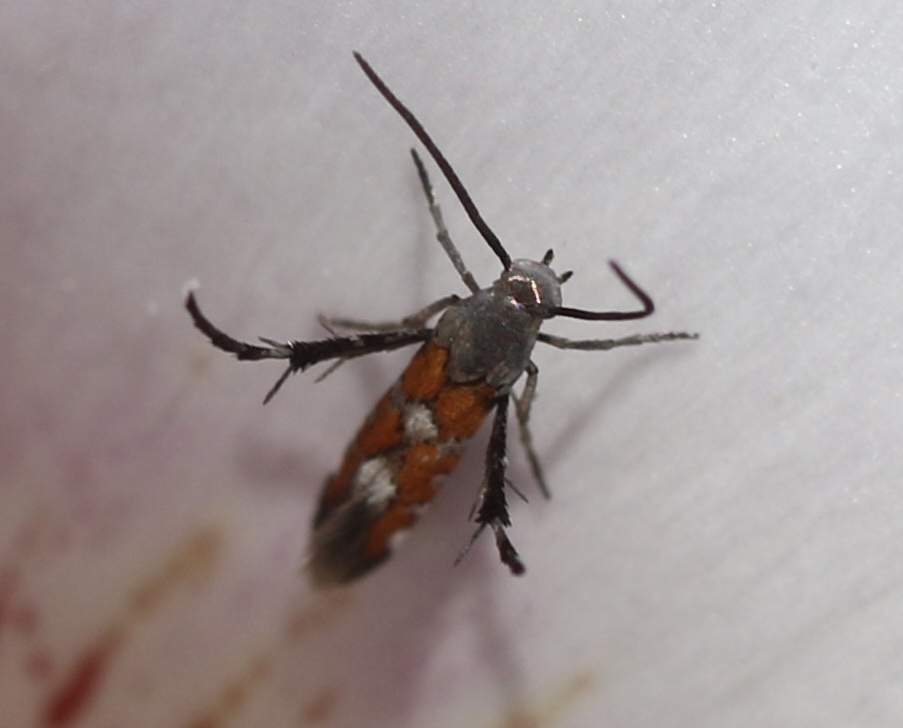
(c) Cricket Raspet, some rights reserved (CC BY) · licence
Family: Heliodinidae · Class: Insecta · Order: Lepidoptera
Aetole extraneella is a California animal in the Heliodinidae family.
Aetole extraneella is a small moth in the family Heliodinidae, a group of microlepidoptera known for their minute size and specialized larval feeding habits. Adult moths typically measure 8 to 12 millimeters in wingspan, with narrow forewings that are bronze to dark brown in coloration. The hindwings are pale gray with long, hair-like fringes characteristic of the Heliodinidae family. The forewings often display subtle metallic scaling that may appear copper-colored under magnification. This species occurs throughout California and extends northward into southern British Columbia, representing a relatively broad distribution for a microlepidopteran. An unconfirmed record exists from Utah, suggesting the species may have a wider range than currently documented. Within California, the moth's distribution likely corresponds to the range of its host plants, which are primarily found in foothill and montane regions. Aetole extraneella inhabits areas where its host plants occur, including chaparral, woodland margins, and riparian zones. The species is associated with plant communities containing Clarkia species and various Epilobium taxa, particularly California fuchsia (Epilobium canum, formerly Zauschneria canum). These habitats typically occur at elevations ranging from near sea level to montane zones, depending on host plant distribution. The moth may also utilize disturbed areas and garden settings where ornamental California fuchsia is cultivated. The larvae of Aetole extraneella are specialized leaf miners and pod borers, feeding within the tissues of their host plants. Primary hosts include species of Clarkia, members of the evening primrose family, and several Epilobium species, with particular preference for California fuchsia. The larvae initially mine within leaf tissues, creating serpentine galleries as they feed. Later instars bore into immature seed pods, where they complete development by consuming developing seeds. This dual feeding strategy allows the species to exploit both vegetative and reproductive tissues of its hosts. In Utah, the species has been recorded from Gaura, suggesting some flexibility in host plant selection. Adult flight periods likely coincide with host plant flowering and fruiting seasons, typically occurring from late spring through early fall depending on elevation and local climate conditions. The conservation status of Aetole extraneella has not been formally assessed by state or federal agencies. Like many microlepidoptera, this species likely faces threats from habitat loss due to urban development, agricultural conversion, and altered fire regimes that affect chaparral and woodland communities. Climate change may impact the species through shifts in host plant phenology and distribution. The moth's apparent dependence on native plant communities makes it potentially vulnerable to invasive plant species that displace native Clarkia and Epilobium populations. However, the species' use of cultivated California fuchsia may provide some buffer against habitat loss in urban and suburban areas.
Classification
Class: Insecta · Order: Lepidoptera · Family: Heliodinidae
Frequently asked questions
How is Aetole extraneella classified?
Aetole extraneella belongs to class Insecta, order Lepidoptera, family Heliodinidae.
What family does Aetole extraneella belong to?
Aetole extraneella is in the Heliodinidae family.
What is Aetole extraneella?
Aetole extraneella is a small moth in the family Heliodinidae, a group of microlepidoptera known for their minute size and specialized larval feeding habits.
Is Aetole extraneella found in California?
Yes. Aetole extraneella is recorded in California in The California Species Project's catalogue.
Related species
Other California species in the same genus, family, or bioregion.
Data from The California Species Project — 14,000+ California species with verified data from CNPS, CDFW, USFWS, and more.