Agabus rumppi
Death Valley Agabus Diving Beetle
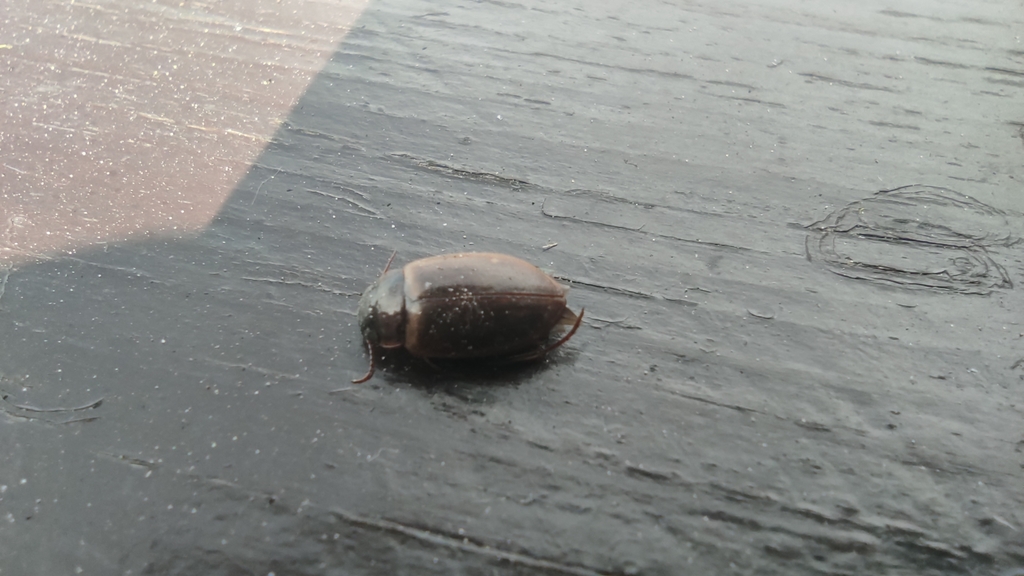
(c) Алексей Селезнёв, some rights reserved (CC BY) · licence
Family: Dytiscidae · Class: Insecta · Order: Coleoptera
Conservation status: G1G3 S1S2
Agabus rumppi (Death Valley Agabus Diving Beetle) is a California animal in the Dytiscidae family.
The Death Valley Agabus diving beetle is a small aquatic insect in the family Dytiscidae, endemic to a limited range within the Mojave Desert region. Like other diving beetles in the genus Agabus, this species exhibits typical dytiscid morphology with a streamlined, oval-shaped body adapted for aquatic life. Adults possess powerful swimming legs with fringed hairs that aid in propulsion through water. The species displays the characteristic dark coloration common to many diving beetles, though detailed morphological descriptions remain limited in the scientific literature. Agabus rumppi has an extremely restricted distribution, occurring only in specific aquatic habitats within the Death Valley region of California and Nevada. The species' range falls within the broader Mojave Desert ecoregion, which extends from southwestern Utah across southern Nevada to southeastern California. Given its association with Death Valley, the beetle occupies one of North America's most extreme environments, where elevations range from 282 feet below sea level to over 11,000 feet in surrounding mountain ranges. This diving beetle inhabits permanent and semi-permanent aquatic systems within the desert landscape. The species requires stable water sources that persist through the region's harsh climatic conditions, including extreme temperatures and minimal precipitation. Death Valley's aquatic habitats are primarily fed by springs and underground water sources, creating isolated aquatic islands within the surrounding arid landscape. These water bodies often exhibit unique chemical compositions due to the region's geological characteristics and high evaporation rates. As with other diving beetles, A. rumppi likely functions as both predator and scavenger within its aquatic ecosystem. Adult diving beetles typically feed on small invertebrates, larvae of other aquatic insects, and organic detritus. The species presumably completes its full life cycle in water, with females laying eggs in aquatic vegetation or substrate. Larvae are also aquatic and predatory, eventually pupating before emerging as adults. The extreme isolation of Death Valley's aquatic habitats likely results in highly specialized ecological relationships and potential endemic prey species. The Death Valley Agabus diving beetle carries a global rank of G1G3, indicating it is critically imperiled to vulnerable globally, with a state rank of S1S2, meaning it is critically imperiled to imperiled within California. While not currently listed under the federal Endangered Species Act, the species appears in U.S. Fish and Wildlife Service databases as a species of conservation concern. The beetle's extremely limited range and dependence on rare desert aquatic habitats make it vulnerable to water diversions, groundwater depletion, and climate change impacts. Protection of Death Valley's spring systems and maintenance of natural hydrological processes are critical for the species' long-term survival. The beetle's conservation status reflects the broader challenges facing endemic aquatic species in arid environments, where habitat loss and water management issues pose significant threats to specialized fauna.
Classification
Class: Insecta · Order: Coleoptera · Family: Dytiscidae
Conservation status
G1G3 S1S2
Frequently asked questions
How is Agabus rumppi classified?
Agabus rumppi belongs to class Insecta, order Coleoptera, family Dytiscidae.
What family does Agabus rumppi belong to?
Agabus rumppi is in the Dytiscidae family.
Is Agabus rumppi protected or of conservation concern?
Agabus rumppi carries the following status: G1G3 S1S2.
What is Agabus rumppi?
The Death Valley Agabus diving beetle is a small aquatic insect in the family Dytiscidae, endemic to a limited range within the Mojave Desert region.
Is Agabus rumppi found in California?
Yes. Agabus rumppi is recorded in California in The California Species Project's catalogue.
Related species
Other California species in the same genus, family, or bioregion.
Data from The California Species Project — 14,000+ California species with verified data from CNPS, CDFW, USFWS, and more.