Agathymus alliae
Mojave Giant-Skipper
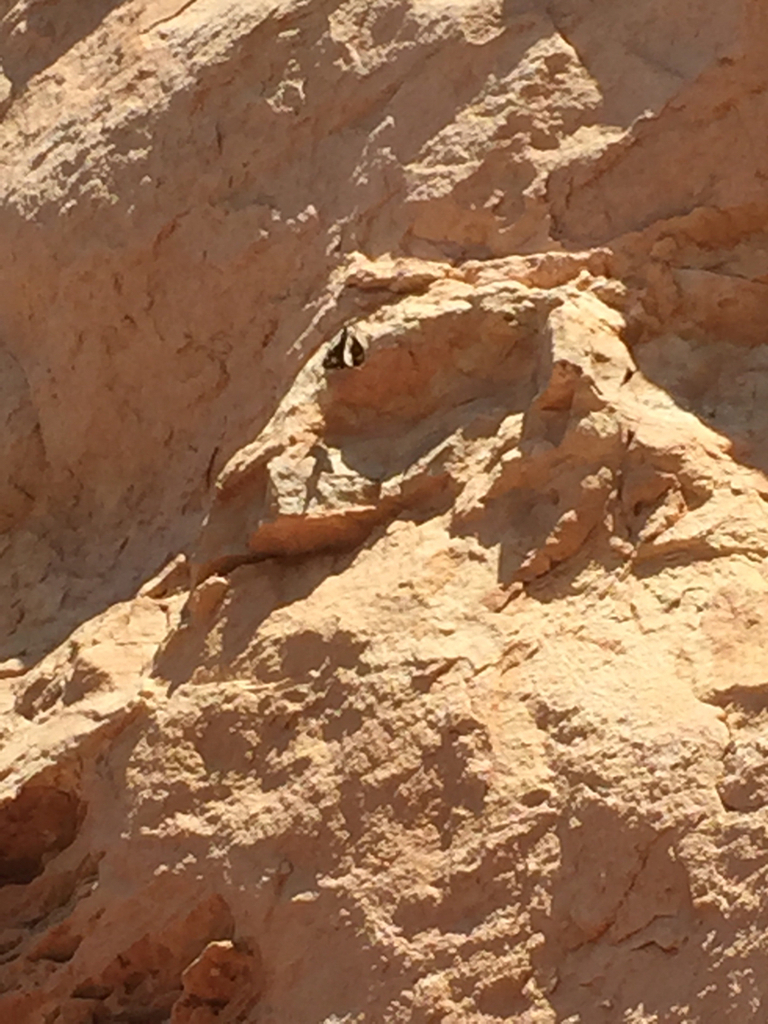
no rights reserved · CC0
Family: Hesperiidae · Class: Insecta · Order: Lepidoptera
Agathymus alliae (Mojave Giant-Skipper) is a California animal in the Hesperiidae family.
The Mojave Giant-Skipper is a large butterfly endemic to the southwestern United States, representing one of the most specialized members of the skipper family. Adults have a wingspan ranging from 50 to 75 millimeters (2.0 to 3.0 inches), with males typically smaller than females. The forewings are dark brown to black with distinctive white or cream-colored spots arranged in bands across the wing surface. The hindwings display a similar dark coloration with pale spotting, though the pattern is less pronounced than on the forewings. Males possess specialized scent patches called stigma on their forewings, appearing as dark, elongated marks that distinguish them from females. The species occurs across east-central California, southern Nevada, southern Utah, and northwestern Arizona, representing a distribution closely tied to the range of its sole host plant. In California, populations are documented from the Mojave Desert region, including areas of San Bernardino County and potentially Riverside and Kern counties. The species' range corresponds directly with elevations and habitats supporting Utah agave populations, typically between 600 and 1,500 meters (2,000 to 5,000 feet) elevation. Mojave Giant-Skippers inhabit arid desert environments characterized by rocky slopes, canyon walls, and desert flats where Utah agave (Agave utahensis) grows. These butterflies require specific microhabitat conditions, including well-drained soils and southern or western-facing exposures that support healthy agave populations. The species is found in creosote bush scrub, Joshua tree woodland, and pinyon-juniper habitats where scattered agave plants occur among desert shrubs and cacti. The life cycle of Mojave Giant-Skipper is intimately connected to Utah agave plants. Females deposit eggs singly at the base of agave leaves or in the crown of the plant. Larvae bore into the agave's fleshy leaves and roots, creating tunnels where they feed and develop over multiple years. The larval stage can extend two to three years before pupation occurs within the agave plant or in nearby soil. Adults typically emerge in late spring through early summer, with peak flight activity occurring from April through June, depending on elevation and local weather conditions. Males establish territories near host plants and engage in perching behavior to locate females. Adults feed on nectar from various desert wildflowers, including fairy duster, desert willow, and chuparosa when available. The species exhibits strong site fidelity, with populations remaining closely associated with specific agave colonies across generations. While not federally or state-listed as of December 2025, Mojave Giant-Skipper populations face potential threats from habitat loss due to urban development, off-road vehicle use, and collection of agave plants for landscaping. Climate change may affect the distribution of Utah agave, subsequently impacting butterfly populations. The species' specialized relationship with a single host plant makes it particularly vulnerable to any factors affecting agave populations. Long-term monitoring data for this species remains limited, making population trend assessment difficult.
Classification
Class: Insecta · Order: Lepidoptera · Family: Hesperiidae
Frequently asked questions
How is Agathymus alliae classified?
Agathymus alliae belongs to class Insecta, order Lepidoptera, family Hesperiidae.
What family does Agathymus alliae belong to?
Agathymus alliae is in the Hesperiidae family.
What is Agathymus alliae?
The Mojave Giant-Skipper is a large butterfly endemic to the southwestern United States, representing one of the most specialized members of the skipper family.
Is Agathymus alliae found in California?
Yes. Agathymus alliae is recorded in California in The California Species Project's catalogue.
Related species
Other California species in the same genus, family, or bioregion.
Data from The California Species Project — 14,000+ California species with verified data from CNPS, CDFW, USFWS, and more.