Agathymus gentryi
Gentry's Giant-Skipper
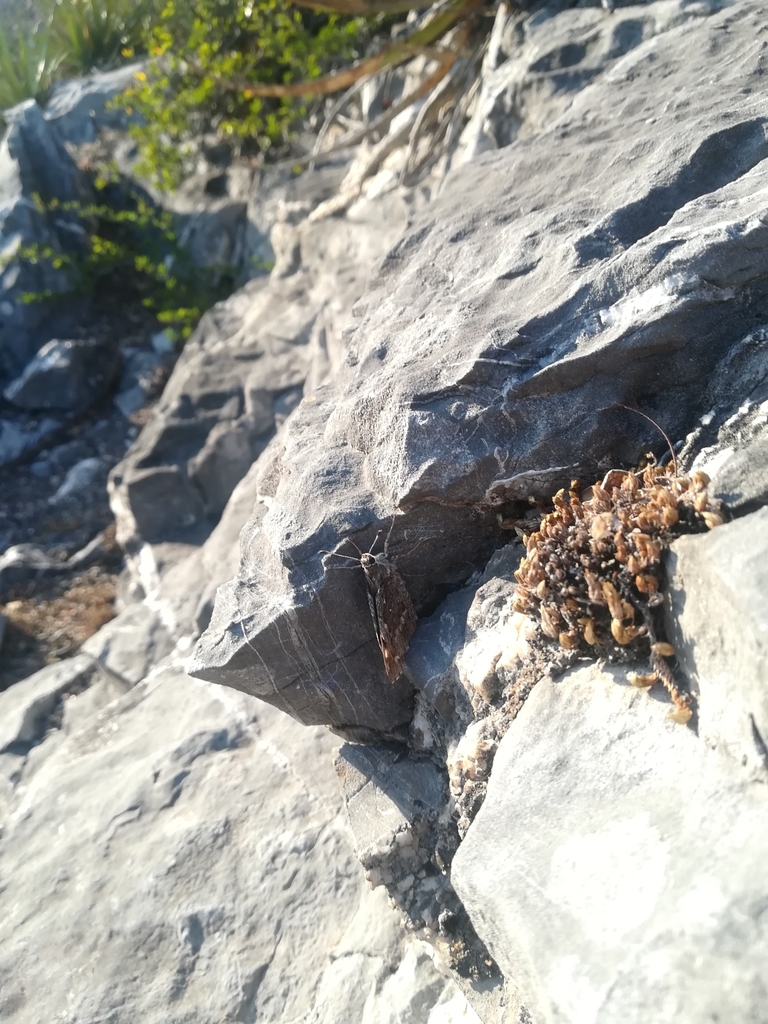
(c) Francisco Martínez González, some rights reserved (CC BY-SA) · licence
Family: Hesperiidae · Class: Insecta · Order: Lepidoptera
Agathymus gentryi (Gentry's Giant-Skipper) is a California animal in the Hesperiidae family.
Gentry's Giant-Skipper is a large butterfly in the family Hesperiidae, distinguished by its robust build and substantial wingspan reaching 60 to 75 mm (2.4 to 3.0 inches). Adults display dark brown to blackish wings with distinctive white or cream-colored spots and patches. The forewings feature a series of translucent white spots arranged in irregular bands, while the hindwings typically show larger white patches near the margins. The body is thick and heavy, characteristic of giant-skipper butterflies, with a grayish-brown thorax and abdomen covered in dense scales. This species occurs in southwestern Arizona west to southeastern California, representing one of the more geographically restricted giant-skippers in North America. In California, populations are documented from the Colorado Desert region, including areas of Imperial and eastern Riverside counties. The species reaches the western limit of its range in the Sonoran Desert ecosystems of southeastern California, where suitable habitat and host plants overlap. Gentry's Giant-Skipper inhabits arid desert environments characterized by creosote bush scrub and desert succulent communities. The species is closely associated with stands of desert agave, particularly in rocky slopes, bajadas, and desert flats where the host plant thrives. Elevation range typically spans from 150 to 900 meters (500 to 3,000 feet) above sea level. These habitats experience extreme temperature fluctuations and receive minimal annual precipitation, generally less than 200 mm (8 inches) annually. The species exhibits an obligate relationship with Agave deserti subspecies simplex as its sole larval host plant. Adult females deposit eggs on or near the base of agave plants, where larvae develop by boring into the thick, succulent leaves and eventually the central stem. Larval development is prolonged, typically requiring two to three years to complete metamorphosis. Pupation occurs within the agave plant in a silk-lined chamber. Adults emerge during spring months, generally from March through May, coinciding with favorable weather conditions and agave flowering periods. Flight behavior is characterized by rapid, powerful wingbeats typical of giant-skippers, with males establishing territories around host plants. Gentry's Giant-Skipper faces conservation challenges primarily related to habitat loss and degradation. Urban development, agricultural conversion, and renewable energy projects have reduced available desert habitat throughout its limited range. Additionally, collection of desert agave plants for landscaping and traditional uses has impacted host plant availability. Climate change poses additional threats through altered precipitation patterns and increased temperature extremes that may affect both the butterfly and its host plant. The species' restricted range and specialized habitat requirements make it particularly vulnerable to environmental changes. Current population status and trends are poorly documented, reflecting the need for systematic surveys across its California range. Conservation efforts would benefit from habitat protection, monitoring programs, and research into population dynamics and ecological requirements.
Classification
Class: Insecta · Order: Lepidoptera · Family: Hesperiidae
Frequently asked questions
How is Agathymus gentryi classified?
Agathymus gentryi belongs to class Insecta, order Lepidoptera, family Hesperiidae.
What family does Agathymus gentryi belong to?
Agathymus gentryi is in the Hesperiidae family.
What is Agathymus gentryi?
Gentry's Giant-Skipper is a large butterfly in the family Hesperiidae, distinguished by its robust build and substantial wingspan reaching 60 to 75 mm (2.4 to 3.0 inches).
Is Agathymus gentryi found in California?
Yes. Agathymus gentryi is recorded in California in The California Species Project's catalogue.
Related species
Other California species in the same genus, family, or bioregion.
Data from The California Species Project — 14,000+ California species with verified data from CNPS, CDFW, USFWS, and more.